No products match your search.
Handle finishes: a conversation with Sophia Zikoudi, Head of KBB Sales at Hendel & Hendel
Written by Jade Agnew
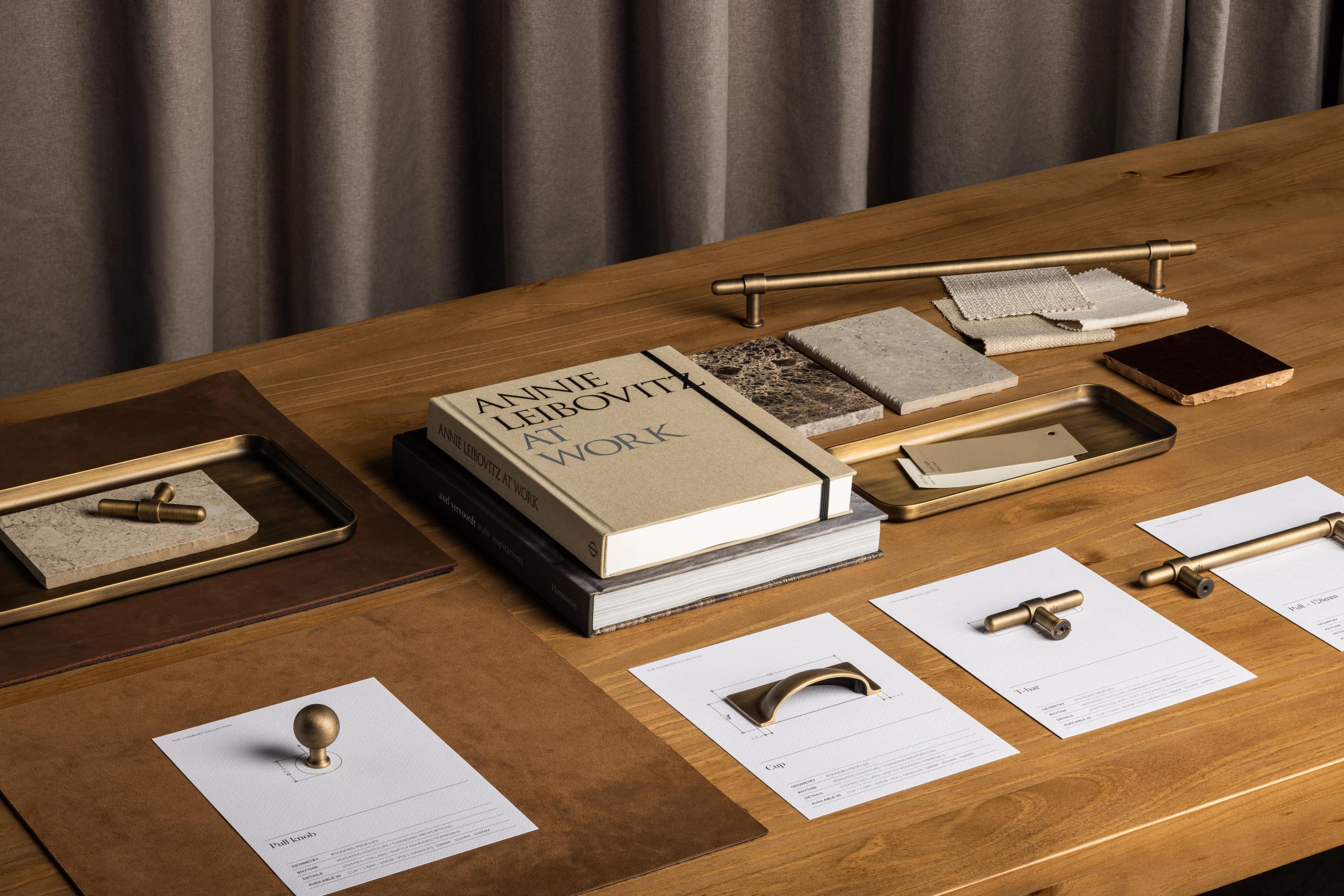
Chisbury, by Hendel & Hendel.
Sophia Zikoudi, Head of KBB Sales at Hendel & Hendel, talks bronze, the return of polished nickel, mixing metals and why hardware belongs at the start of the design conversation.
"The same handle can completely change the personality of the kitchen."
Sophia looks after Hendel & Hendel's relationships across the kitchen, bedroom and bathroom industry, working with designers and showrooms on how hardware fits into the wider scheme. Hendel & Hendel has been making cabinet hardware since 1971, with its collections designed by the team in Lincoln.
We met her in our Chelsea showroom, where our new display uses Hendel & Hendel's Fitzrovia handles in polished nickel plate. We asked her which finishes are rising, which are softening, whether brass can sit beside stainless steel, and what's coming next for the kitchen.
Tell us a little about your role and what you're working on at the moment.
I'm Head of KBB Sales, so I look after our relationships within the kitchen, bedroom and bathroom industry. A huge part of the role is working closely with designers and showrooms, helping them understand our collections and how the right hardware can change a space.
It's not simply about selling handles. It's about understanding the cabinetry, materials, finishes and the overall design vision.
At the moment I'm focused on growing our presence in the KBB market, developing showroom partnerships and introducing more designers to the breadth of our collections. I love seeing hardware considered earlier in the design process, rather than as an afterthought.
What trends are you seeing in handle finishes right now?
One of the biggest things I'm noticing is a real appreciation for warmer finishes with depth and character.
We've recently launched our Bronze finish, and its warm red undertones have been particularly popular. I love that it's as versatile as a lighter finish like Dark Brushed Brass, but it makes more of a statement. Burnished Brass is another finish that continues to grow.
What's exciting is that designers are becoming more confident about choosing a finish that complements the cabinetry and the overall feel of the kitchen, rather than thinking everything has to match perfectly. For me, it's about warmth, texture and a space that feels individual.
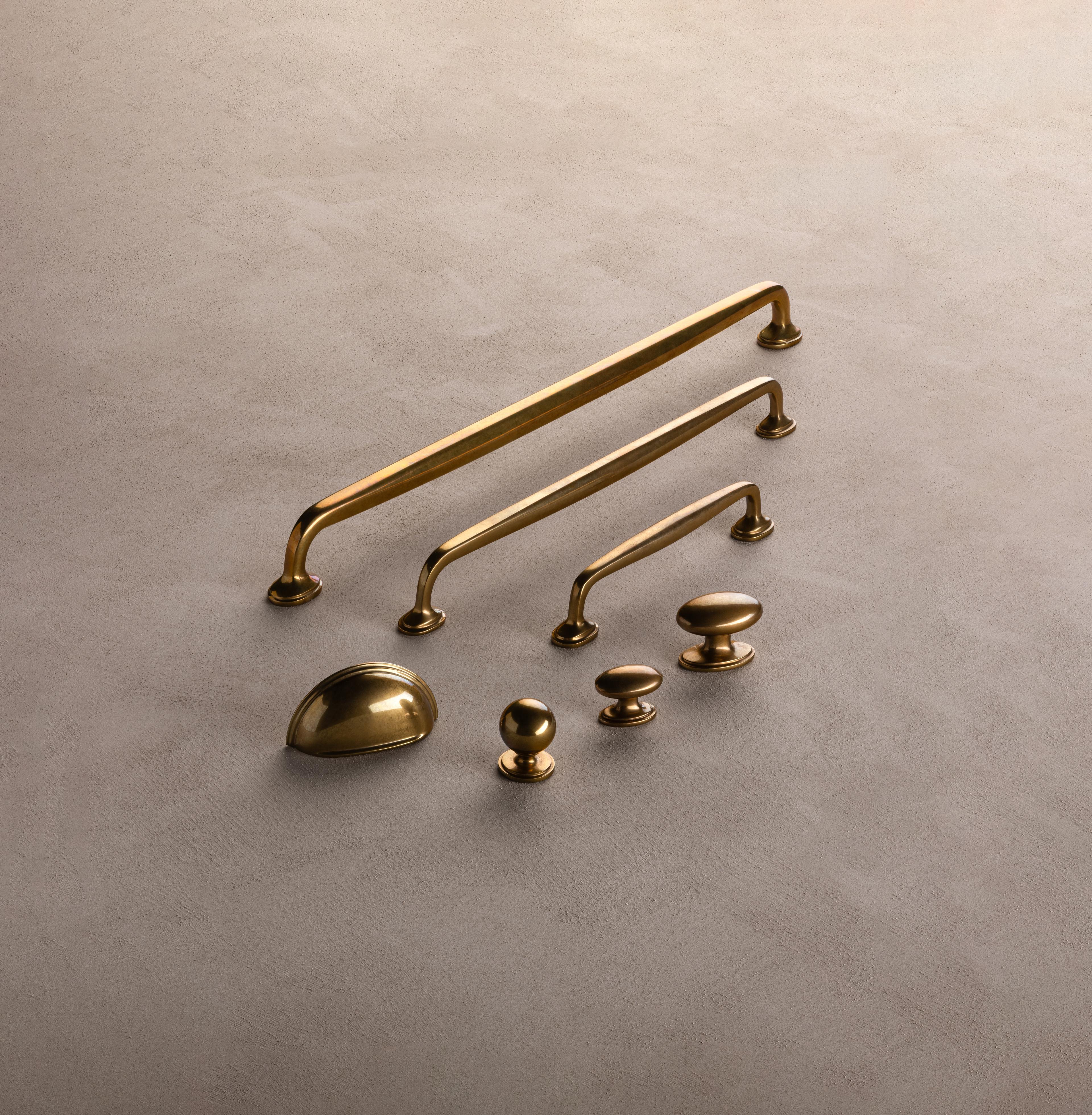
Greenwich, by Hendel & Hendel.
Which finishes are designers and clients drawn to at the moment?
Burnished Brass continues to be a popular choice, and we're seeing growing interest in Polished Brass Lacquered across some of our collections too.
Polished Nickel is also finding renewed appreciation, particularly among designers looking for a cooler metallic finish that works beautifully alongside both traditional and contemporary cabinetry.
At the same time, we're seeing an increasing interest in warmer, more nuanced finishes. Matt Black still has its place, particularly within contemporary interiors, but designers are exploring alternatives that bring a different depth and character to a space.
Bronze feels like a natural progression from brass. Its deeper tone and subtle warmth allow it to sit comfortably alongside a wider material palette, particularly natural stone and darker cabinetry.
Ultimately, it's less about following a particular trend and more about choosing finishes that feel personal to the space and the people who use it.
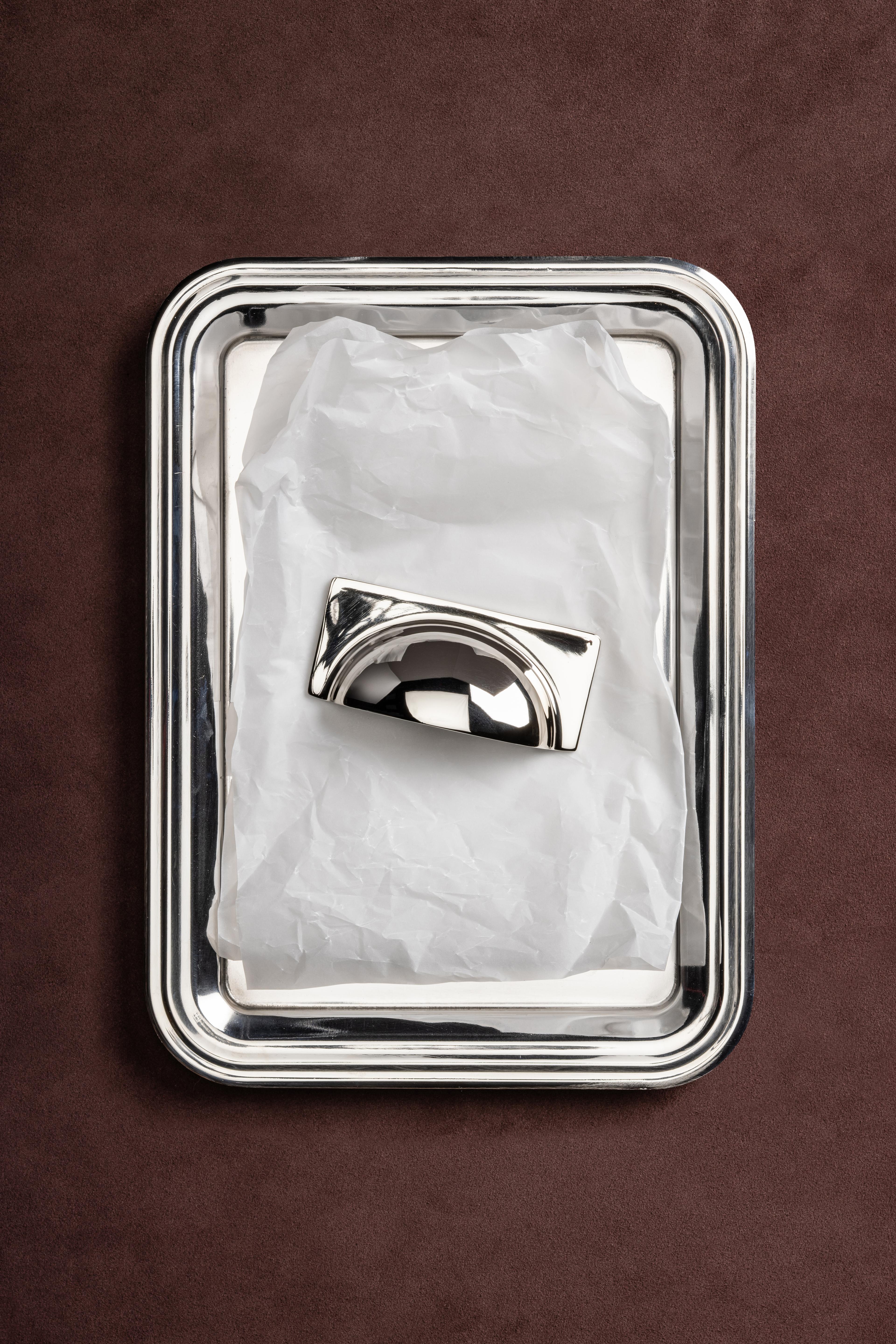
Chisbury in Polished Nickel, by Hendel & Hendel.
Our Chelsea display uses polished nickel plate. How does it compare with aged brass, and what kind of kitchen suits each?
They give you two very different looks.
Polished nickel is brighter, more metallic and reflective. It can look beautiful on classic painted cabinetry or alongside marble, but that brightness means the choice of door colour needs a little more thought.
Aged brass is softer, warmer and more characterful, particularly with oak, earthy neutrals and deeper colours.
I'd also say Dark Brushed Brass is one of our most versatile finishes. Its warmer tone and darker patina let it sit comfortably with a broad palette, often more easily than polished nickel.
That's what I find so interesting about hardware. The same handle can completely change the personality of the kitchen depending on the finish.
Is mixing aged brass with chrome or stainless steel appliances an issue?
Not at all. Mixing metals can make a much more interesting, considered kitchen. We regularly see finished projects where aged or antique brass handles sit alongside matt chrome or nickel accents.
In most kitchens the handles aren't sitting directly next to the appliances anyway, so they don't need to be an exact match. Stainless steel can feel almost neutral within the overall scheme.
My advice is to choose the decorative metal you really love, then look at how the other finishes work with the cabinetry, worktops and lighting. If the mix feels intentional, it can be incredibly cohesive. A well designed kitchen should feel curated, not necessarily coordinated.
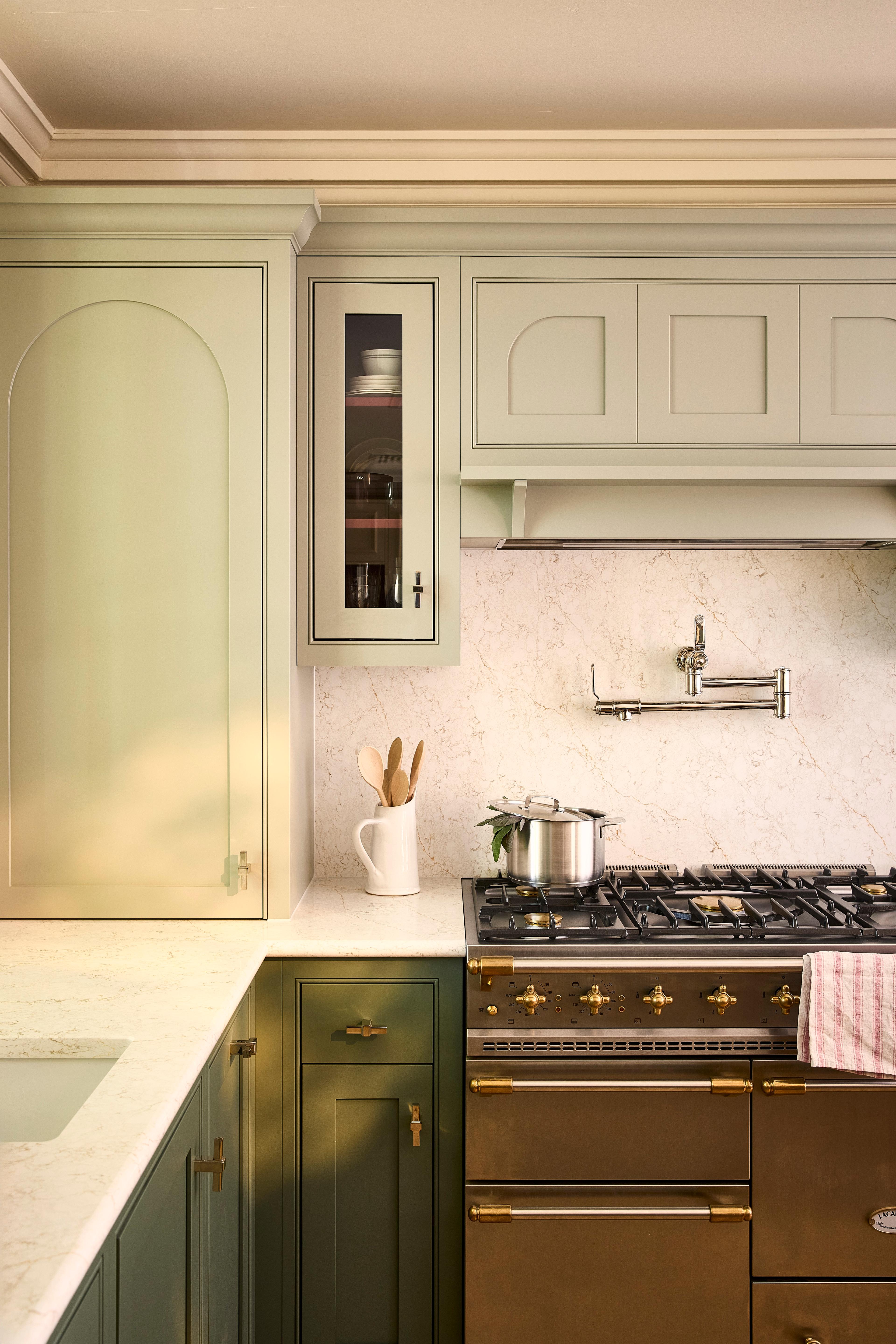
Our Madingley kitchen, paired with Hendel & Hendel handles.
How should handle choice change for a bathroom vanity compared with a kitchen?
The principles are similar, but the practical priorities are slightly different.
In a kitchen, handles are used constantly, so comfort, grip and durability really matter. I'd often suggest something simple and comfortable to hold, like our Chisbury or Scroll pull handles.
On a vanity you can be a little more playful, because you're working with a smaller piece of furniture. A beautiful knob or a sculptural pull can become a feature in its own right. Chisbury works really well on a vanity because it's quite delicate.
The same collection can also move between rooms. The larger scroll pull looks lovely on a wardrobe, where the fixings are hidden so it seems to float, and the small T-bar is really sweet in a bathroom. Same handle, two rooms, two different jobs.
I'd still think carefully about how it feels to use, and how the finish works with the taps, lighting and mirrors. Bathrooms are more humid, too, so it's worth checking the finish is suitable and reading the care guidance. It's always about finding the balance between something beautiful and something practical.
You've recently launched a rail with hooks. What else is coming for the kitchen?
We've launched our pot and towel rail system, which I'm really excited about, because it shows how hardware can go beyond cabinetry and become part of the wider kitchen design.
There are more brass accessories in development for the new year, particularly hooks, with five designs planned. Some other pieces have only just completed the design process, so we'll have more to share soon.
It's a natural direction for us. Kitchens are becoming more personal and layered, and accessories are a lovely way to add those personal details while keeping everything practical and easy to use.
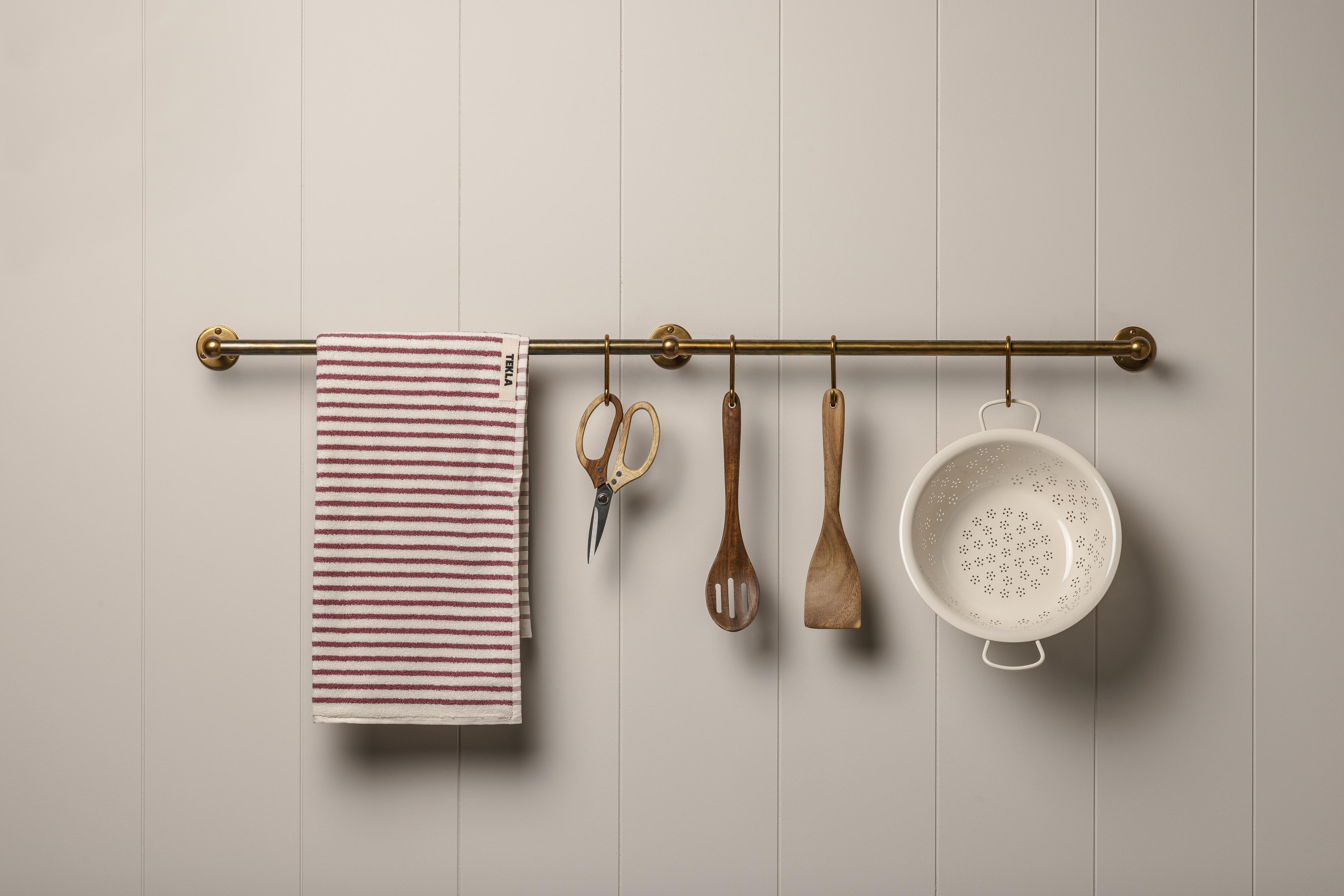
The Farnham pot rail, by Hendel & Hendel.
Where do you see handle design going over the next few years?
I think we'll keep seeing two really distinct directions, and I don't see either slowing down.
On one side there's demand for clean, contemporary forms, like our Hoxa and Felix collections. On the other, designers are drawn to more intricate detailing and character, like Greenwich and Harleston. There's room for both, and demand for both. It comes down to the style of the space and the personality the client wants to bring to it.
Accessories will become an increasingly important part of a project, too. People want more ways to personalise their kitchens, but they want those details to be easy to find and fit.
Hardware is becoming part of the design conversation from the very beginning.
Hendel & Hendel's newest pieces lean towards the sculptural. Scroll, a solid brass collection inspired by the unfurling of a parchment roll, is designed for kitchens, wardrobes and utility rooms. The pot and towel rail system is available now, with new brass hooks to follow in the new year. You can see the full collections on the Hendel & Hendel website and on Instagram.
Request a Brochure
To receive a digital copy of our brochure and regular updates from us, please complete your details below.