No products match your search.
How to Make a Kitchen Feel Calm and Organized
Written by Jade Agnew
How to Make a Kitchen Feel Calm and Organized
A calm kitchen isn't a tidier kitchen – it's a better designed one. Clear countertops, a place for everything and a palette that lets the room breathe all come from decisions made long before anything is installed.
Here's our designers' guide to planning a kitchen that stays calm by itself…
There's a particular feeling you get in a well-designed kitchen. Nothing competes for attention. The kettle isn't wedged between the toaster and some clutter, and you can put the groceries away without moving three things first. It reads as calm – but calm isn't a look. It's the result of dozens of small decisions about what you own, how you cook and where things live. Style helps. Storage does the heavy lifting.
What actually makes a kitchen feel calm?
Three things, in our experience: clear surfaces, short journeys and a quiet palette.
Get those right at the design stage and the kitchen holds its shape almost by itself. Get them wrong and you'll be tidying the same surfaces every evening for the next twenty years.
Why does planning matter more than tidying?
Because clutter is usually just homelessness. Things pile up because there's nowhere obvious for them to go, and no amount of weekend decluttering fixes a layout problem – it only resets the clock.
Most kitchens are designed around a layout and then filled with belongings. We'd suggest the opposite. Before you think about islands or countertops, take stock: how many pans do you genuinely use, is there a stand mixer living on the counter because it's too heavy to lift, and are there backpacks, dog leashes and pet food to house as well as dishes?
That inventory becomes the brief. With a truly bespoke kitchen, every internal dimension can be built around the answer – a drawer sized for your dinner plates, a cabinet tall enough for the mixer to stay plugged in and out of sight.
Where should everything live?
Think in zones rather than cabinets. The test we come back to is the return journey: not how easy something is to reach, but how easy it is to put back. If returning an item takes two movements or a bent knee, it won't get returned – it will sit on the countertop instead.
So everything for tea and coffee within an arm's movement of the kettle. Cutting boards, knives and the trash around the prep area. Oils, salt and pans by the cooktop.
A few details we build in almost every time:
- Bespoke flatware inserts, cut to your drawer and your flatware rather than a plastic tray that rattles around inside it. Forks stop migrating.
- A sink caddy, so brushes and dish soap have somewhere proper to sit. The sink surround is where visual mess starts, and it's the easiest to design out.
- Trash drawers rather than trash cabinets – a pull-out with compartments sized for how your city actually collects, so nothing stands in the corner.
How do you keep countertops clear?
Decide early that certain things will simply never live on them.
The most effective move is a pantry with a working interior: a lower countertop for the toaster, coffee machine and kettle, with power inside and doors that close on the whole scene. Breakfast happens inside the cabinet.
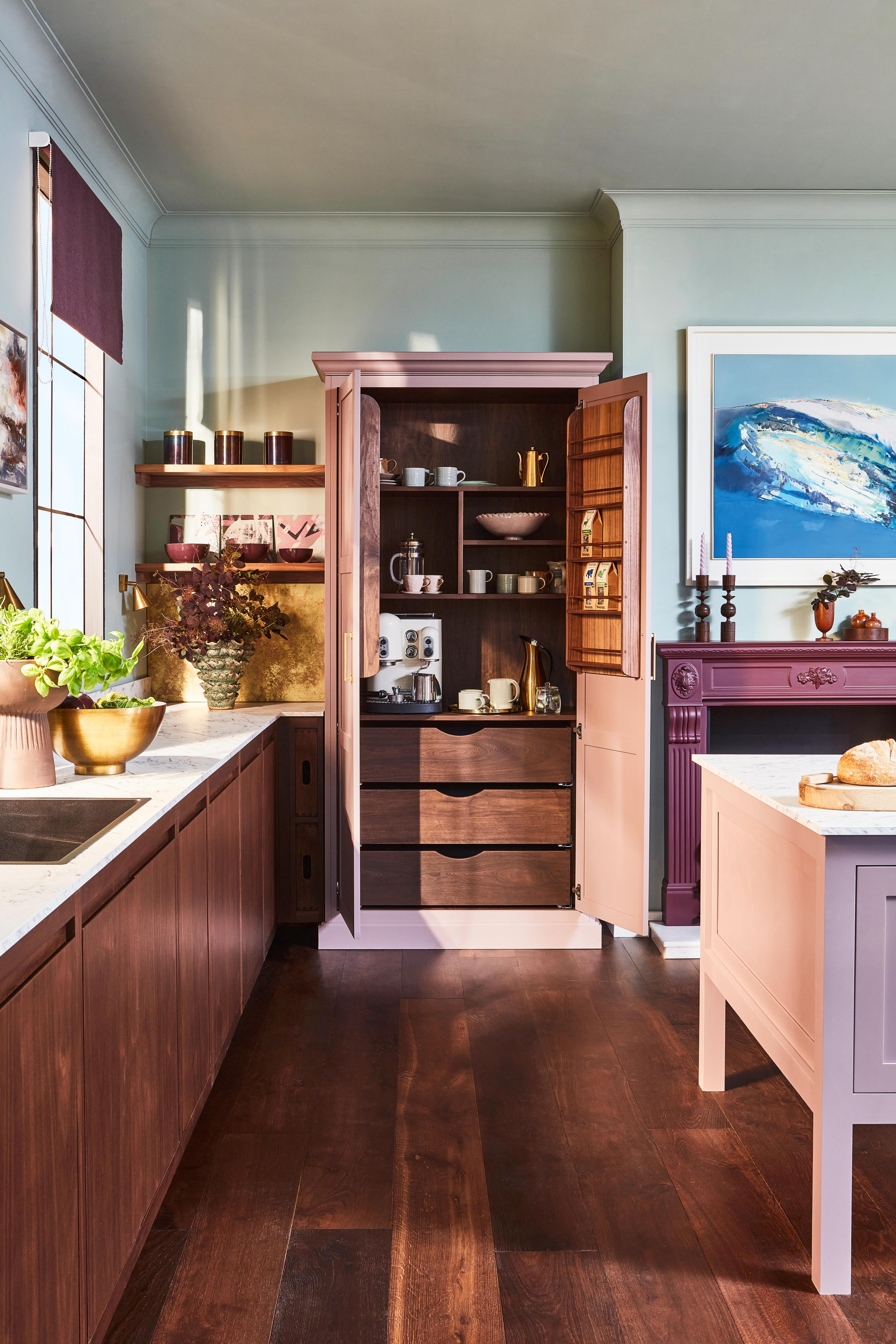
Houghton Kitchen – a full coffee station lives inside this pantry, with power, an internal countertop, deep drawers and racks in the doors, so the whole scene closes away behind two doors.
Next, integrated appliances. A refrigerator or dishwasher behind matching cabinetry removes a run of stainless steel and a manufacturer's logo from your eyeline at once, so the cabinetry reads as one calm surface rather than a series of interruptions.
Then drawers instead of base cabinets. Cabinets hide things at the back; drawers present them.
There's a whole world of this – spice racks in the door, corner carousels, inserts made for your specific gadgets. Our favorites are gathered in 11 kitchen organization tips.
What colors make a kitchen feel calm?
Warm neutrals and natural timber, almost every time. Soft taupes, stones and sands sit quietly in a room, change gently with the light and let the craftsmanship do the talking. Our own Naked Colours palette is drawn from the Norfolk coast for exactly this reason – Holt Latte, Felbrigg Stone and Norfolk Dunes are designed to feel restful rather than sterile.
Timber does something paint can't. Oak or walnut brings warmth into a restrained scheme, so a neutral kitchen reads as calm rather than cold.
Beyond that it's discipline: two or three tones carried across cabinetry, walls and countertop, and one language of hardware and metals throughout. Open shelving is beautiful, but it only stays calm if what sits on it is genuinely curated.
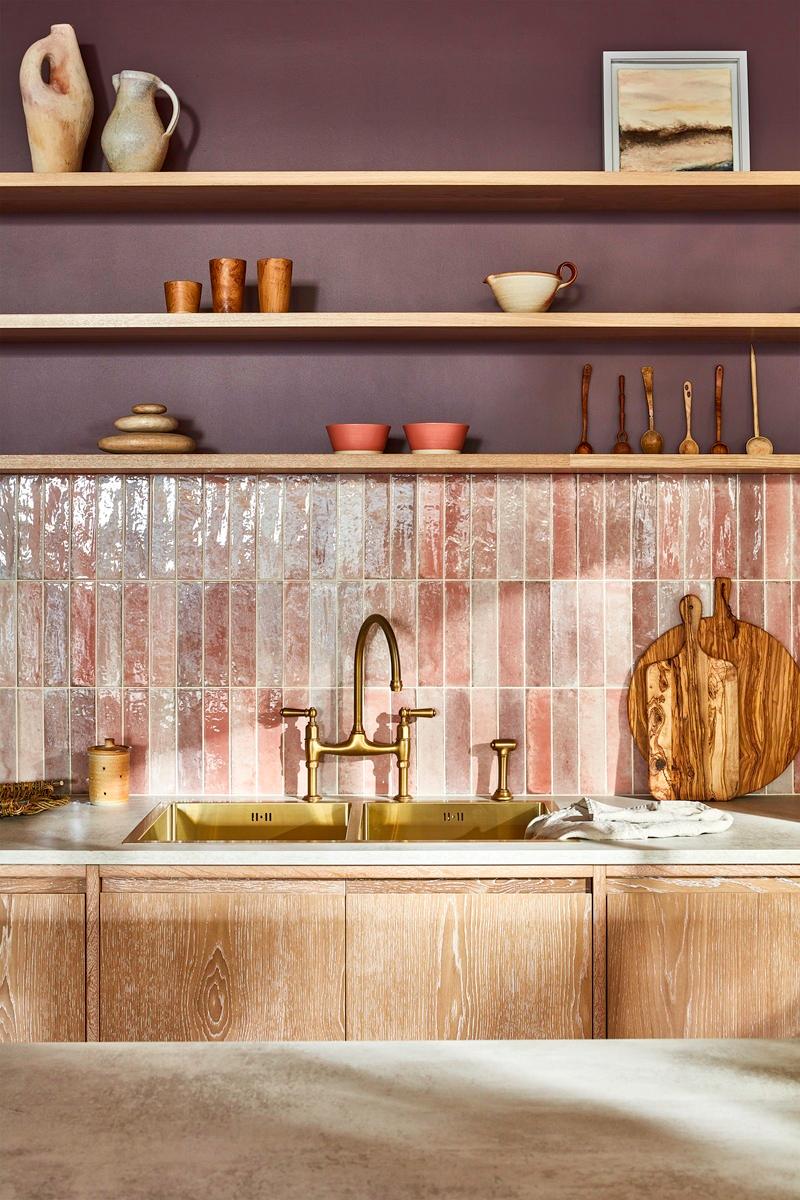
Harpley Kitchen – open shelving stays calm when what sits on it is chosen rather than accumulated: a few ceramics, some wooden beakers, and nothing more.
How should you light a calm kitchen?
In layers. A single bright ceiling light flattens a room. Task lighting where you need to see properly, softer light elsewhere, and dimmers throughout – so the room can shift from a busy weekday breakfast to something quieter in the evening.
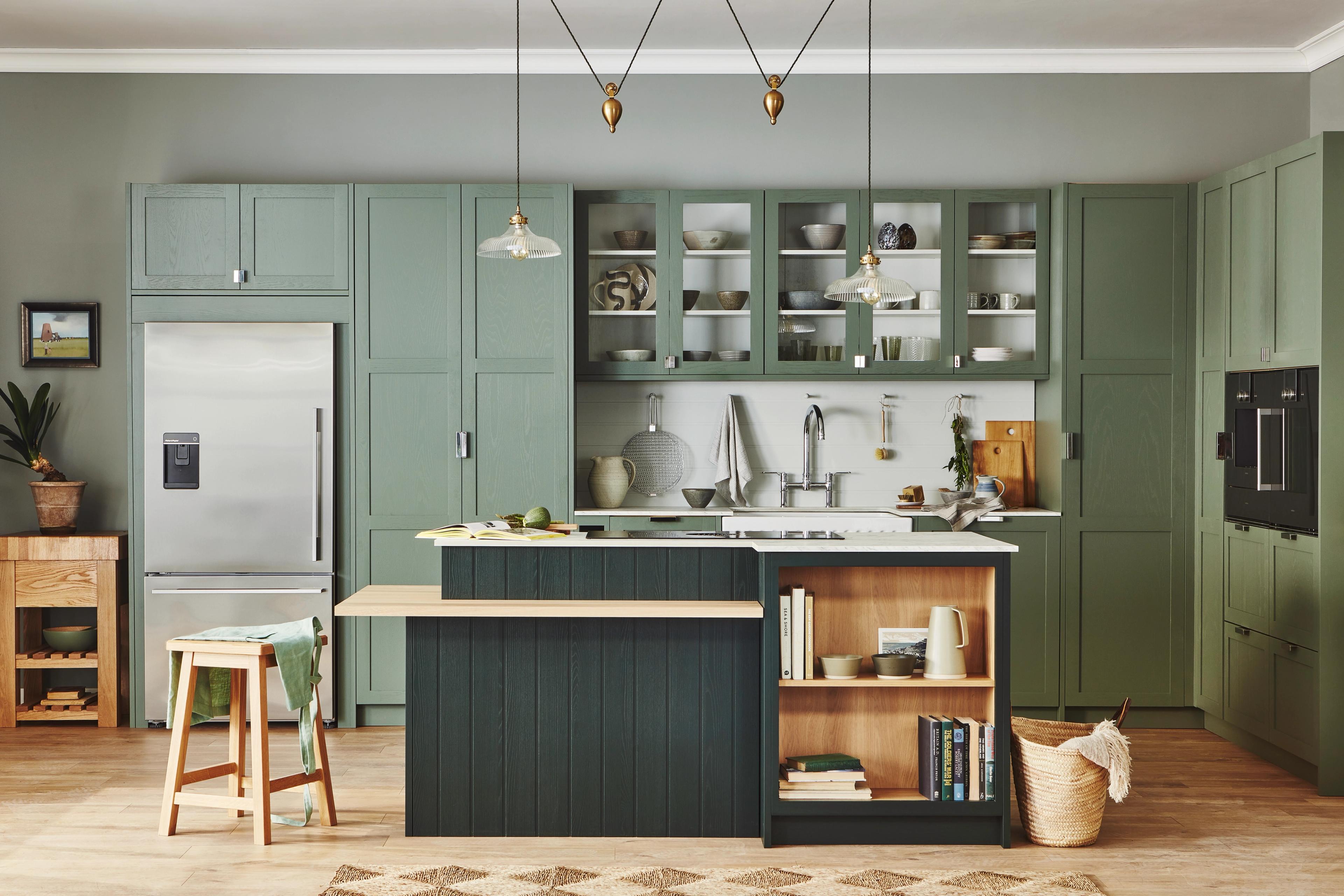
Saint Giles Kitchen – ribbed glass pendants on brass counterweights drop low over the island for dinner and lift out of the way for prep.
Why leave room to breathe?
Empty countertop either side of the cooktop and sink. An unassigned drawer or two, because life expands. Space for two people to pass without a negotiation. Kitchens tighten as households change, and a design with no give in it starts to feel stressful surprisingly quickly.
The calm comes from the plan
You can tidy a badly planned kitchen every day and it will still feel like hard work. A well-planned one holds its shape by itself, because everything has a place that makes sense. That's the real argument for bespoke – not the finish or the detailing, lovely as those are, but a room built around the way you actually live rather than a set of standard sizes.
Start your dream kitchen journey today.
Frequently Asked Questions
How do I stop my kitchen countertops getting cluttered?
Give the offending items a home instead of a hiding place. A pantry with an internal countertop and power keeps small appliances behind closed doors, and integrated appliances remove visual noise from the run of cabinetry.
Are drawers better than cabinets for kitchen storage?
For base units, usually yes. Drawers bring the contents out to you rather than making you kneel and reach into the back.
Do I need more storage, or better storage?
Usually better. If the same few things never make it back into the cabinet, their home is in the wrong place or takes too much effort to use.
Can a small kitchen feel calm?
Absolutely. In a compact space the planning matters more, not less – zoned storage, trash drawers and integrated appliances all buy back space and keep surfaces clear.
Request a Brochure
To receive a digital copy of our brochure and regular updates from us, please complete your details below.