No products match your search.
Timber floors in kitchens: a conversation with Christof Schirlbauer, Managing Director of Waxed Floors
Written by Jade Agnew
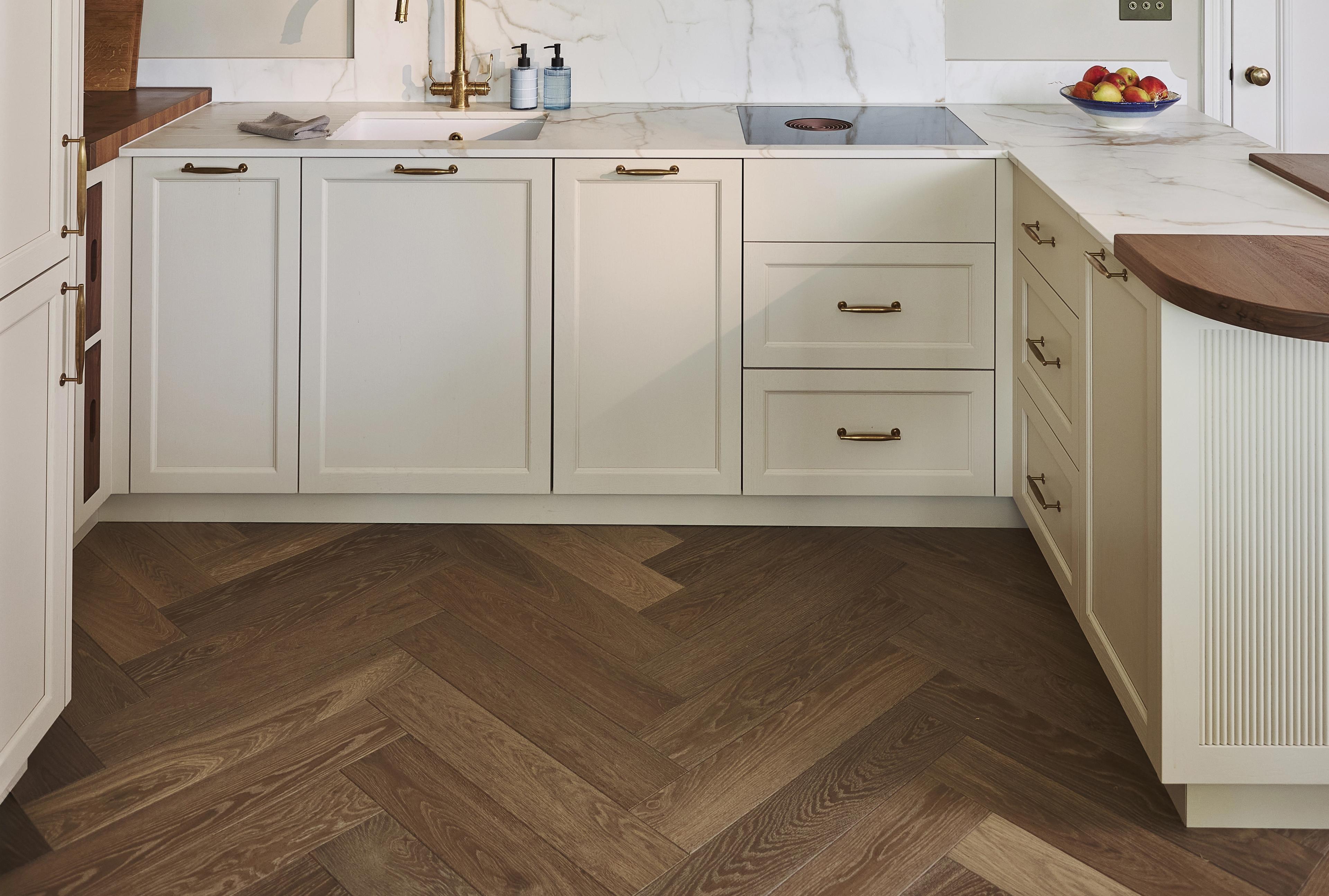
Old Chelsea, with a herringbone oak floor by Waxed Floors.
Christof Schirlbauer, Managing Director of Waxed Floors, talks oak, oil and why the floor should always go down before the kitchen.
"Timber is naturally warm underfoot and absorbs sound. Using timber in kitchens lets clients install one floor that flows between the living space and the kitchen and dining area."
Christof is the Managing Director of Waxed Floors, which makes engineered oak floors to order, each one produced to the client's own specification. For 20 years the company has worked with homeowners, architects and interior designers from its showroom on Battersea Rise in south London, sourcing its timber from accredited sawmills and suppliers across Europe.
Waxed Floors laid the floors in several of our Naked projects, including Old Chelsea, Highgate, and in our Chelsea showroom. Each one shows what happens when floor and cabinetry are planned together. We asked Christof what clients are choosing now, how to pair a timber floor with timber cabinetry, and how to live with wood in the busiest room in the house.
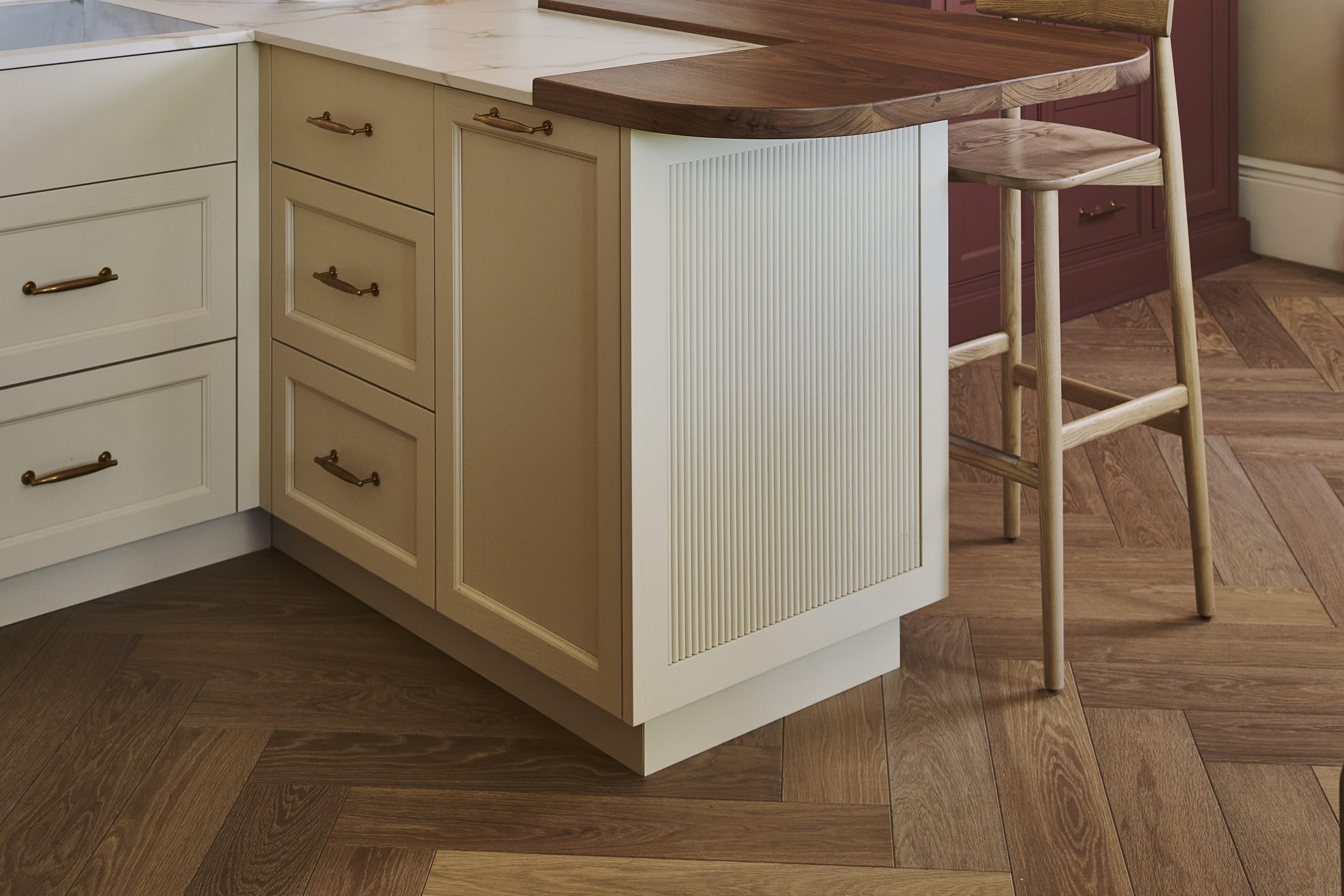
Old Chelsea, with Naked cabinetry over a herringbone oak floor by Waxed Floors.
Are you seeing more demand for timber floors in kitchens? Why do you think clients are drawn to them?
Yes, absolutely. The kitchen has evolved from a closed-off utility room into the central hub of the home, often opening directly into living and dining spaces. Clients are drawn to timber because it opens up the space and brings an authentic feel into the kitchen. Stone or porcelain tiles can feel cold, clinical and hard underfoot. Timber is naturally warm underfoot and absorbs sound. Using timber in kitchens lets clients install one floor that flows between the living space and the kitchen and dining area.
A few years ago, people tended to match their cabinetry to their floor. Now we see more clients happy to mix timbers. Is that what you are seeing too? Any advice on pairing wood with wood?
We are seeing the same trend. In the past clients were restricted by a limited choice of colours. The key to pairing wood with wood is contrast in scale and tone, but harmony in undertone.
If you have dark oak or walnut cabinetry, pair it with a lighter, calmer floor like our Fumed Oak White or Oak Calico. If the floor and cabinets are too close in tone without matching exactly, they fight each other. Avoid clashes in tone, for instance combining brown with reddish-brown.
Vary the grain and texture, too. Kitchen cabinets are often made from prime grade timber with an even, straight grain. That pairs well with the lively grain of a timber floor in our premier or rustic A grade. For cabinetry in a smooth timber finish, consider a textured oak floor such as our Treehouse (band-sawn) finish.
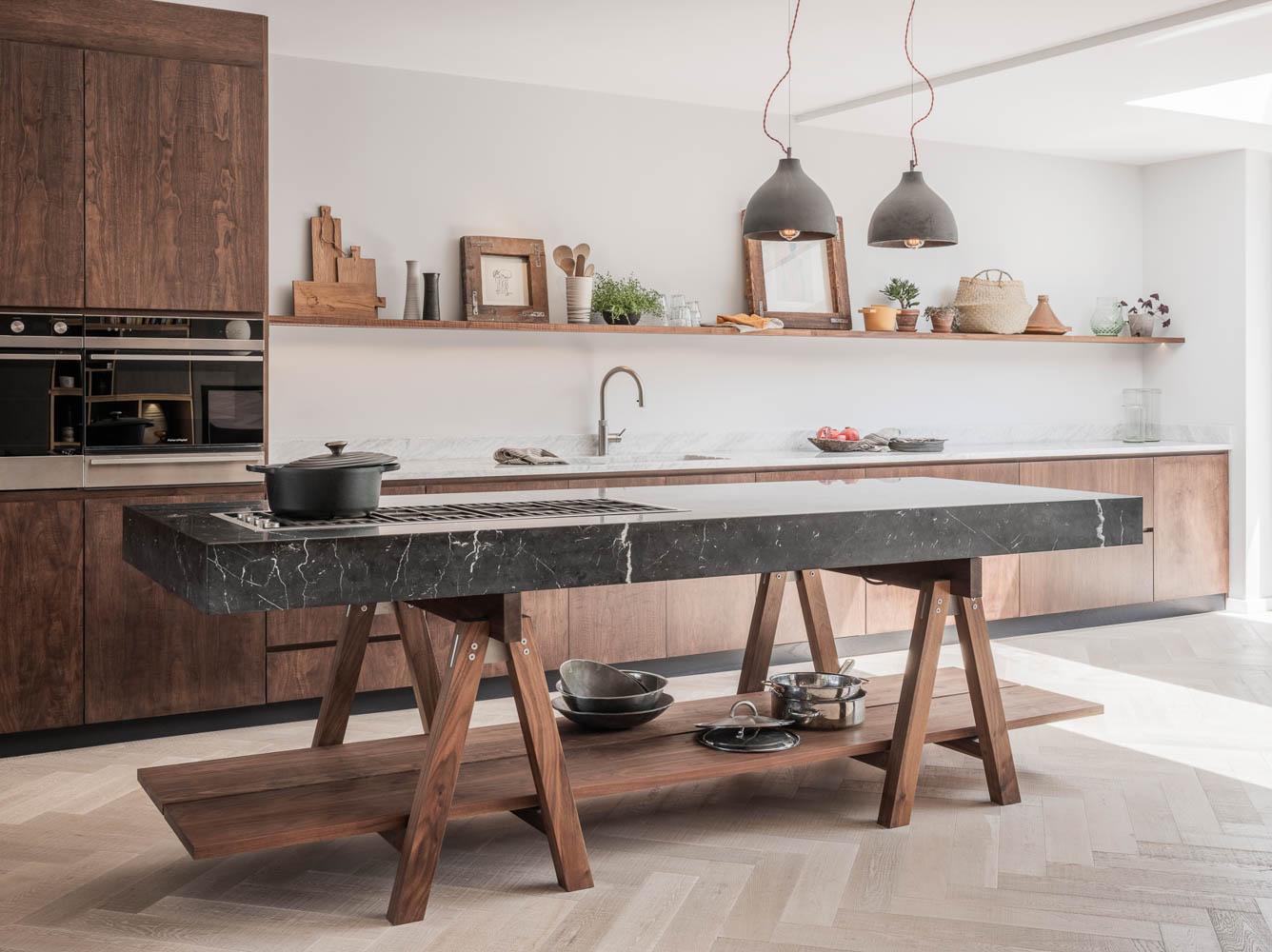
Highgate, with an oak parquet floor by Waxed Floors.
Which of your floors are most popular right now? Are clients leaning darker or lighter?
We are seeing a strong lean toward mid-tones. Ultra-pale, white floors have taken a back seat, and very dark tones are only specified occasionally. Clients like neutral tones that feel understated. Many of our tones come from combining a traditional fuming process with pigmented oil, which creates authentic-looking mid-tones with a virtually unaltered appearance. I should mention that 95% of our orders are in oak, which is the most incredible and versatile wood species on the planet.
Herringbone or plank? How should someone decide?
It comes down to the architecture of the house and the layout of the kitchen. Having said that, you can never really go wrong with straight boards. And if you're drawn to the look of a herringbone parquet, go for it. When I talk to clients, the choice is usually an easy one to make.
Planks look fantastic where you want one floor to run from room to room, and in large open-plan spaces where you want to draw the eye out towards a garden. They give a clean, grounded, classic look.
Herringbone has endured strongly over the past 20 years. The pattern is elegant but doesn't feel overstated. It works well in square rooms and open-plan spaces.
Chevron parquet is very different to herringbone. The zig-zag pattern, with straight lines between the rows, creates a striking, almost extravagant design.
We are also seeing a comeback of parquet panels. Our pre-oiled Versailles panels can be made without bevelled edges and with a slightly distressed finish. The same applies to our 4-s panels, which are much smaller, so they suit smaller spaces and rooms with an awkward shape.
Wide boards or narrow? What difference does it make to a room?
Board width completely changes how a room feels. Boards 220mm wide or more can make a room feel grand and calm. Narrower boards look more traditional. In a premium kitchen we almost always lean toward wide boards, for their understated but luxurious feel.
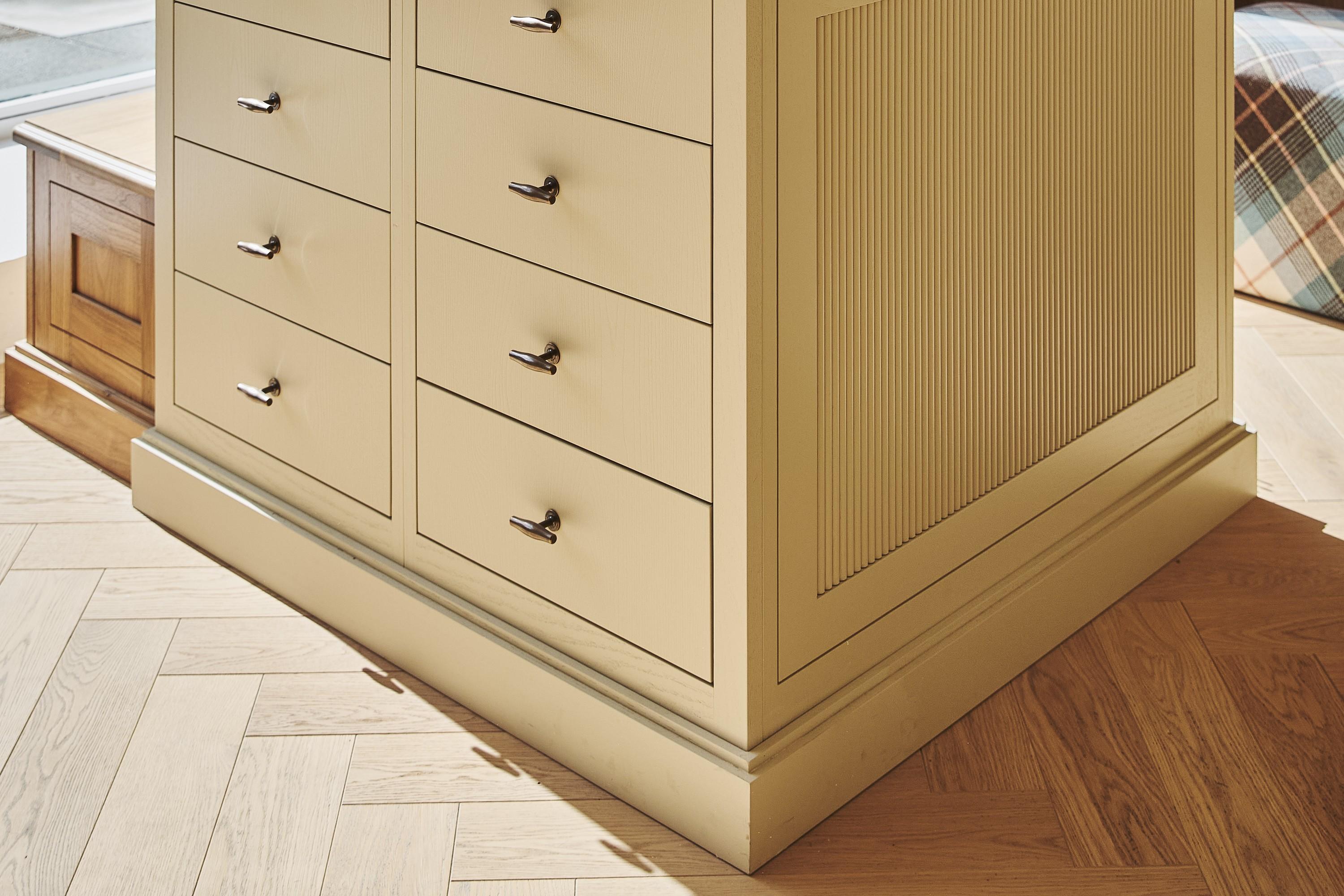
Our Chelsea showroom, where Waxed Floors laid the oak floor.
What makes a quality timber floor?
Quality is determined by the sourcing of the timber, the construction of the board and the manufacturing process. Many steps in production need the skill and experience of people. In other words, a quality timber floor can't be made entirely by machines.
Our floors are made to order, each to the client's specification. The most popular widths are 180mm, 220mm and 240mm, in rustic A or premier grade.
When it comes to the finish, in my opinion nothing beats a natural oil. The oil penetrates the pores of the wood and brings out its natural character. It is the perfect companion for textured floors, such as our planed, band-sawn, brushed, and sawn and scraped finishes, because there is no risk of peeling or flaking. That also makes it ideal for kitchens and bathrooms. No other finish is as easy to maintain in the long term as a planed surface in a natural oil.
Engineered or solid? Why do you work with engineered?
We work almost exclusively with engineered wood flooring, and for modern kitchens it is the only sensible choice. Kitchens go through constant changes in humidity and temperature from cooking, steam and underfloor heating. Solid wood expands and contracts, which leads to warping and gaps. Engineered wood uses a multi-layered, cross-ply structure that restricts this movement and keeps the floor stable. Because of how we make our floors and the natural oil finish, you could not tell just by looking whether they are solid or engineered oak.
How much does the thickness of the top layer matter? How many times can a floor be sanded and refinished over its life?
Our 15mm engineered flooring has a top layer of around 4mm and can be sanded twice. Our 20mm boards have a wear layer of around 6mm and can be sanded three times in their lifetime. But when re-oiled periodically, our floors don't need sanding for at least 15 to 20 years. The advantage of an oil finish is that it can be re-oiled many times. Reviving the oil extends the life of the floor and keeps the patina of a premium engineered floor.
What is essential to consider when laying a timber floor in a kitchen?
Subfloor preparation and timing are everything. The subfloor must be level, structurally sound and completely dry. With newly laid screed over underfloor heating, the heating system must be fully commissioned before the floor goes in. That means running the heating for a minimum of two weeks to dry out the moisture underneath.
It is crucial that the floor is delivered only when the site is ready: after the screed has been laid and dried, and after other wet works such as skimming the walls are finished.
The golden rule is to lay the timber floor before the kitchen is installed. The kitchen is then built on top of the floor.
The best installation method in a kitchen is to fully bond the floor to the subfloor, whether that subfloor is screed or timber. That way the installer doesn't have to compromise on quality, as usually happens with floors laid floating over underlay.
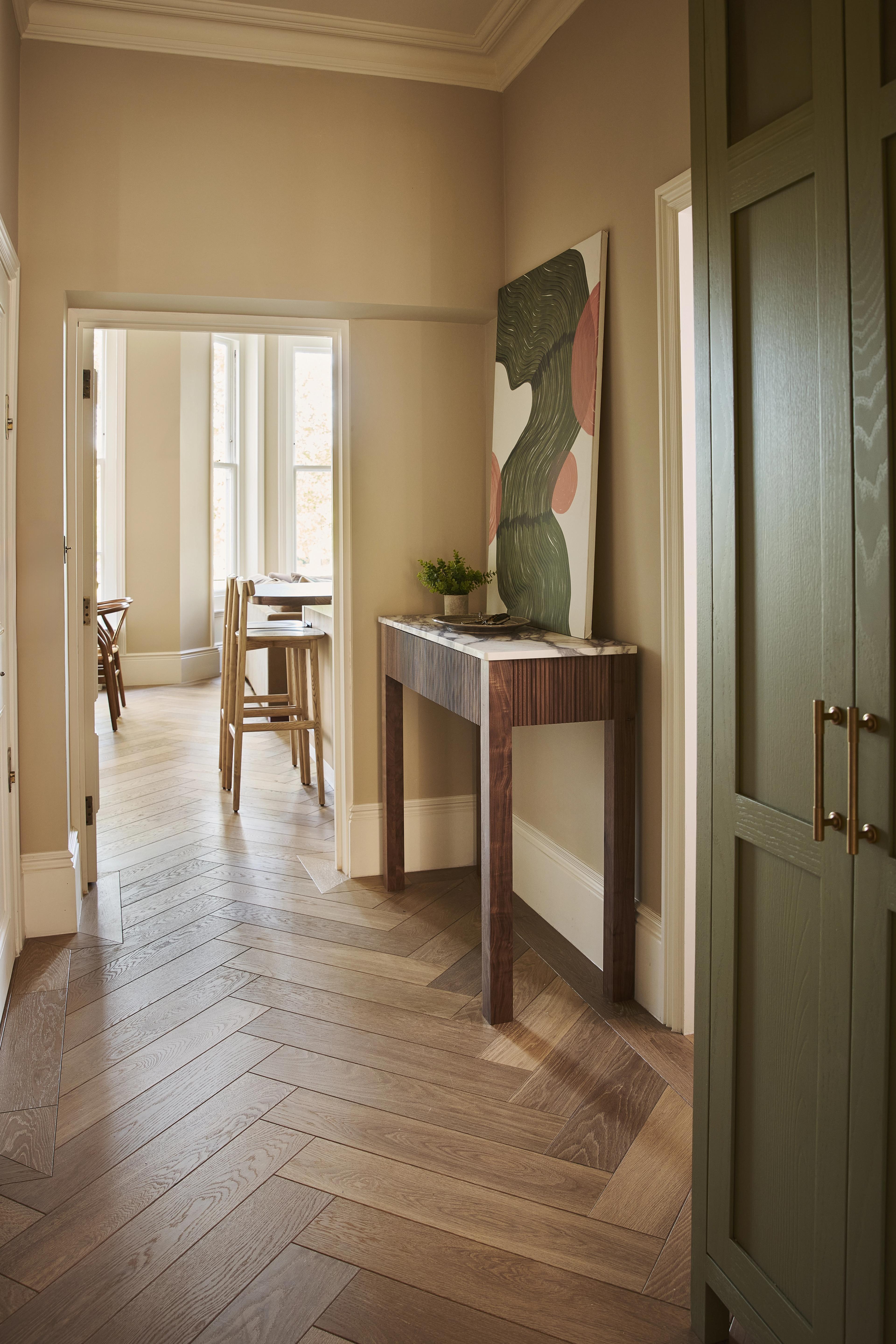
Another view of Old Chelsea and its herringbone oak floor by Waxed Floors.
Should a kitchen floor be sealed, and how?
Yes, but the type of seal matters immensely. I'm sure everyone has seen heavily varnished oak floors that look like laminate. If the floor is sealed with a plastic-like coating, you can't appreciate the natural material.
Most lacquers and surface coatings also start to deteriorate once the finish is lightly damaged by something sharp. Moisture gets underneath and the finish cracks, and soon you need to sand and refinish the whole floor.
A natural oil finish is very easy to maintain. If you scratch or stain an oiled floor, you can spot-repair the affected board without touching the rest of the room.
For clients in flats, how good is soundproofing now? What goes underneath, and what should people check before they start?
A common misconception is that a floor floating over underlay gives effective sound insulation. In truth, a floating floor moves up and down when you walk on it, and that movement makes enough noise to make the underlay ineffective.
The best system is a heavy, dense underlay bonded to the subfloor, with the timber floor then bonded to the underlay. The underlay is a composite of cork and rubber, available from 3mm to 10mm thick. I recommend the 5mm version, which becomes almost a 10mm sound-insulating layer once installed, because of the two adhesive lines of 2 to 3mm each. The adhesive stays permanently flexible, which improves the insulation further.
If you live in a flat, always check your lease and talk to the building management if there is one. Many blocks need proof of a specific decibel (dB) reduction before they approve wood flooring. In that case it is best to bring in a firm specialising in acoustic insulation to write a report and recommend a system that meets the requirements.
How should a timber kitchen floor be cleaned day to day?
Day-to-day care is very simple. Use a soft broom, or a vacuum with the hard-floor brush down, to remove dust and grit. Never use a soaking wet mop, a steam cleaner or harsh household detergents such as bleach or washing-up liquid, which strip the oil finish. Use a damp, tightly wrung-out microfibre mop with a soap made for oiled floors. The soap cleans and maintains, leaving a very thin protective layer of wax behind.
What about spills and wear? How do you maintain it over the years?
People worry about kitchens, but timber is very resilient. If you spill water, wine or oil, just wipe it up within a reasonable time. Because our floors are finished with natural oils, they develop a patina over time rather than looking damaged. If a busy area, like the spot in front of the sink or the cooker, starts to look a little dry or worn after a few years, you don't need to move furniture or sand the room. Simply re-oil that area more often.
Read more about Old Chelsea and Highgate here, or see the floor for yourself in our Chelsea showroom. You can see more of Christof's floors on the Waxed Floors website and on Instagram.
Request a Brochure
To receive a digital copy of our brochure and regular updates from us, please complete your details below.