No products match your search.
Timber is back. For Naked, it never went away
Written by Andrew Nixon
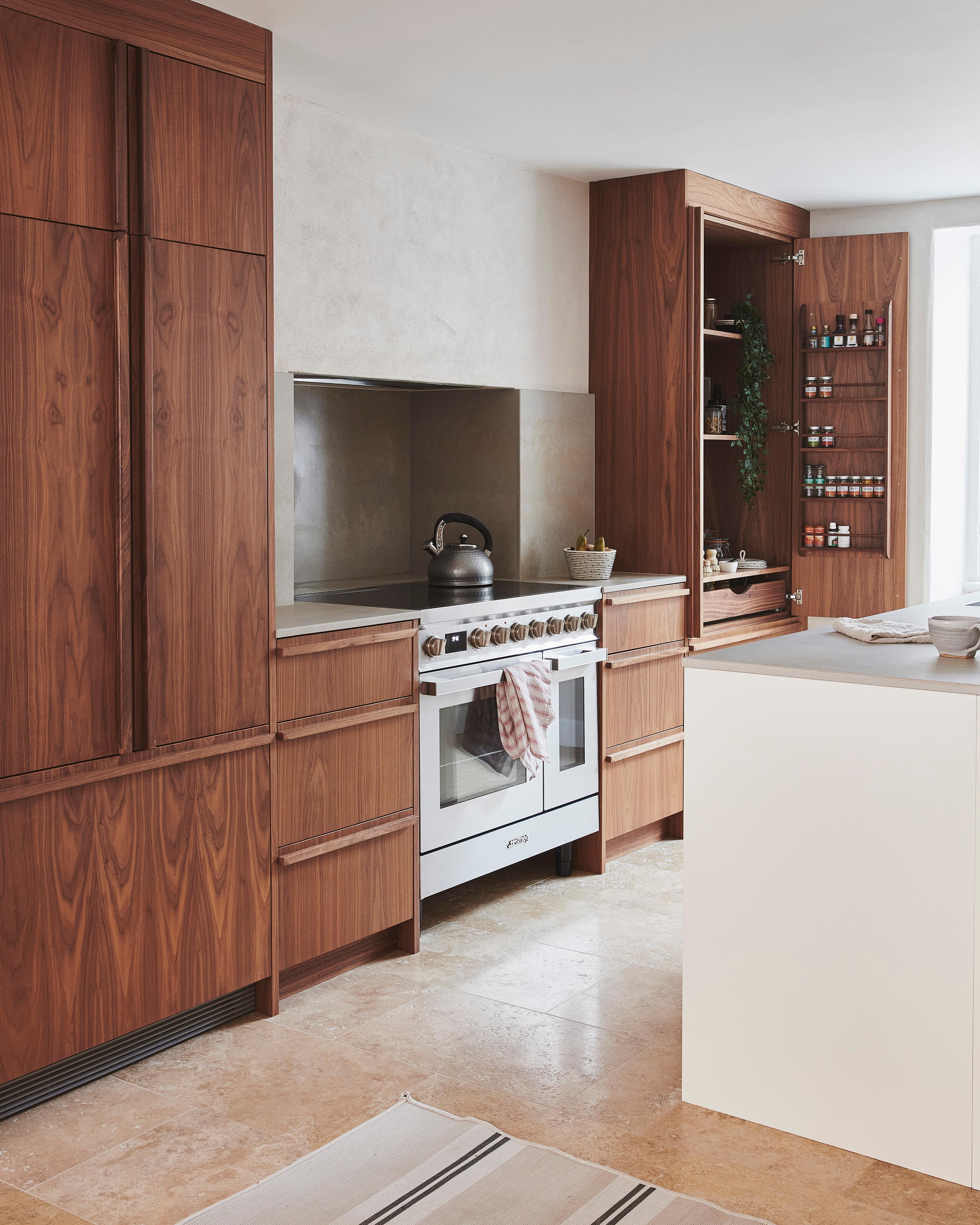
After years of smooth, cool and rather anonymous kitchen surfaces, timber is enjoying a return to favour. At Naked, we are delighted, if slightly amused. Because our love of oak, walnut and all things wooden goes back to the very beginning…
Timber is having a bit of a moment… After years in which kitchens became smoother, flatter and cooler, people are rediscovering grain, warmth, texture and the simple pleasure of a material that looks and feels natural.
We are very pleased about this, naturally. Though it is slightly strange to hear timber described as a new kitchen trend, as though somebody has only recently invented trees.
For Naked, timber is the material our business grew from, one we have spent years cutting, joining, shaping, staining, lacquering, veneering and generally getting to know.
As our Head of Design Jayne Everett puts it: “We are experts in timbers. All things timber for Naked!”
It all started with hardwoods
Long before there was a Naked Kitchens showroom, a collection of house colours or an enormous workshop in a former RAF hangar, there was an oak worktop.
When Jamie and Jayne Everett moved to Norfolk in the early 2000s, they wanted a kitchen that could cope with life with three young children, without compromising on how it looked. Unable to find what they wanted at the right price, they began making their own oak kitchen worktops and tables.
That experiment with hardwood became the beginning of Naked Kitchens. The business has grown considerably since then, but timber is still running through it: in the cabinetry, worktops, shelves, drawer boxes, islands, dressers, butcher’s blocks and small details made in our Norfolk workshop.
At heart, we are joiners and cabinetmakers. We simply happen to make kitchens.
That’s important because there is a difference between offering timber and understanding what it can do.
A timber kitchen is not a colourway
The phrase timber kitchen can suggest one recognisable look: perhaps pale oak cabinets, a few neutral surfaces, something vaguely Scandinavian.
But timber can’t be pigeonholed like that - it has infinite variety. It can be light, dark, crisp, rustic, architectural, decorative, traditional or extremely modern. It can form the whole kitchen or appear in one carefully chosen place; be in the background or take centre stage.
Even the same species can create completely different effects depending on how it is cut, arranged and finished.
Leave walnut relatively natural and its varied grain has a softer, lighter character than many people expect. In the Grosvenor kitchen (top), natural walnut gives clean slab doors a warm mid-century feeling, while in Coleridge (below) it sits alongside Mussel and Asparagus paint colours and the extravagant veining of Fior di Viola stone. The timber holds its own among all that colour and pattern, while giving the room something calmer to rest upon.
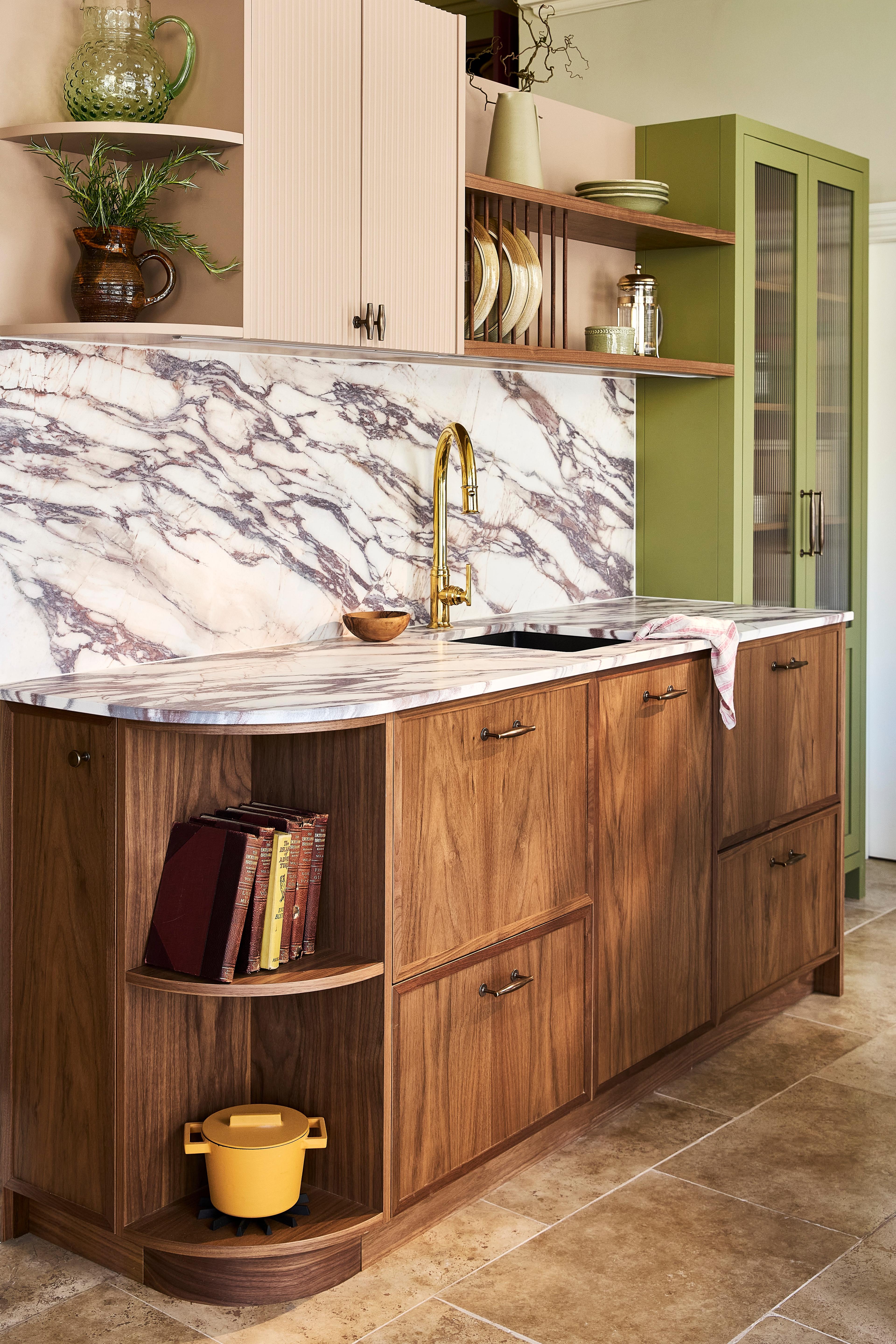
Walnut veneer in the Coleridge kitchen
Darkened oak becomes something else again. In kitchens such as Camden (below) and Pimlico, stained oak feels sleek and architectural, with the grain creating rhythm across long runs of modern cabinetry. It has all the visual composure of a minimal kitchen, but there is still something recognisably natural beneath the clean lines.
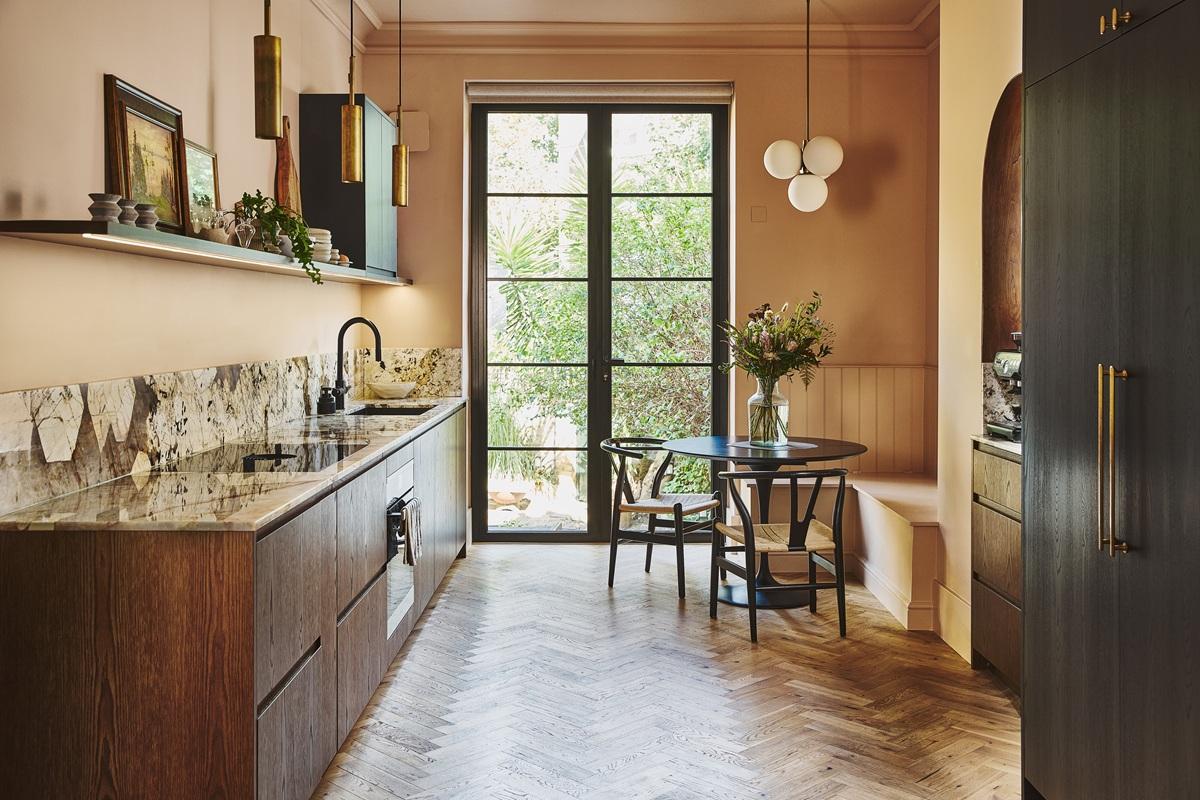
Dark stained oak in the Camden kitchen
Oak: the great all-rounder
Oak has a reassuring familiarity. We have lived with it for centuries, in buildings, floors, furniture and kitchens, and perhaps that is why it settles so comfortably into a home.
Yet familiar does not mean predictable: natural oak can bring warmth to a painted kitchen, while a limed finish pulls pale tones into the grain and gives it a lighter, more textured appearance. A dark stain creates depth and can be used across every cabinet front, inside a larder, on an island, as a worktop or simply as a shelf running through a painted scheme.
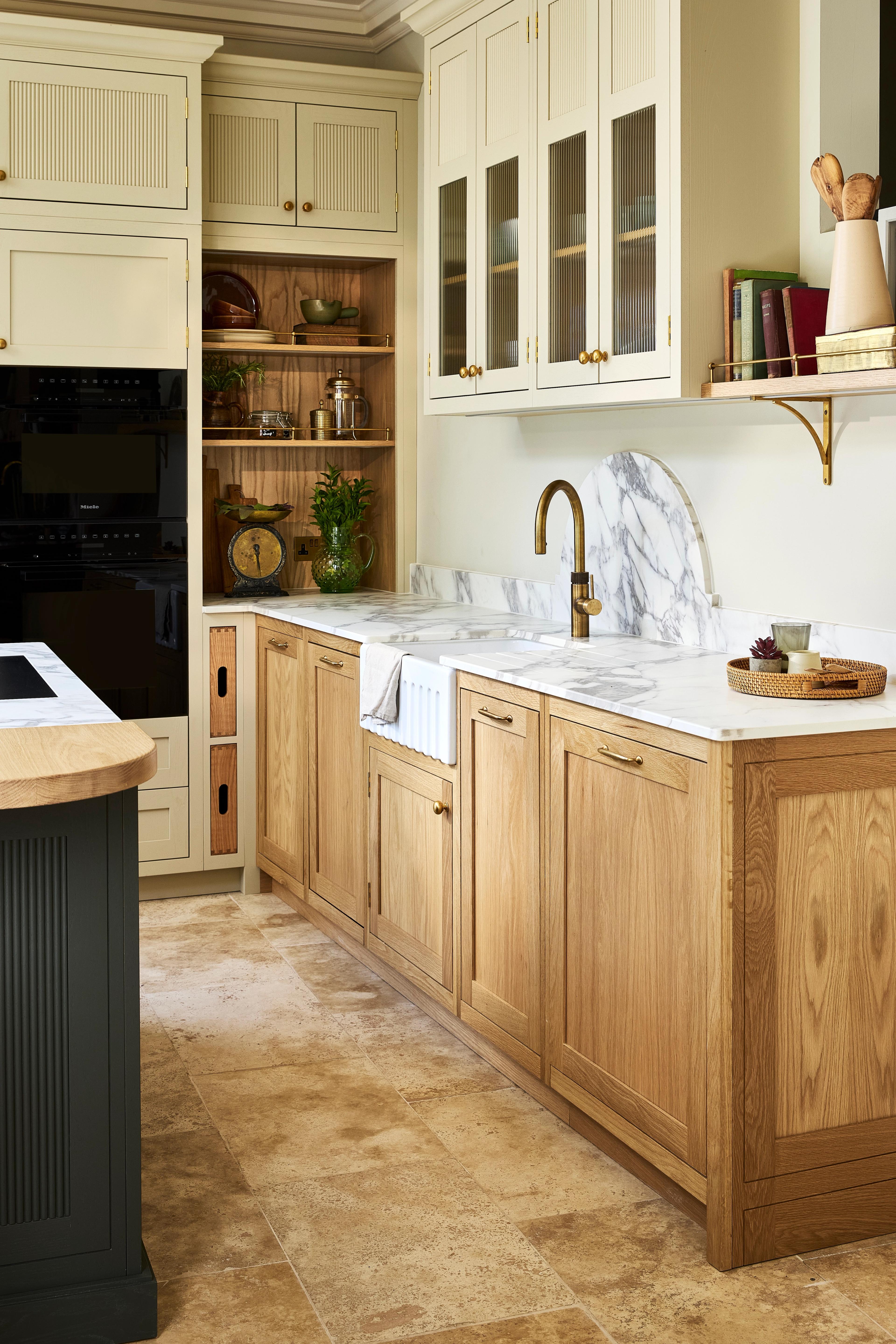
Oak plays many roles in the Wimpole kitchen
In Wimpole (above), oak appears inside and outside the cabinetry, across Shaker fronts and in the worktop of the central island. Reeded oak sections introduce lines, shadow and texture, breaking up the height of the tall cupboards. It is still recognisably a classic kitchen, but the timber details stop it becoming too well behaved.
Oak is also found in one of the less immediately visible parts of every Naked kitchen: our solid oak drawer boxes.
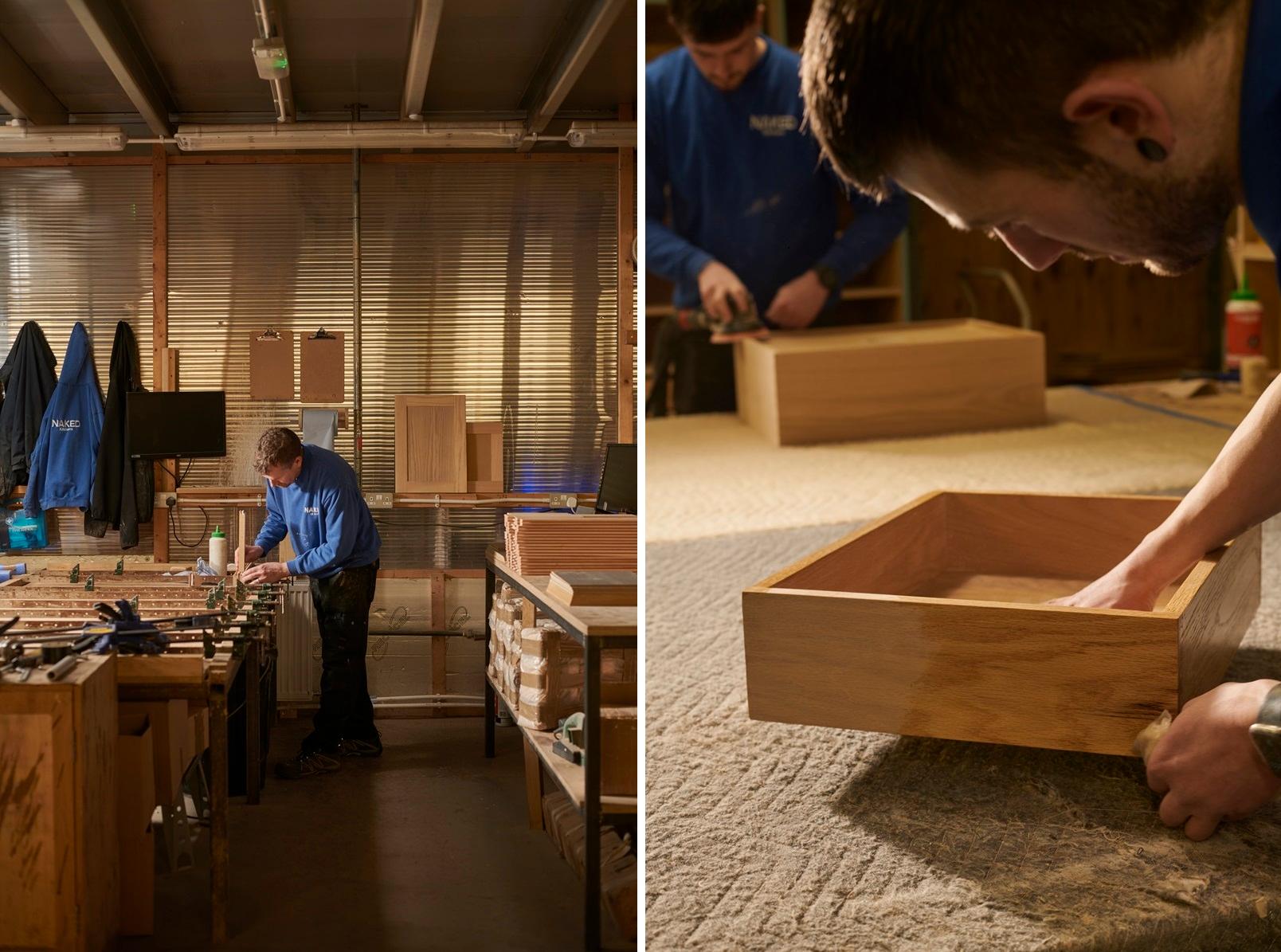
The timber arrives at our workshop as rough-sawn boards before being planed, sized, moulded, sanded, finished and made into precise drawer components. The dovetailed pieces are assembled by hand, bringing modern machinery and traditional judgement together in something that may spend most of its life hidden behind a door.
That is timber expertise too: knowing how to turn a rough board into a drawer that will be opened thousands of times.
The interesting bits are sometimes at the edges…
Working confidently with timber also means looking beyond conventional cabinet fronts.
End grain, for example, reveals the cross-section of the timber rather than the familiar long sweep of the grain. The pattern is tighter, more graphic and full of natural variation. Used in a prep surface or butcher’s block, it introduces a solid, purposeful detail that feels as if it belongs in a proper working kitchen.
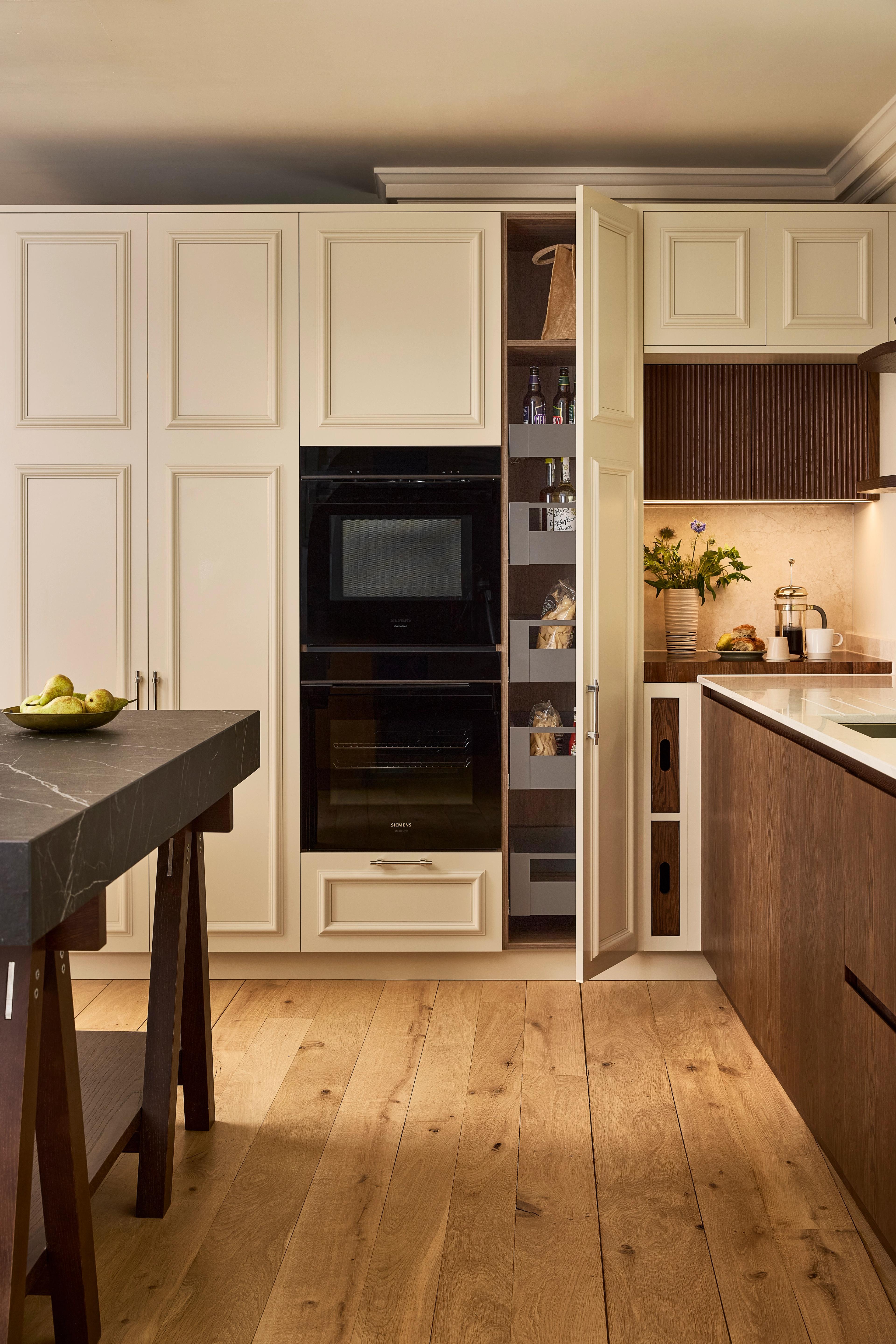
The Midsummer kitchen (above) includes an oiled walnut end-grain inset beside its lighter stone surfaces. It is tactile, practical and pleasingly substantial: a relatively small area of timber that changes the character of the whole run. Elsewhere in the same kitchen, dark-stained oak fronts and walnut interiors show how several expressions of timber can sit together without the scheme feeling busy.
.
The advantage of having our own workshop
One of the advantages of having our own workshop is that the design does not have to stop at the limits of somebody else’s catalogue.
We can test an idea, alter a profile, adjust the grain direction, develop a stain, make an unusual worktop or work out how a particular timber detail should meet the cabinetry around it. The designers and makers can solve the problem together because they are part of the same team.
Our workshop combines highly accurate modern machinery with the judgement of skilled people. Precision matters enormously when cabinetry has to fit perfectly, but timber also requires experience; learning how to work with its character takes time.
Made for a long life
Perhaps the renewed enthusiasm for timber reflects a wider change in what people want from their homes.
A flawless surface can look impressive on the day it is installed, but timber offers something more enduring. It may mellow, deepen or pick up the odd mark, but those changes become part of the room rather than evidence that it needs replacing.
Good timber can also be maintained, repaired and refinished. It belongs to the world of things worth looking after.
That’s part of what we mean by Built for Life. A kitchen should be strong enough to withstand life, beautiful enough to keep loving and made from materials that gain character through being lived with.
So yes, timber is the talk of the town again… But at Naked, the conversation never really stopped. It began with oak worktops and tables in Norfolk more than two decades ago, and it continues every day in our workshop. It’s part of who we are.
Request a Brochure
To receive a digital copy of our brochure and regular updates from us, please complete your details below.