No products match your search.
The little threads that hold a kitchen together
Written by Andrew Nixon
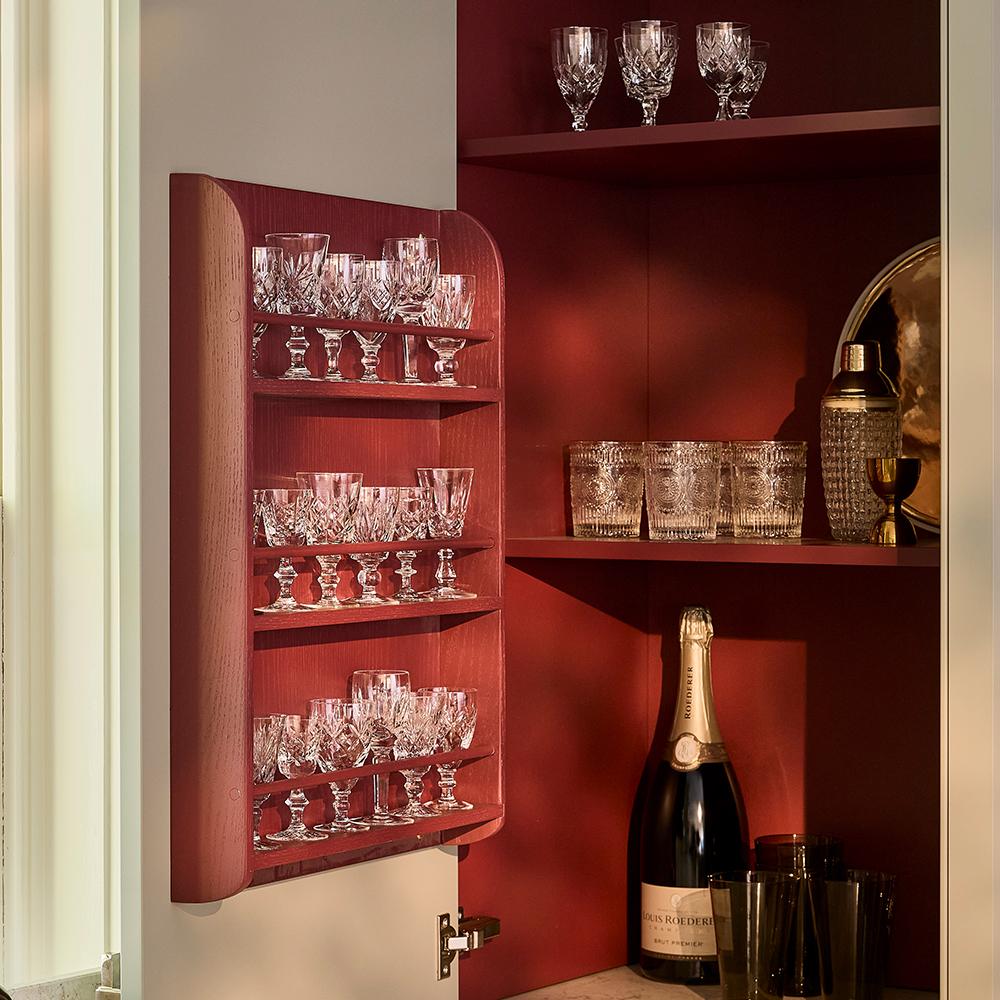
A kitchen can contain different colours, materials, pieces and ideas while still feeling as though everything belongs together. Often, the secret lies in the small details that pass from one part of the room to another.
Some kitchens have an obvious idea holding them together. The cabinetry is all one colour, the same material is used throughout and everything clearly belongs to the same family.
Others are harder to explain.
They might bring together painted and timber cabinetry, freestanding and fitted furniture, changing worktops and appliances with a character of their own. Yet the room still feels coherent. Your eye moves easily through it. Nothing seems to have wandered in from another kitchen.
Naked’s Head of Design, Jayne Everett, talks about the “little threads” that hold a design together.
They might be a colour that reappears across the room, a timber stain picked up by an appliance, or a line that continues from a fitted run into a freestanding piece. Sometimes the connection is as small as a worktop detail or a section of reeded timber appearing in two different places.
Without shouting for attention, these details help everything belong together.
A kitchen does not have to match
Once you allow an island to differ from the cabinets around the walls, introduce a freestanding dresser or mix painted finishes with timber, a kitchen starts to gain character. It can feel as though it has come together naturally rather than arriving as one big block of matching furniture.
The trick is to give that variety a few connections.
That is especially useful in a bespoke kitchen, where you are free to change colour, material, size or proportion from one part of the room to another. The little threads stop that freedom from becoming muddle.
Let a colour travel
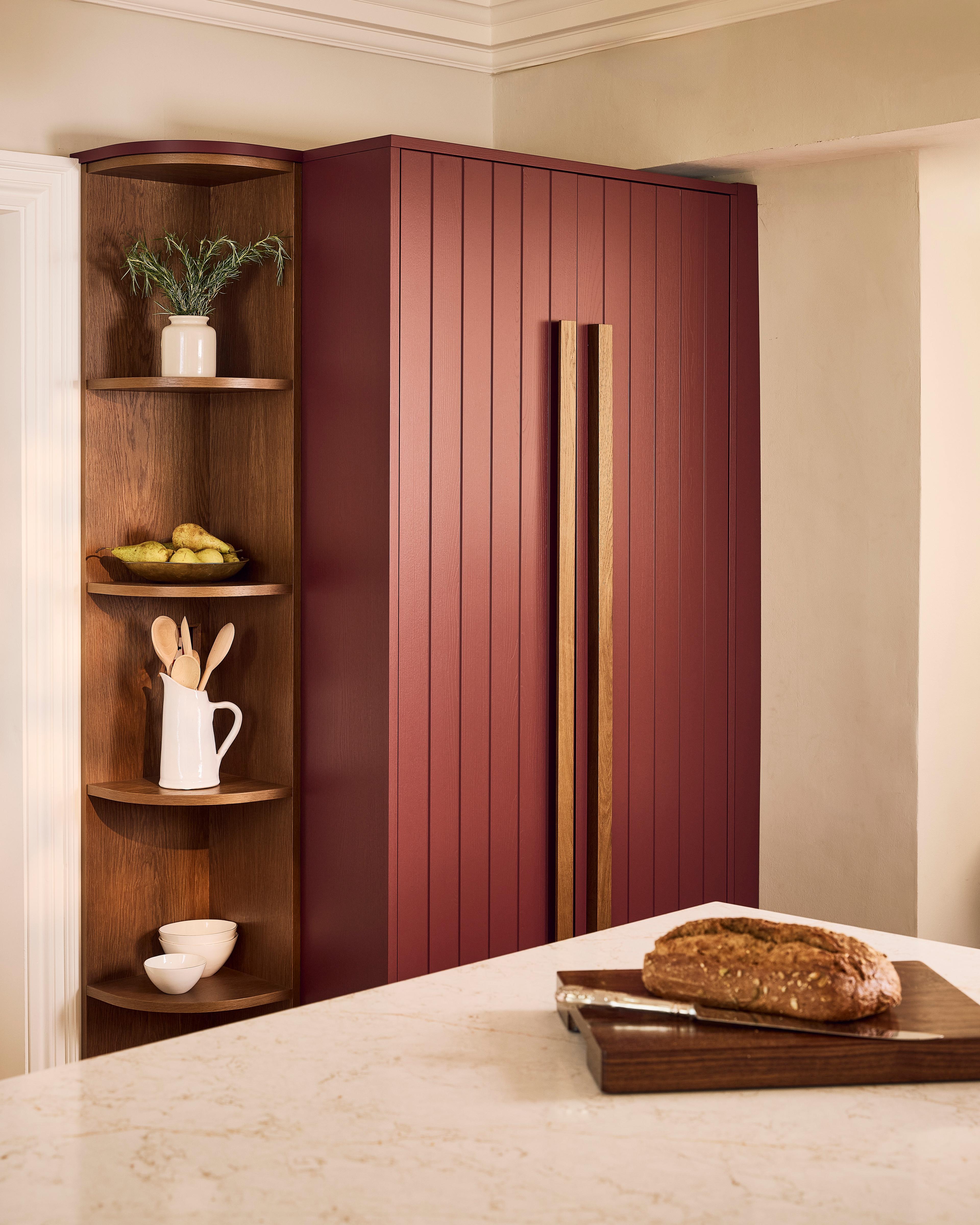
Above and top - Sharrington Red ties together different areas of the Madingley kitchen
In the Madingley kitchen, Sharrington Red appears in several different places.
It is used on the bookcase, corner cabinet and larder, moving through the room rather than being concentrated in one big statement. Each appearance helps the others make sense. One red piece might feel separate; repeated around the room, the colour becomes part of the kitchen.
The rest of the cabinetry uses different shades of green rather than one uniform colour. This gives the individual pieces their own character, while the flashes of red help tie things together.
This can work particularly well with stronger colours. You do not necessarily need a whole wall of red cabinetry. A colour might appear inside a glazed cupboard, on a dresser across the room or on a tall cabinet at the end of a run. The eye spots it once, then recognises it again.
Connect materials without using them everywhere
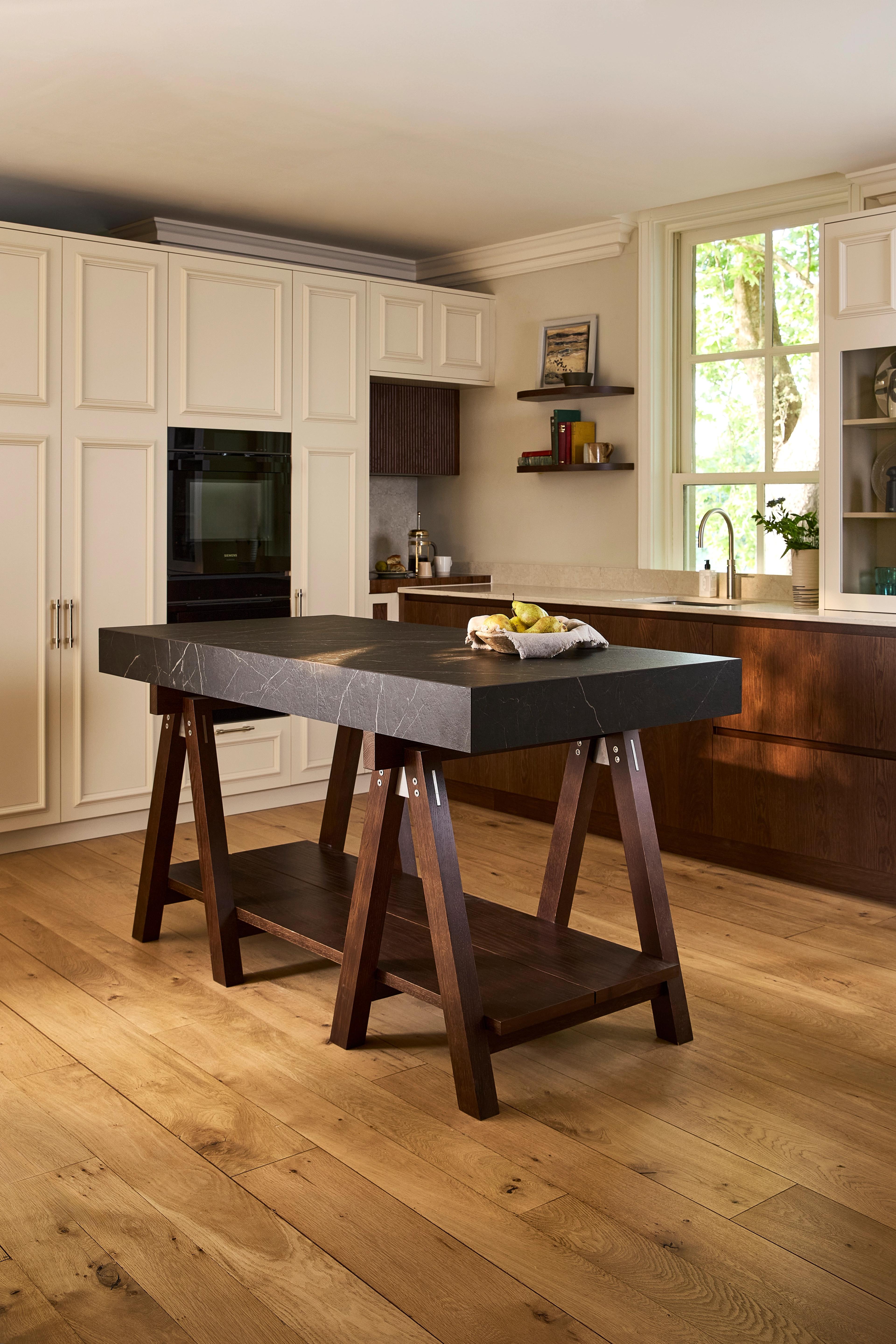
Dark timber tones in the Midsummer kitchen
Timber can do the same job because its grain and warmth are easy to recognise even when it is used in different ways.
In Midsummer, the darker stained oak of the island is picked up by other deep tones in the cabinetry and appliances. The island has plenty of character of its own, but it still feels part of the wider room.
Stone and worktops can create similar links. A material might continue up a splashback, reappear on a dresser or crop up again on part of the island. Even using the same worktop thickness or edge detail in different places can help connect them.
A few echoes are often enough.
Let the appliances join in
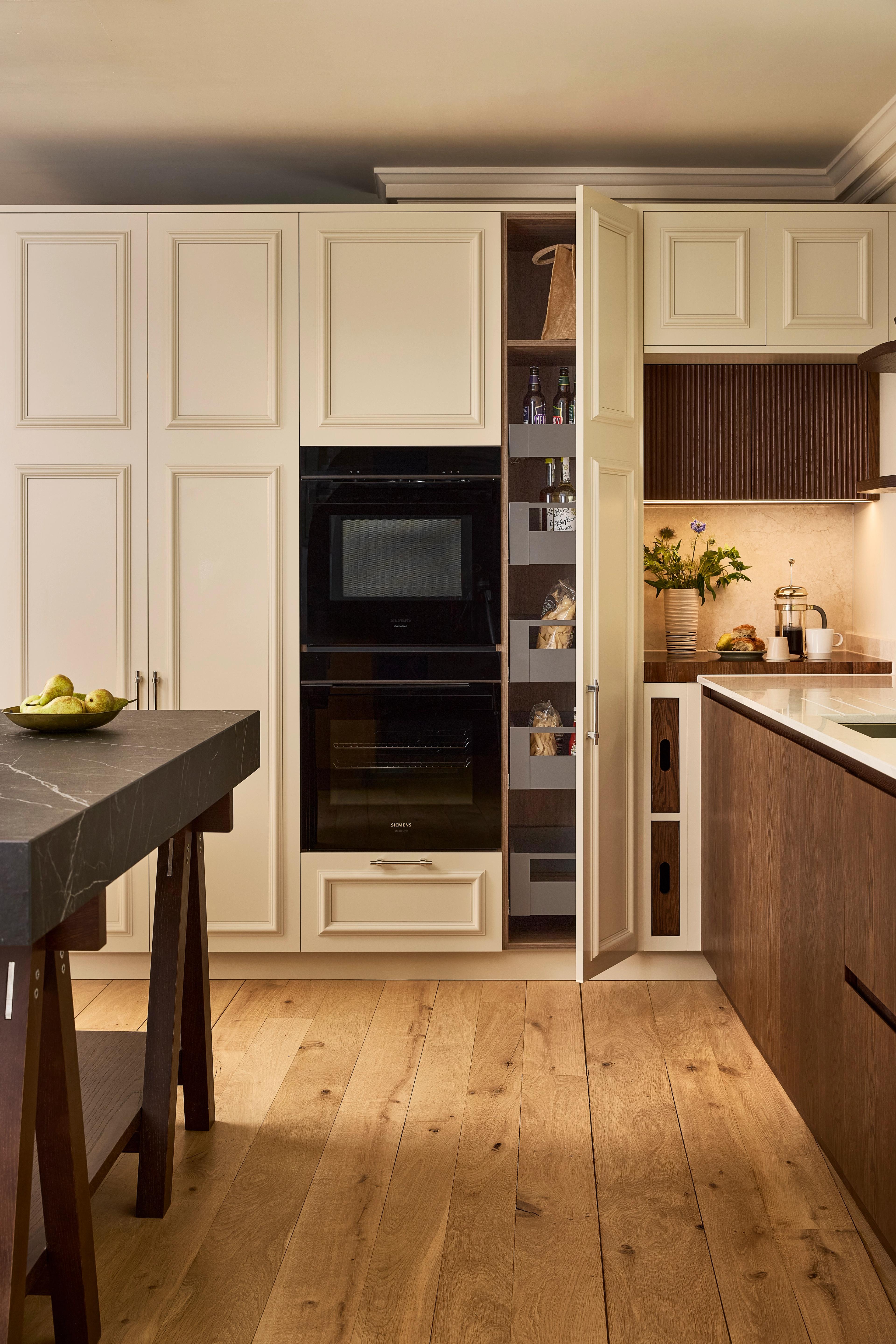
Dark appliances sit naturally in the Midsummer kitchen
Appliances can easily feel like interruptions: big rectangles of glass, steel or black sitting among all the cabinetry.
They work much better when their colour and finish are thought about as part of the kitchen from the start.
Again in Midsummer, the dark appliances sit naturally alongside the stained oak, deeper cabinetry and stone. Their colour appears elsewhere in the room, so they feel part of it.
In another kitchen, stainless steel might connect with handles or taps. A range cooker could pick up the colour of an island. Brass might appear in lighting, handles and a boiling-water tap.
The point is simply that appliances do not have to sit apart from the rest of the design.
Repeat a detail in a different way
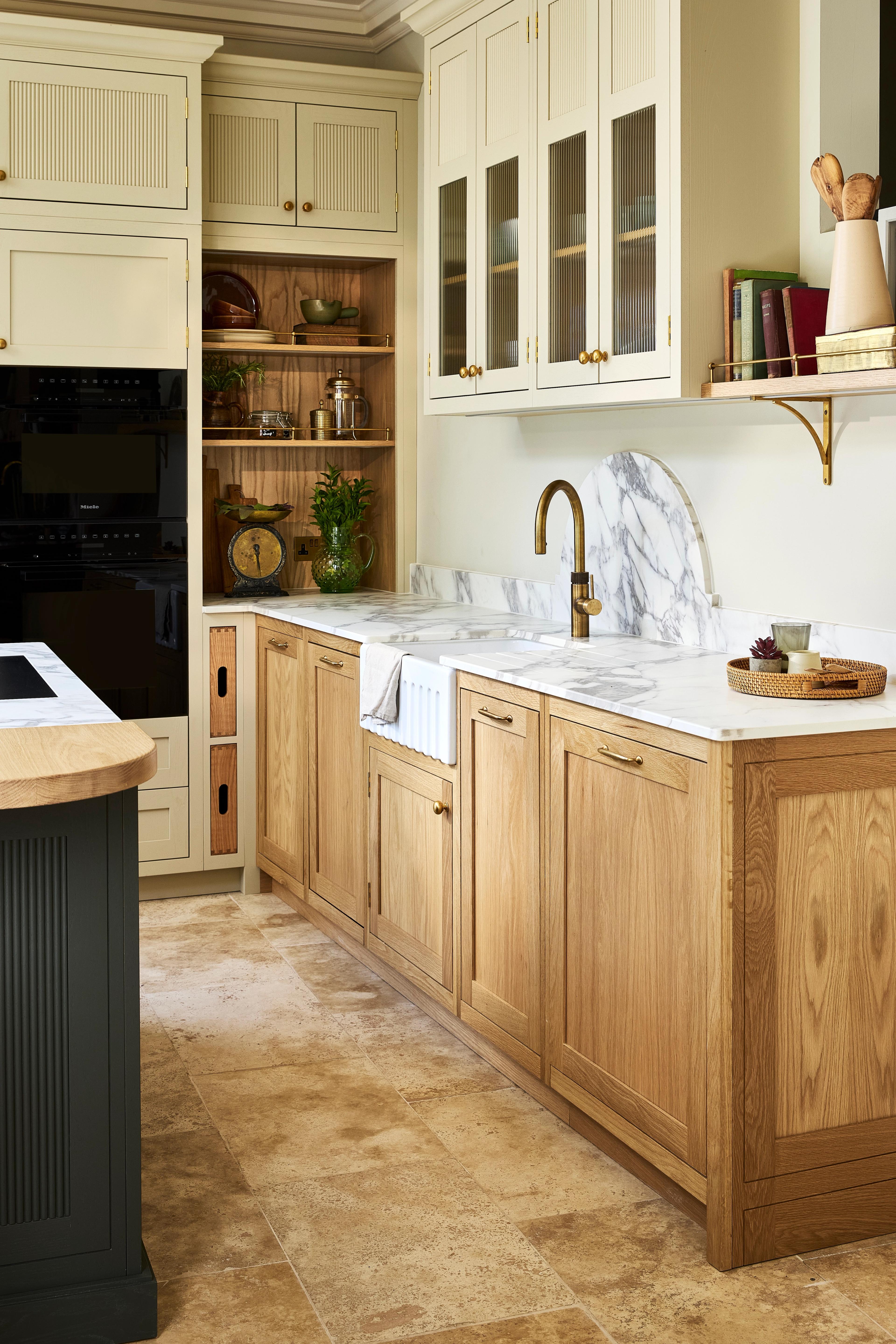
Reeded timber on the tall cabinets and island, and fluted glass, in the Wimpole kitchen
Sometimes the thread is not a colour or a material, but a particular detail.
In Wimpole, reeded timber appears high on the tall cabinetry and then again on the island. The two areas are separate and the timber is used at different scales, but the repeated texture connects them. Fluted glass in the wall cabinets continues the theme.
At the end of the sink run sits a freestanding end-grain butcher’s block. It is very clearly its own piece of furniture. But a shelf continues from the fitted cabinetry and runs across it, linking the two together.
Without that shelf, the butcher’s block might simply look as though it had been put beside the kitchen. That one continuous line helps it belong.
These connections often come down to small things: where a shelf ends, how panelling turns a corner, whether one line continues into another piece, or how the height of one cabinet relates to the next.
They may seem minor on a drawing, but you notice the difference when the kitchen is built.
Carry the thread through the house
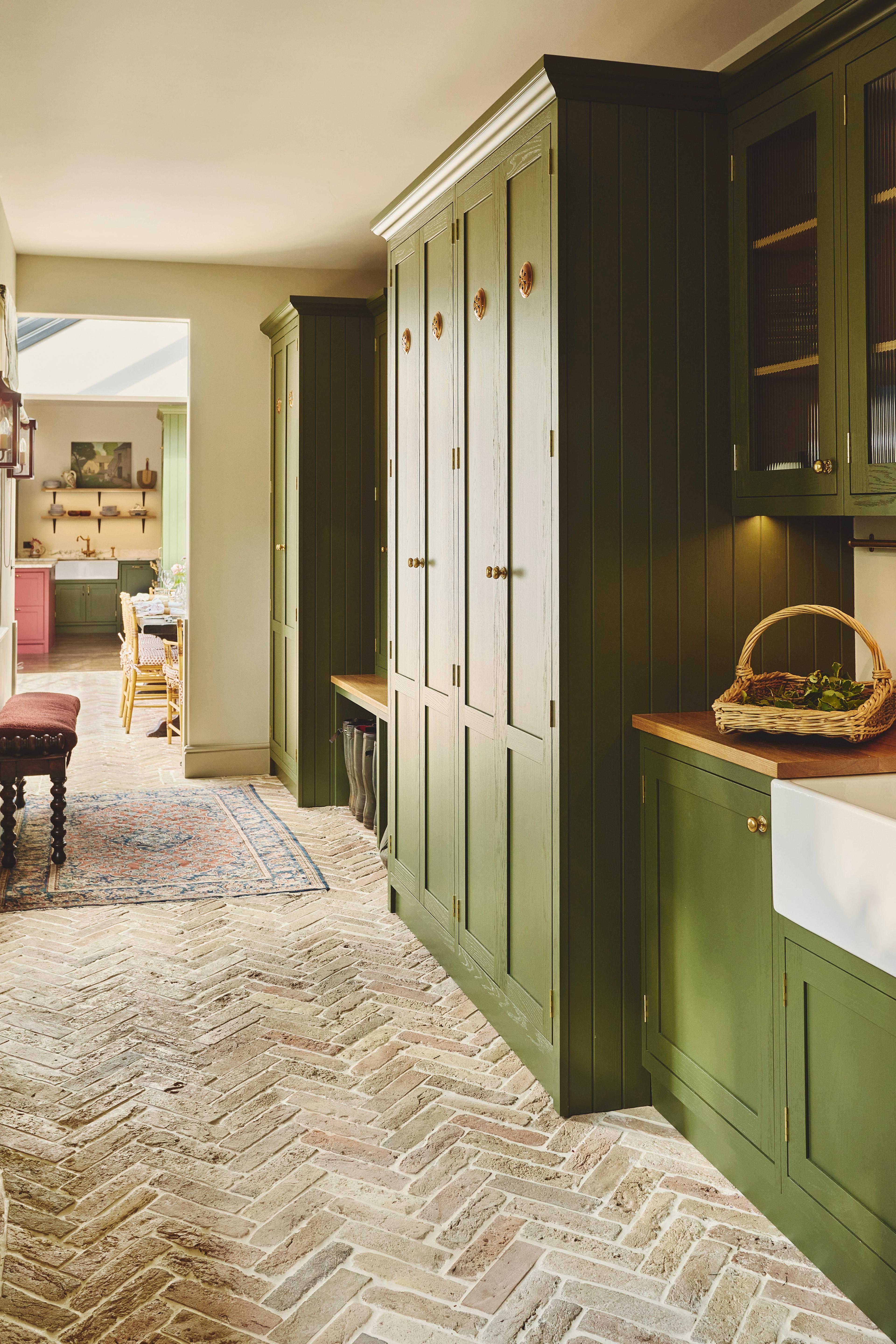
Greens run through the whole of Norton House, from the kitchen to the utility to the bedroom cabinetry
The same idea can extend beyond the kitchen. In an open-plan room, a kitchen colour might reappear on a bookcase or the timber from an island might be used for a window seat. Across a whole house, those connections can travel further.
At Norton House, bespoke cabinetry runs through the kitchen, utility, boot room and bedrooms. The rooms are not identical, but repeated greens, oak and brass help them feel related.
The kitchen itself combines two close shades of green with a pink breakfast bar and timber worktop. Elsewhere, the greens return in different ways, while oak worktops and brass fittings connect the utility back to the kitchen.
This is not about making every room match. Each space can have its own feel, while a few familiar colours and materials keep appearing along the way.
Use enough repetition, then stop
Little threads work because they remain little. Usually it is enough to choose a few connections and let them crop up naturally. One might be a colour, another might be timber, while a third could be a line, edge or handle finish. They do not all need to appear everywhere.
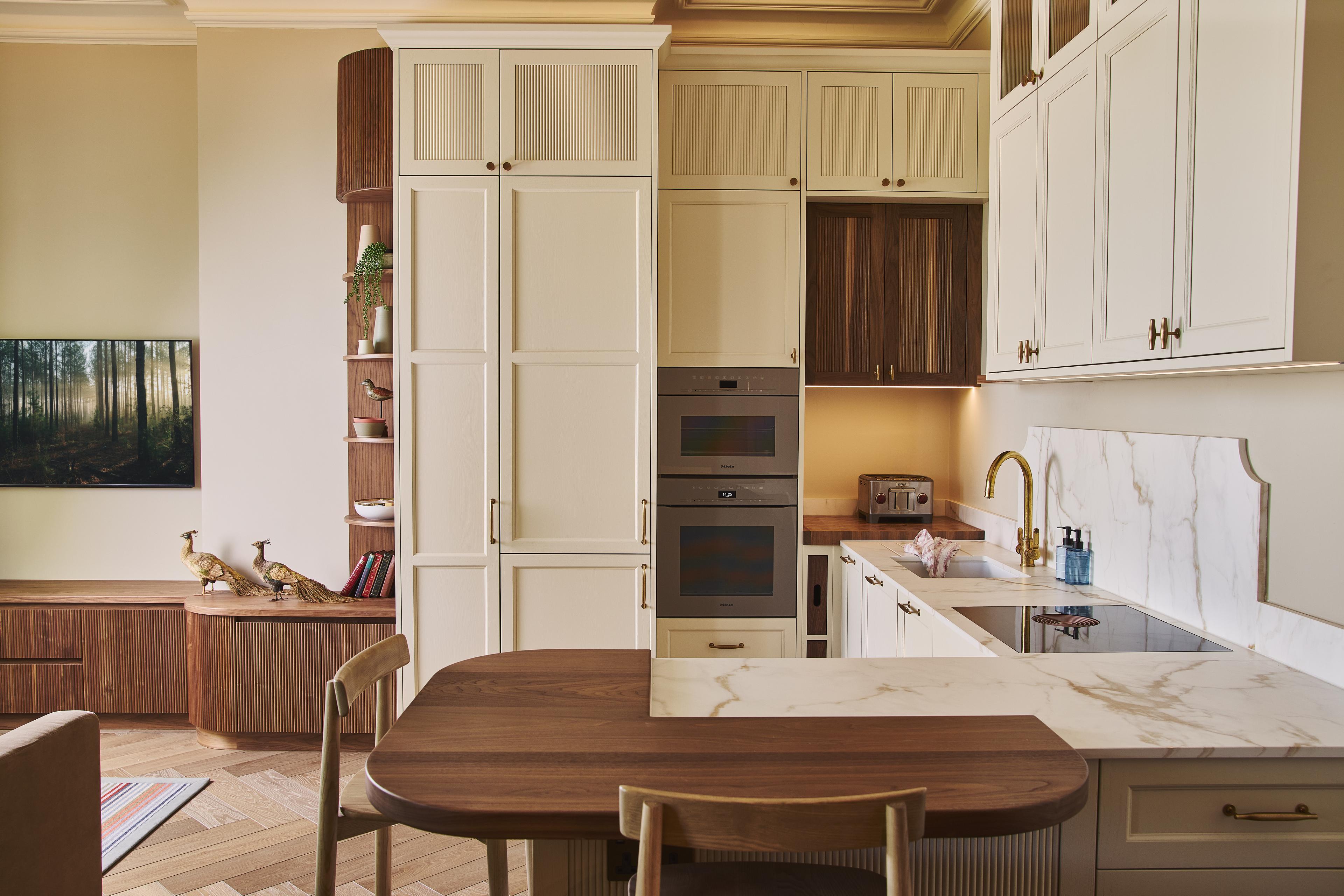
Beautifully put together: the Old Chelsea kitchen
That leaves room for variation, and for all the things that arrive once people actually start living in the kitchen. Of course, a kitchen built for life will never stay perfectly arranged. Stools move, cookbooks pile up and flowers appear on the table.
A good kitchen can take all of that: the little threads are still there underneath, holding it together.
Request a Brochure
To receive a digital copy of our brochure and regular updates from us, please complete your details below.