No products match your search.
Kitchen trends for 2027 – the year of ‘Warmth and Texture’
Written by Jade Agnew
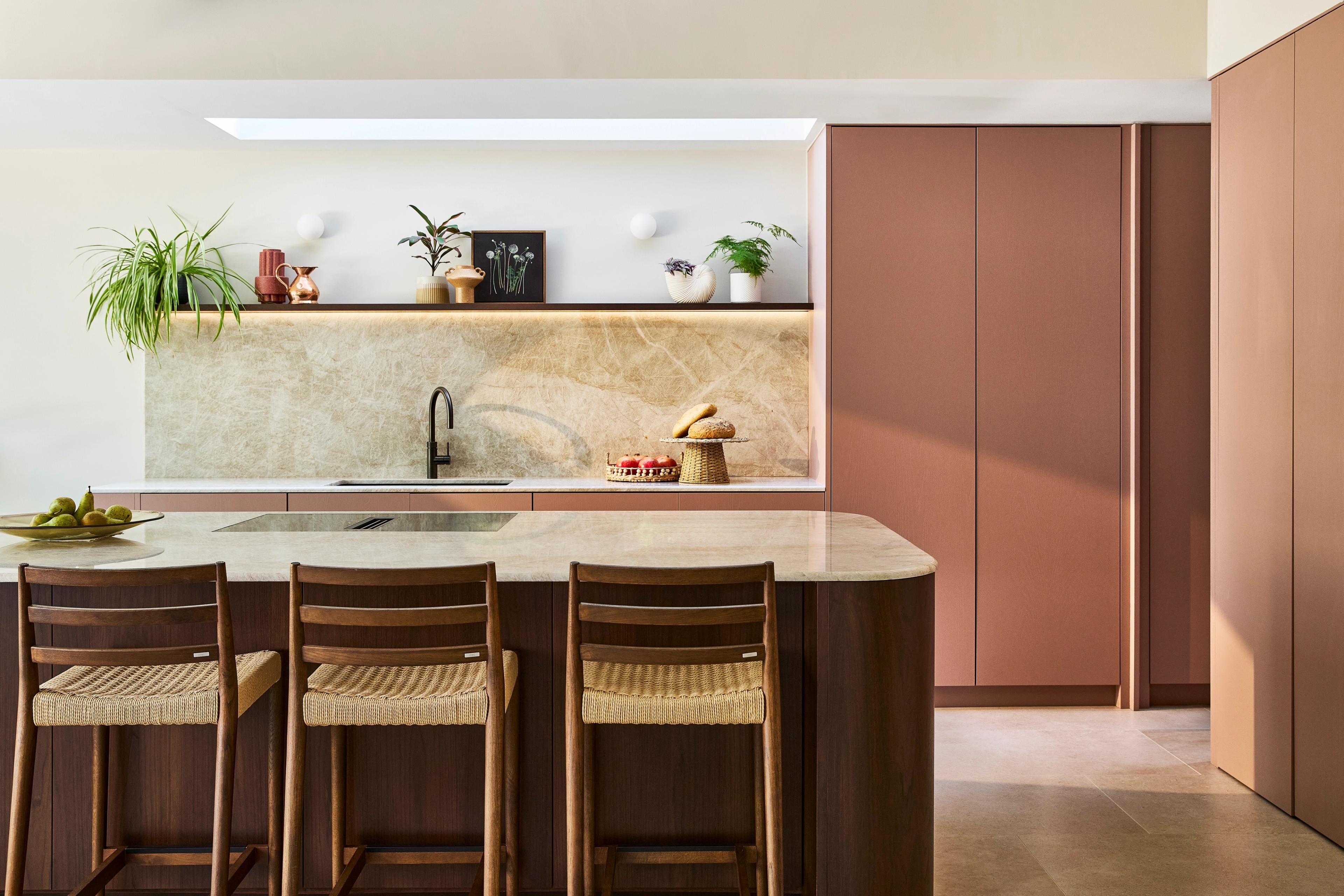
Dark stained walnut and Wild Heather cabinetry in our Grove Park kitchen: calm at first glance, rich in detail up close
Each year, kitchen design finds a new visual language. In 2026, the mood was one of restraint: composed, quietly confident spaces with a clearly defined identity. As we look to 2027, that sense of calm remains, but it is joined by a richer, more tactile sensibility. Deeper timbers, warmer colours and more expressive worktops are coming to the fore. This is the year of warmth and texture: kitchens that appear serene at first glance, then reveal their depth through beautifully considered detail.
“Stark whites and cool greys are giving way to timeless taupes, cashmere tones, earthy reds, sage greens, aubergine and burgundy,” says Jayne Everett, Creative Director. “Think rich, earthy and deeply inviting - that is where kitchen design is heading.”
These are the key directions shaping the most considered kitchens of 2027:
1. Eclectic cabinetry
Mixed styles brought together with quiet confidence
The most compelling kitchens now being designed rarely rely on one single expression of cabinetry throughout. Instead, they layer colour, stained timber, glazing and textured upper cabinets to create rooms that feel collected rather than prescribed. A painted run may sit beside richly grained timber; a glazed larder can introduce both practical storage and a moment of visual lightness.
This approach is especially successful in period homes, where a wholly uniform kitchen can feel too newly imposed. The secret lies in establishing a single unifying thread - a tone, timber, handle finish or material language - and allowing the surrounding elements to vary with intention.
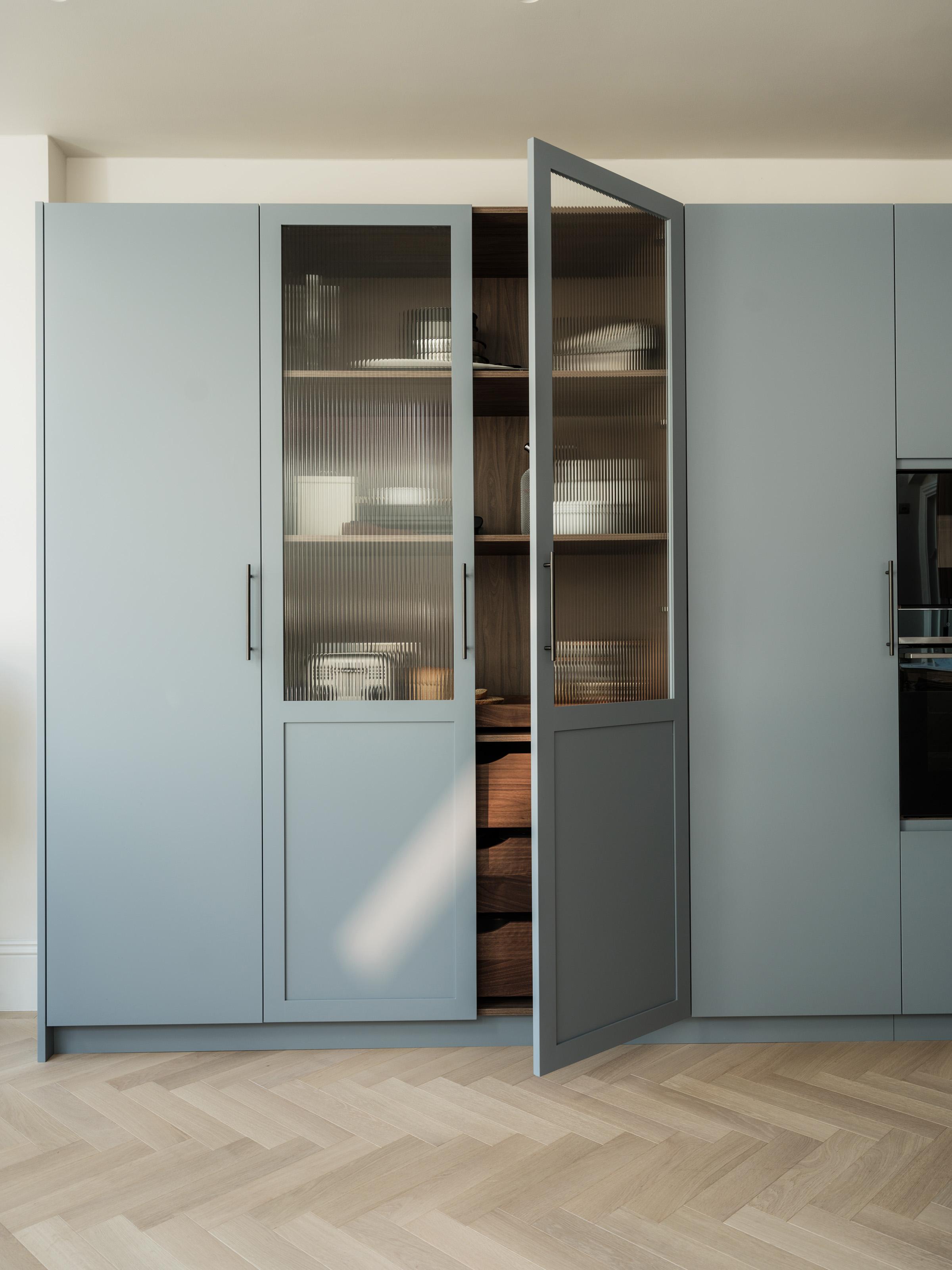
In our Maida Vale kitchen, a glazed larder brings practical storage and a moment of lightness to the First Flight cabinetry
2. Freestanding pieces
Furniture-like pieces with the ease of modern living
Freestanding pieces offer one of the most elegant expressions of this eclectic mood. A display cabinet, larder or cook’s island conceived as furniture rather than fitted joinery changes the rhythm of a room. The Harpley larder and Coleridge cook’s island are exemplary: beautifully crafted, practical and full of character.
They carry the quiet authority of heirloom pieces, with the added advantage that they can move with their owners from one home to the next.
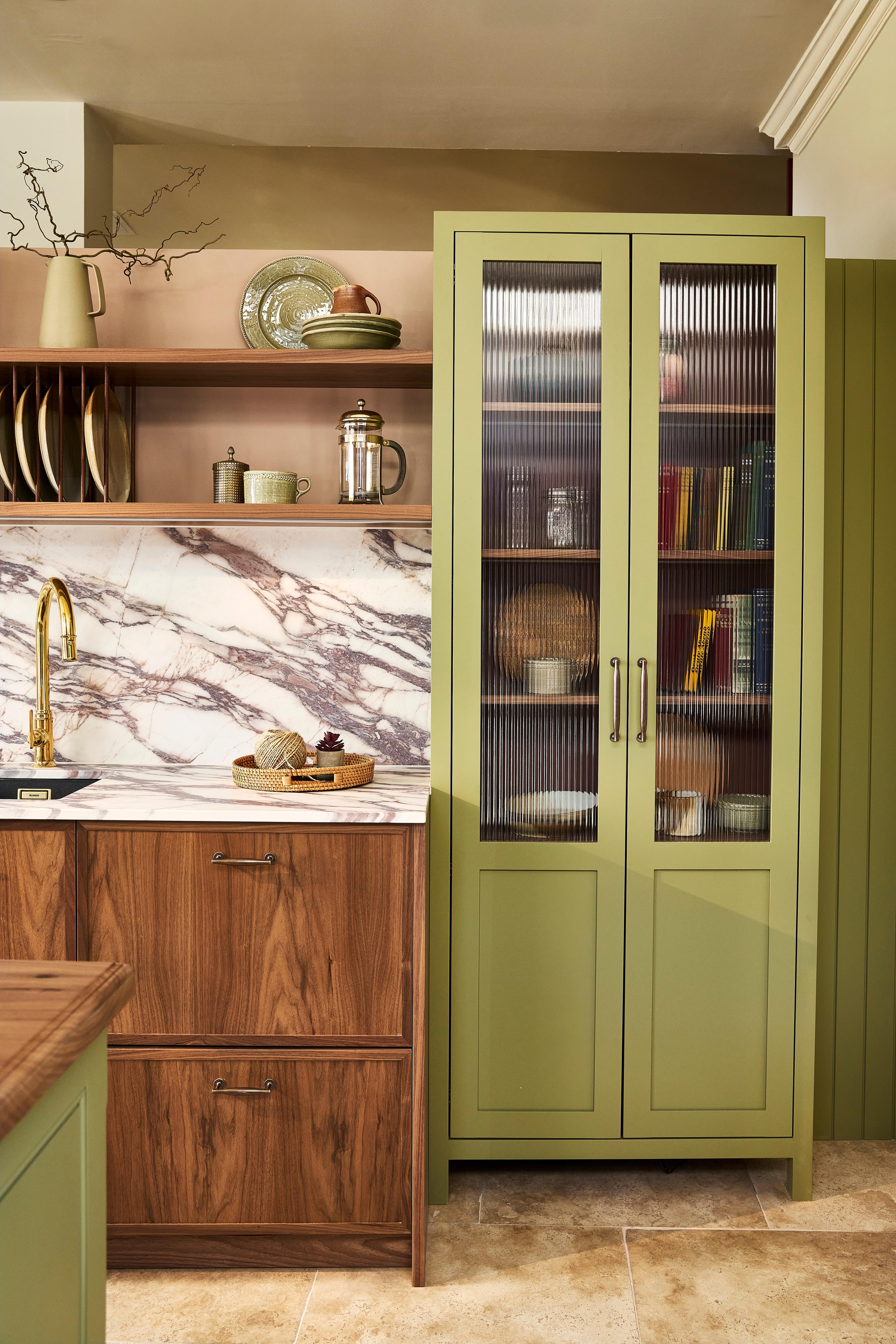
A freestanding glazed wall cabinet in our Coleridge kitchen makes room for crockery and glassware, while deeper concealed storage handles the everyday clutter
3. Timber stains
Deep, light and tonal stains that celebrate the grain
If one material direction defines 2027, it is the return of stained timber. Where 2026 embraced lighter lacquers and a more pared-back finish, the coming year looks towards deeper tones and a greater appreciation of natural grain. Timber is no longer simply a surface; it is a defining part of the room’s atmosphere.
A well-chosen stain enhances the colour of the wood and intensifies the movement within the grain. Rather than flattening the timber, it gives it depth and presence. In a beautifully stained oak door, the pattern becomes as important as the shade itself: something to be read, felt and enjoyed at close quarters.
“Sumptuous dark-stained oak really accentuates the richness of the grain,” says Jayne.
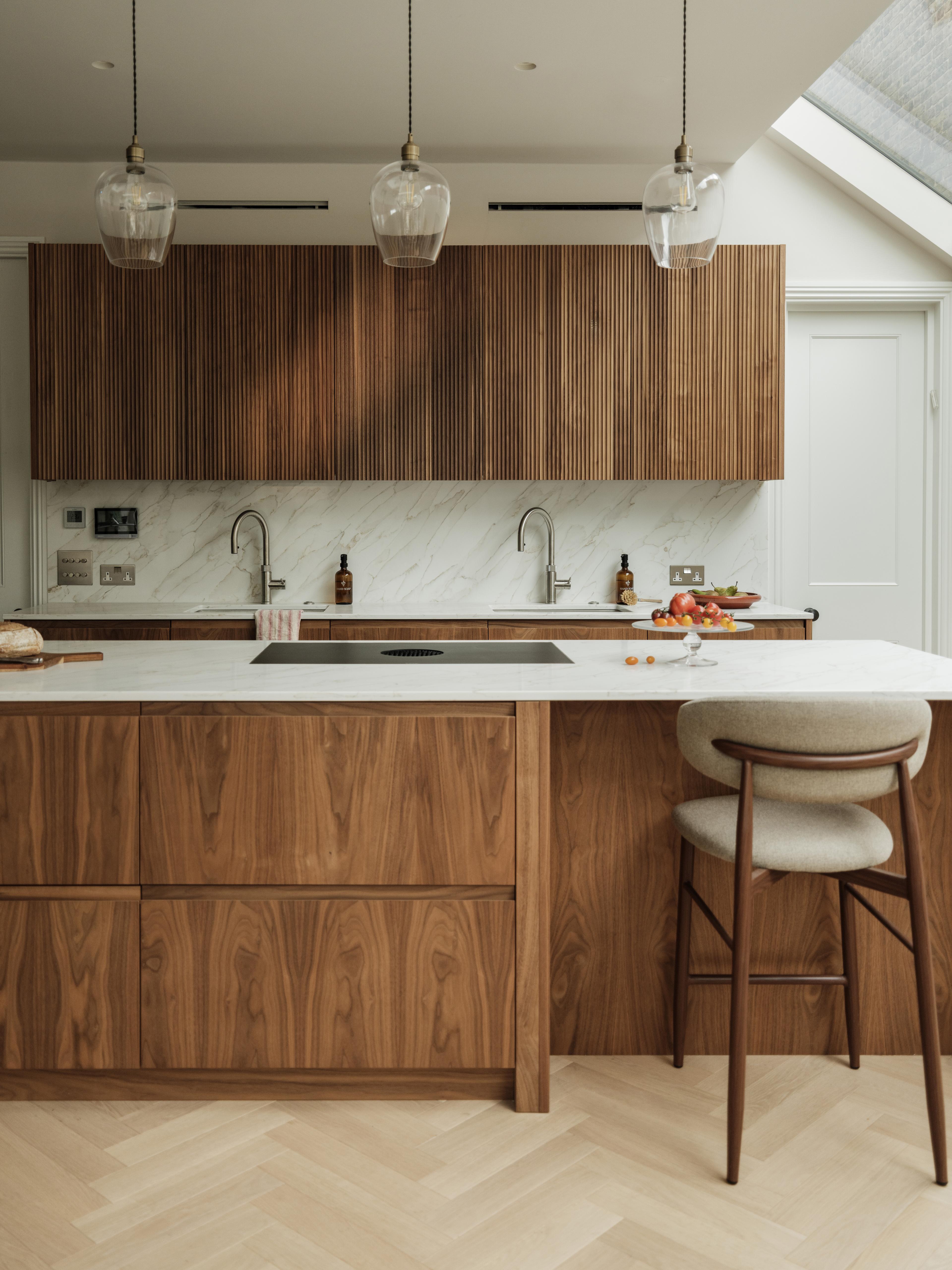
In our Maida Vale kitchen, a mix of walnut textures shows how much character the grain alone can bring
4. Combination of soft neutrals and richer colour
Taupe, cashmere, earthy reds and sage
The warm neutrals that shaped last year’s palettes remain foundational, but they are now being paired with colours of greater depth and confidence. Gentle taupes and cashmere shades provide a sophisticated backdrop, while richer tones, earthy reds, greens, aubergines and burgundies bring character and contrast. An island, larder interior or freestanding piece becomes the perfect place for a bolder gesture.
Sharrington Red and Asparagus, two new additions to the Naked Kitchens colour palette, speak beautifully to this direction, offering a grounded yet distinctive way to introduce contrast.
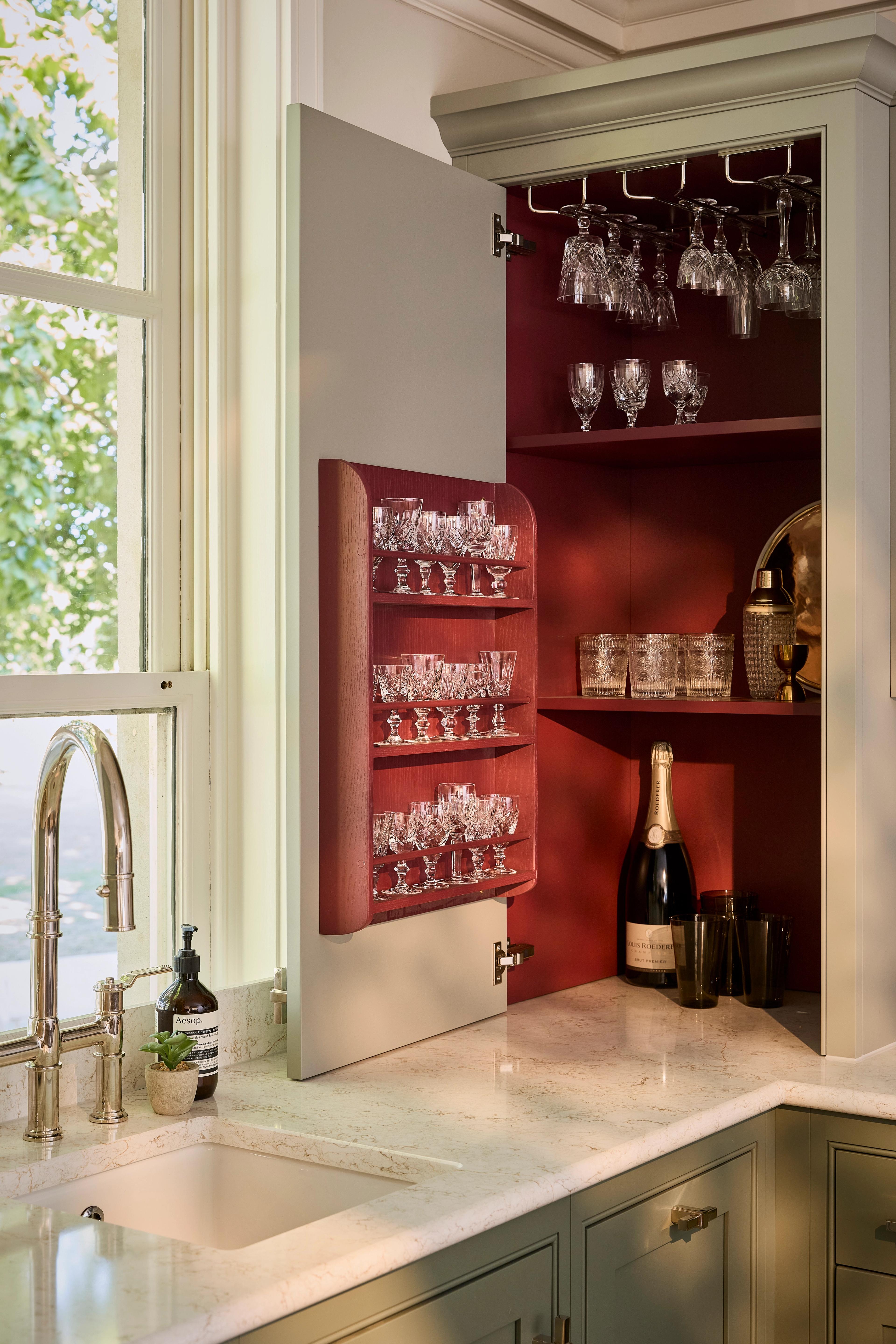
Burnham Green, Marsh Green and Sharrington Red in our Madingley kitchen, with the red kept as a considered accent
5. Layers of texture
Reeded, scalloped and everything between
Texture continues to be one of the most persuasive tools in contemporary kitchen design. Reeded panels, so prevalent through 2026, remain important, but they are now joined by scalloped finishes and softer forms. Used on island ends, cabinet fronts or feature panels, these details introduce shadow, tactility and a more sculptural quality to the room.
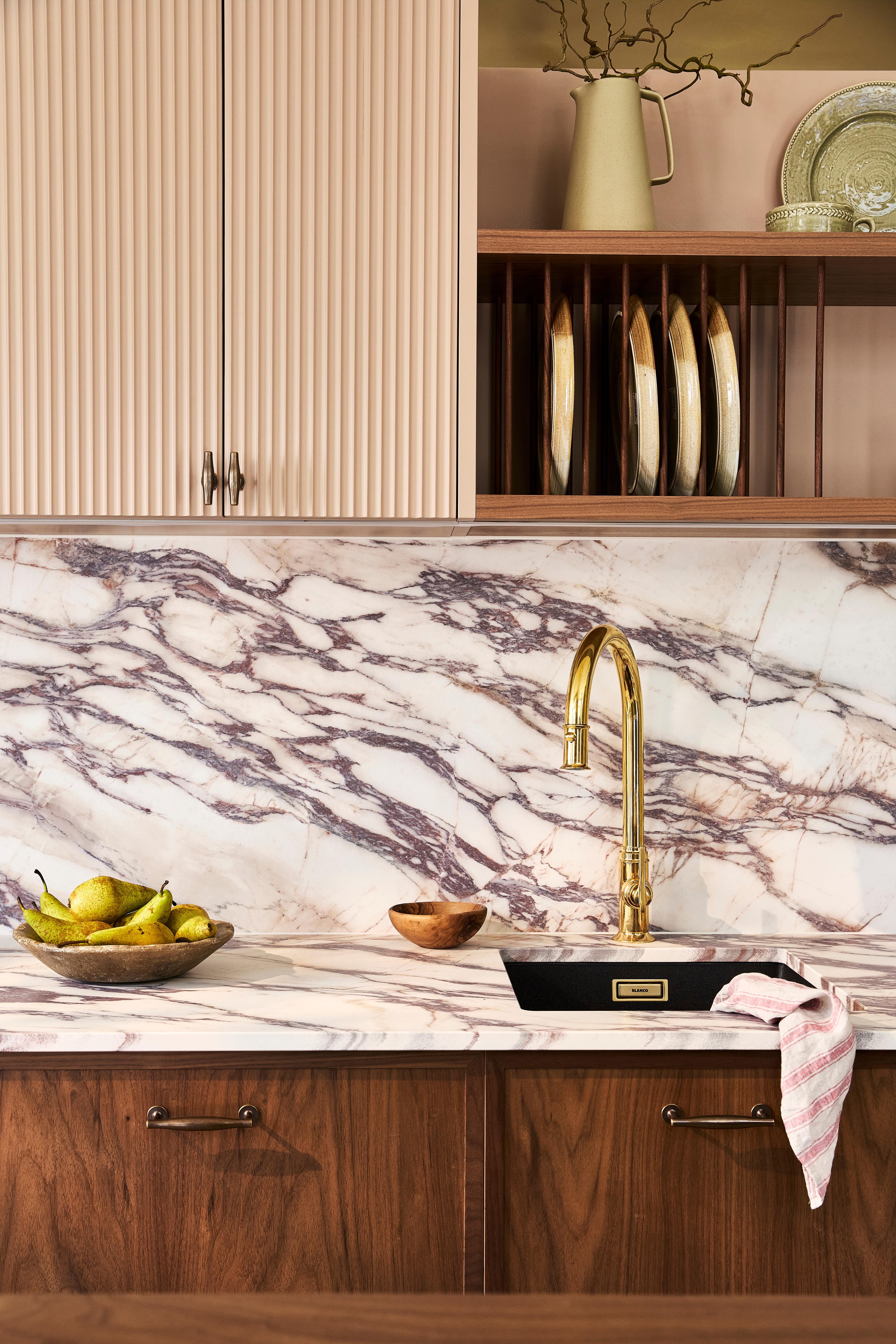
The scalloped wall unit in our Coleridge kitchen adds soft shadow and a more sculptural edge to the room
6. Shaped splashbacks
From practical panel to architectural detail
The splashback is moving beyond its purely practical role. When shaped with intention, it becomes an architectural detail in its own right. A soft arch, sweeping curve or stepped profile can frame a hob or sink with elegance, creating a quiet focal point that gently lifts the entire wall.
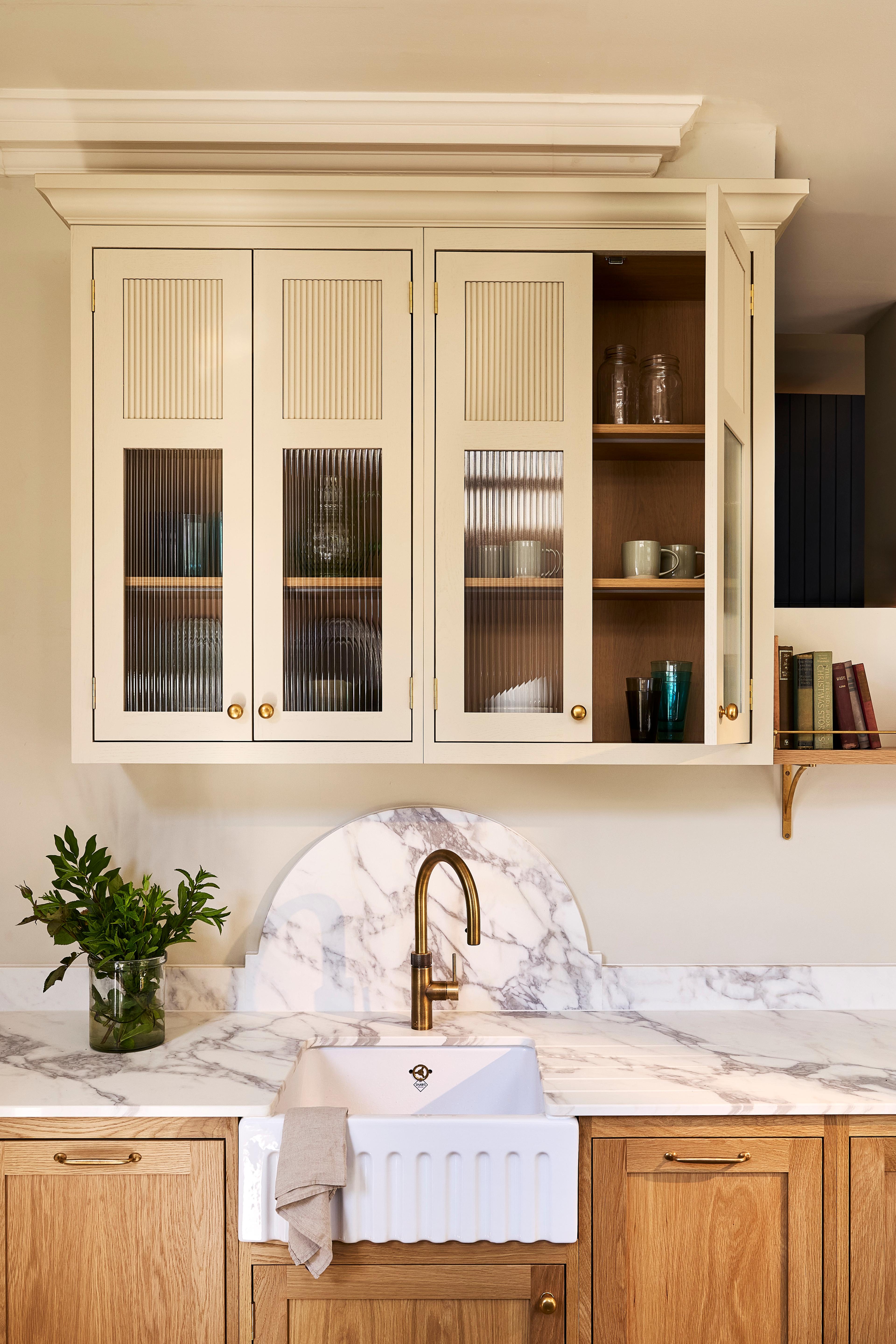
In our Wimpole kitchen, a shaped splashback frames the sink and quietly lifts the whole wall
7. An Art Deco influence
Clean lines meeting curves
Textured panels, shaped splashbacks and curved edges all point towards a renewed Art Deco influence. Its appeal lies in the combination of geometry and softness: the straight line sharpened by the curve, the curve made more elegant by the line. Used with restraint, it lends structure, glamour and a sense of history without overwhelming the design.
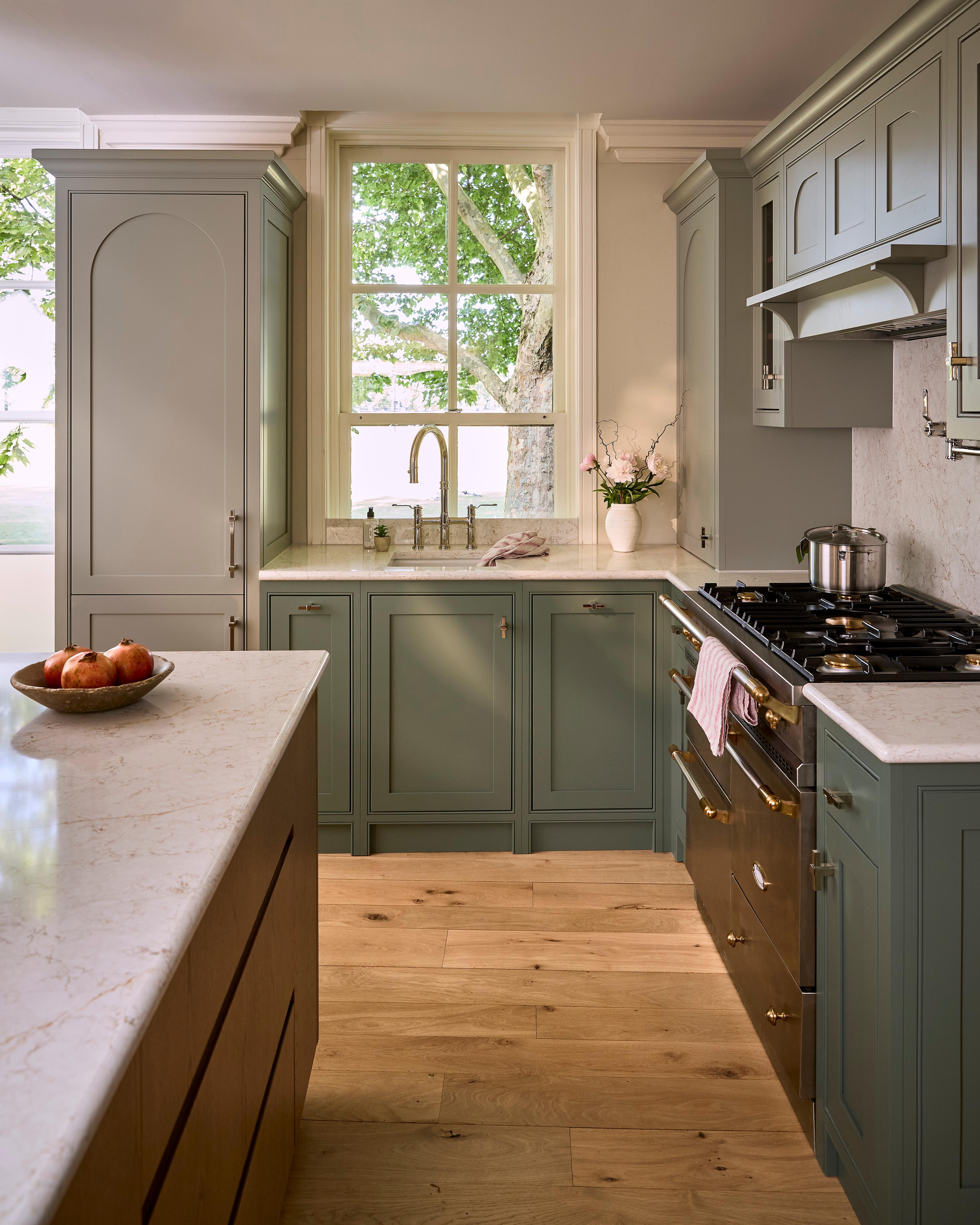
Curved Shaker fronts in our Madingley kitchen, where curves and arcs bring a touch of Art Deco softness to a classic door
8. Polished Nickel Plate
The finish gaining on aged brass
Aged brass remains a much-loved choice, but polished nickel plate is emerging as a refined alternative. Cooler and brighter than brass, it sits particularly well against dark stained timber and richly painted cabinetry. Where brass offers warmth and familiarity, nickel brings a cleaner, fresher note.
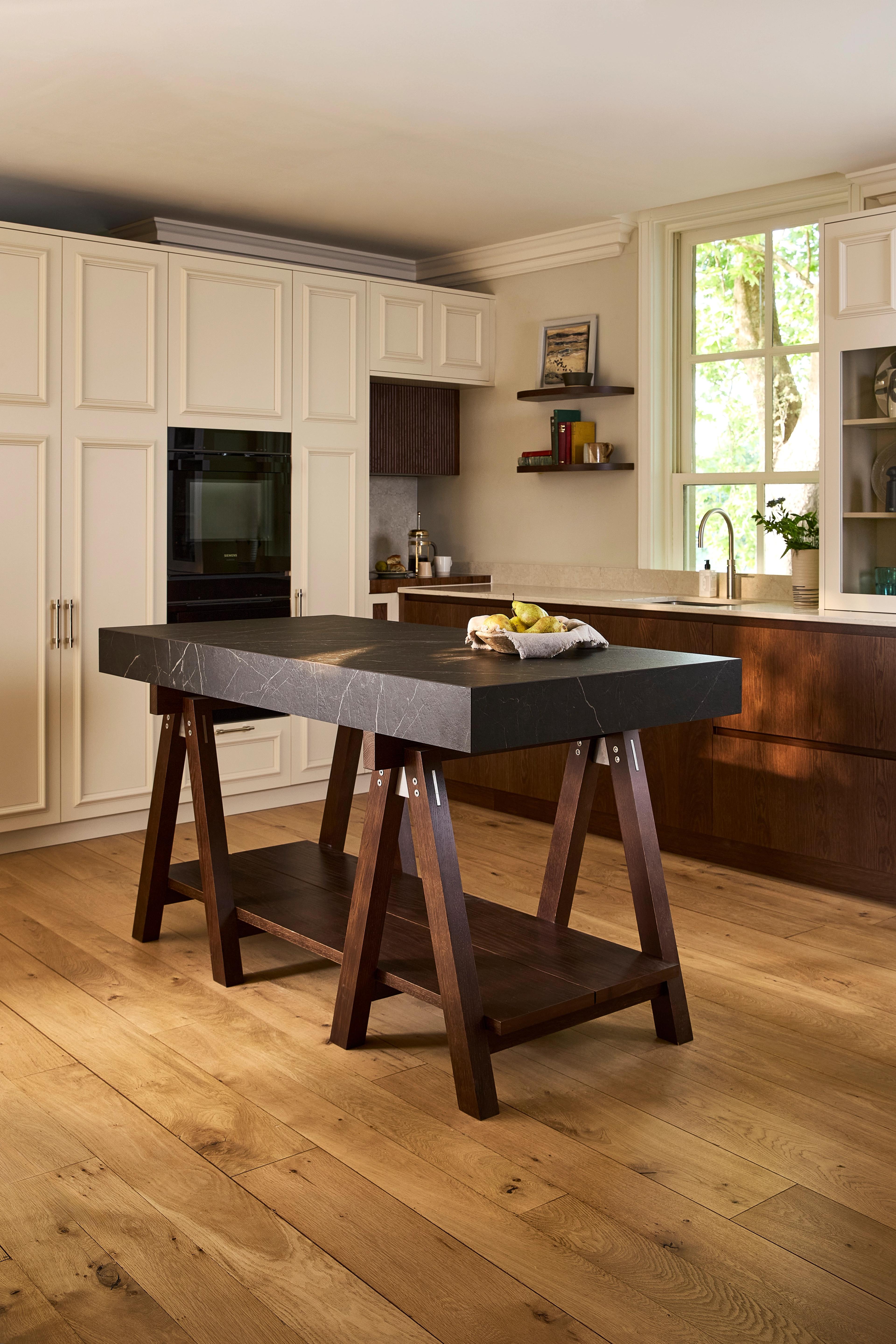
Polished nickel handles against Norfolk Dunes and dark stained oak in our Midsummer kitchen
9. Bolder veined worktop surfaces
Design choice moving towards a much more interesting, patterned worktop
Monochromatic worktops are giving way to surfaces with genuine visual movement, where veining runs, pools and draws the eye. The worktop now plays a defining role within the overall composition, becoming a central design element rather than an understated afterthought.
New low-silica materials such as Eclos and Sapienstone are also gaining attention, offering the beauty of marble with impressive durability. Advances in 4D porcelain take this further still, carrying the veining through the body of the slab so the pattern continues across edges and cut-outs with striking realism.
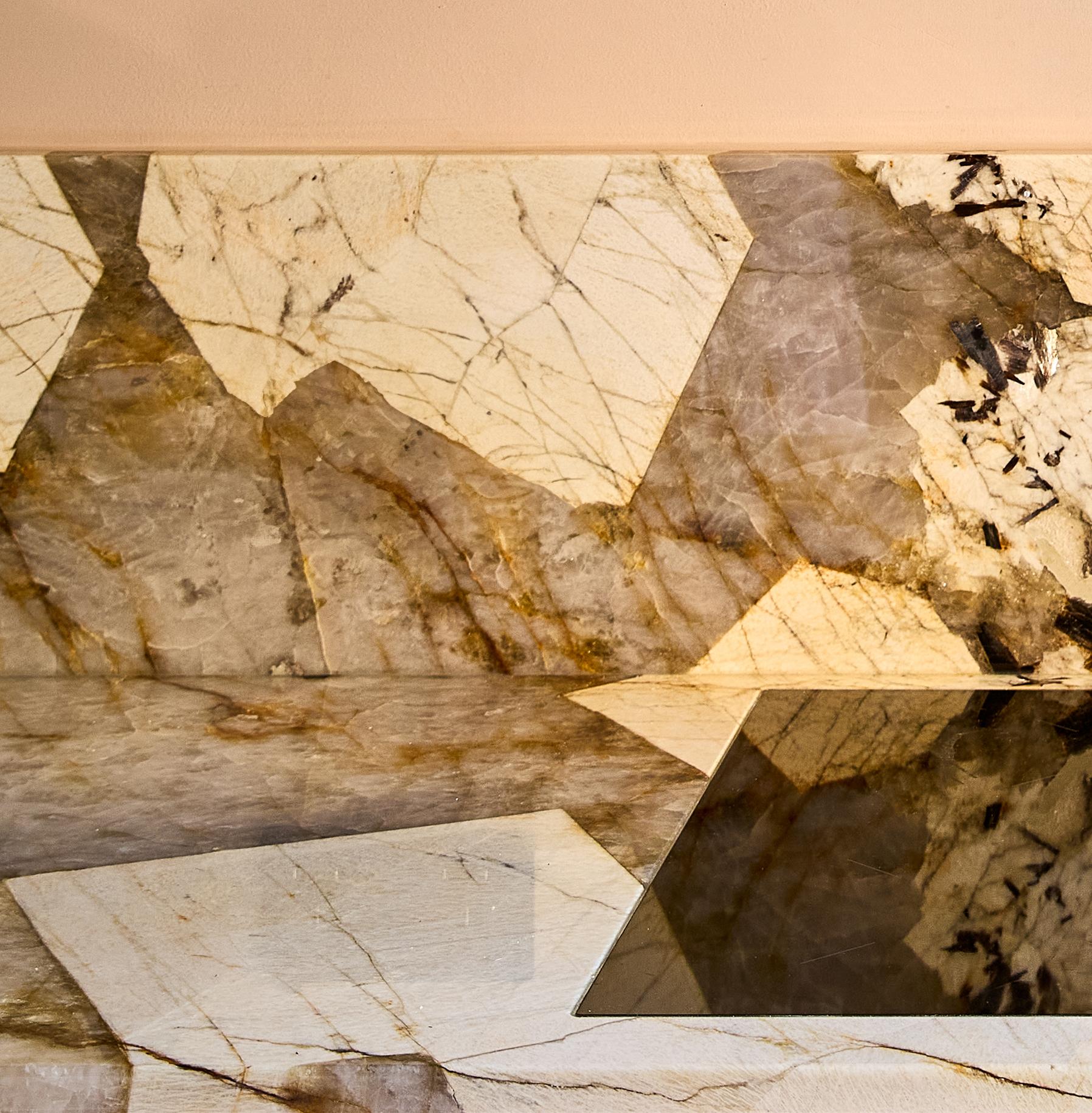
In our Camden kitchen, veined quartz becomes the focal point against dark stained oak
Warmth you can feel
For kitchen design, 2027 promises a renewed sense of individuality. These are rooms with personality, atmosphere and material depth: spaces shaped not only by how they look, but by how they feel to live in.
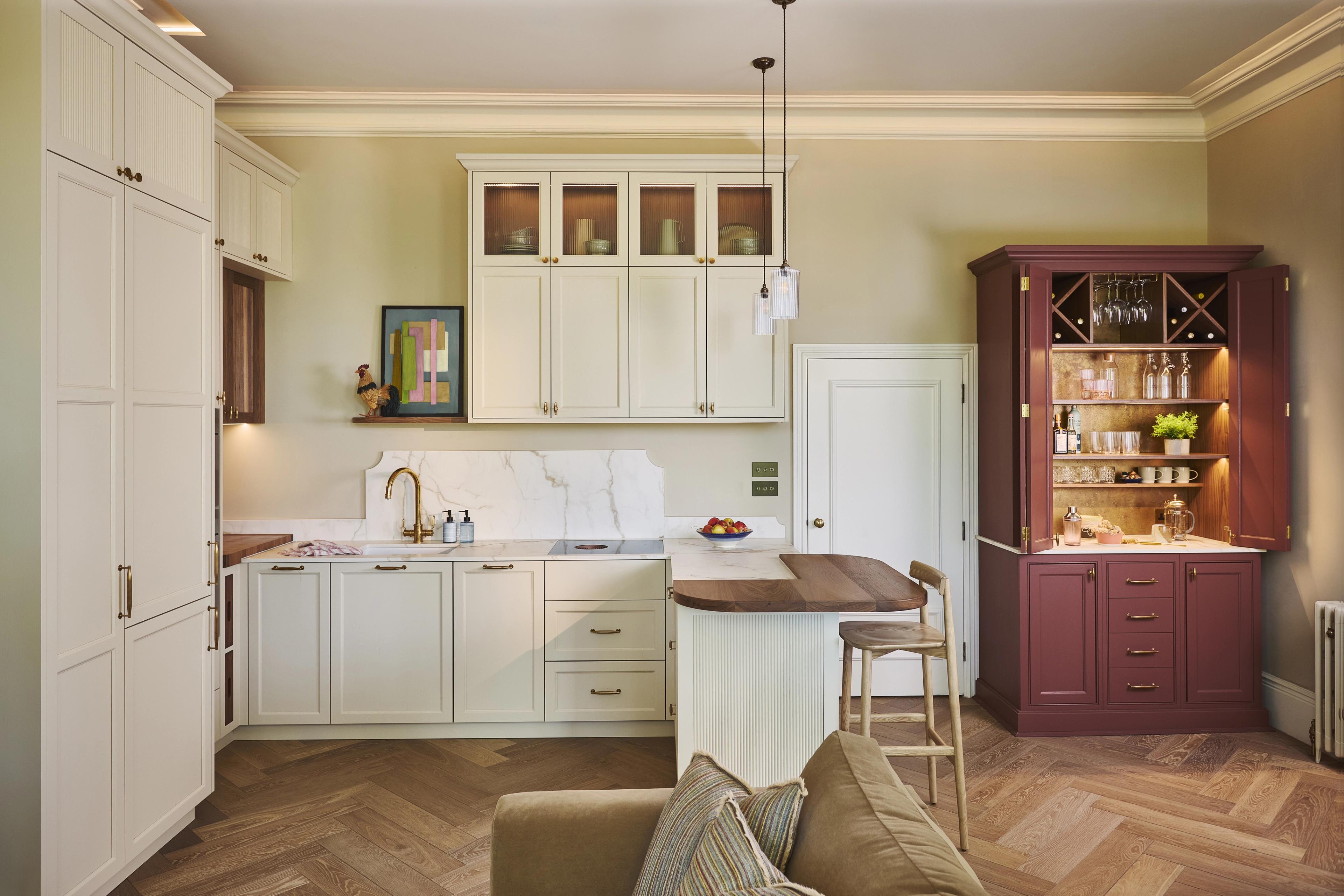
Painted cabinetry, walnut and reeded oak layered together in our Old Chelsea kitchen
The year’s defining quality is tactility. A stained timber door, a scalloped panel, a polished nickel handle, a dramatically veined worktop, each invites closer engagement. It is precisely this richness of experience that has shaped the recent expansion and updating of the Naked Kitchens showrooms in Norfolk, Cambridge and London, where these ideas can be seen, touched and explored across cabinetry for the whole home, from kitchens to bathrooms, bedrooms and beyond.
“In a world of AI,” Jayne says, “it is more critical than ever to visit, touch, see and create your own internal representation of what the kitchen actually is.”
Naked Kitchens creates exceptional bespoke kitchens and other rooms for the way people really live. For further inspiration, explore our portfolio or book a discovery call.
See also: Kitchen colours: the joy of warm neutrals · Kitchen trends for 2026
Request a Brochure
To receive a digital copy of our brochure and regular updates from us, please complete your details below.