No products match your search.
The Circular Workshop: How we turn kitchen offcuts into heat
Written by Andrew Nixon
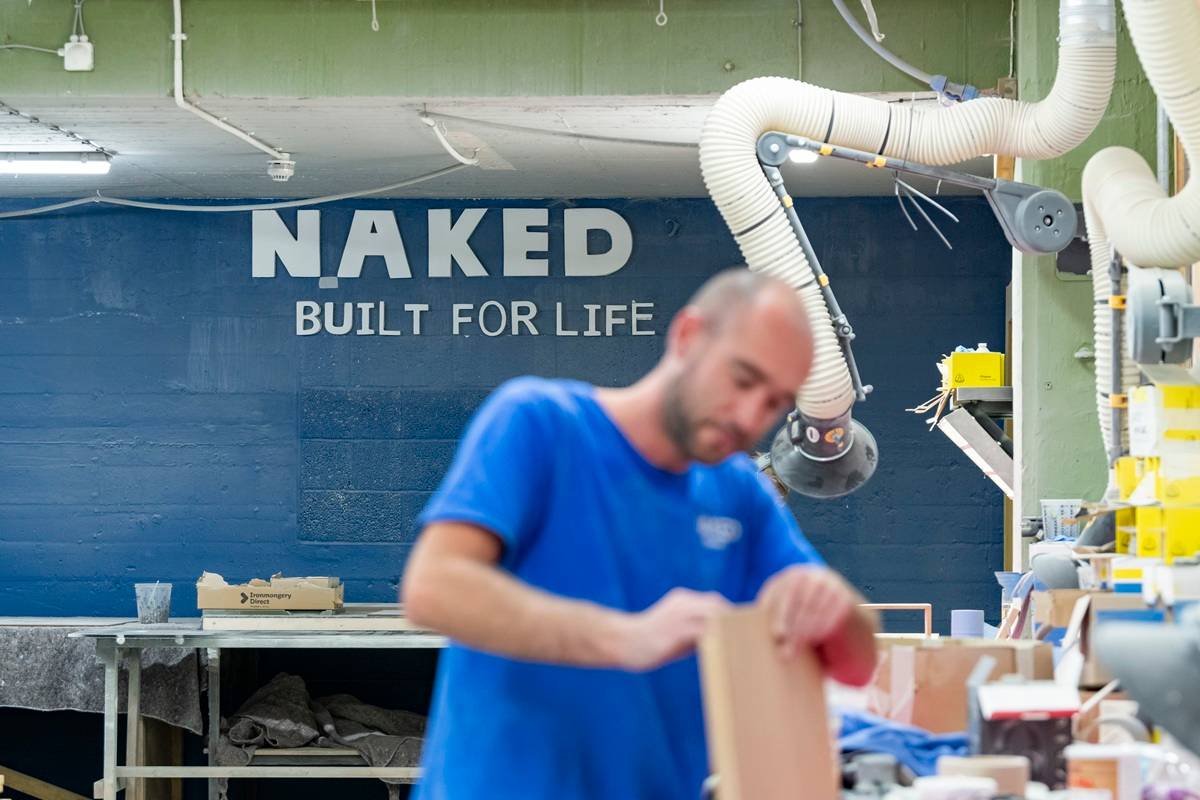
In our Norfolk workshop, offcuts, chippings and dust from making bespoke kitchens are put to good use – helping to heat the workshop, spray booths, offices and showroom.
At Naked, we’re not very good at throwing things away.
That might sound like a slightly odd confession, but it is actually one of the things we’re most proud of. In our Norfolk workshop, the offcuts, chippings and dust created while making bespoke kitchens don’t simply disappear into a skip. Wherever possible, they are reused. And when they can’t be reused, they help heat the workshop itself.
It is a circular way of working: the waste from making kitchens is used to help power the making of more kitchens.
And while that sounds beautifully simple, it has taken a serious amount of thought, investment and technology to make it happen.
Sustainability starts with the first cut
When we make a kitchen, we begin with the careful cutting of timber and board materials.
This is where waste can so easily happen. A poorly planned cutting process can leave large amounts of unused material – awkward shapes, strips, fragments and leftover pieces. So before a sheet is cut, we plan it properly.
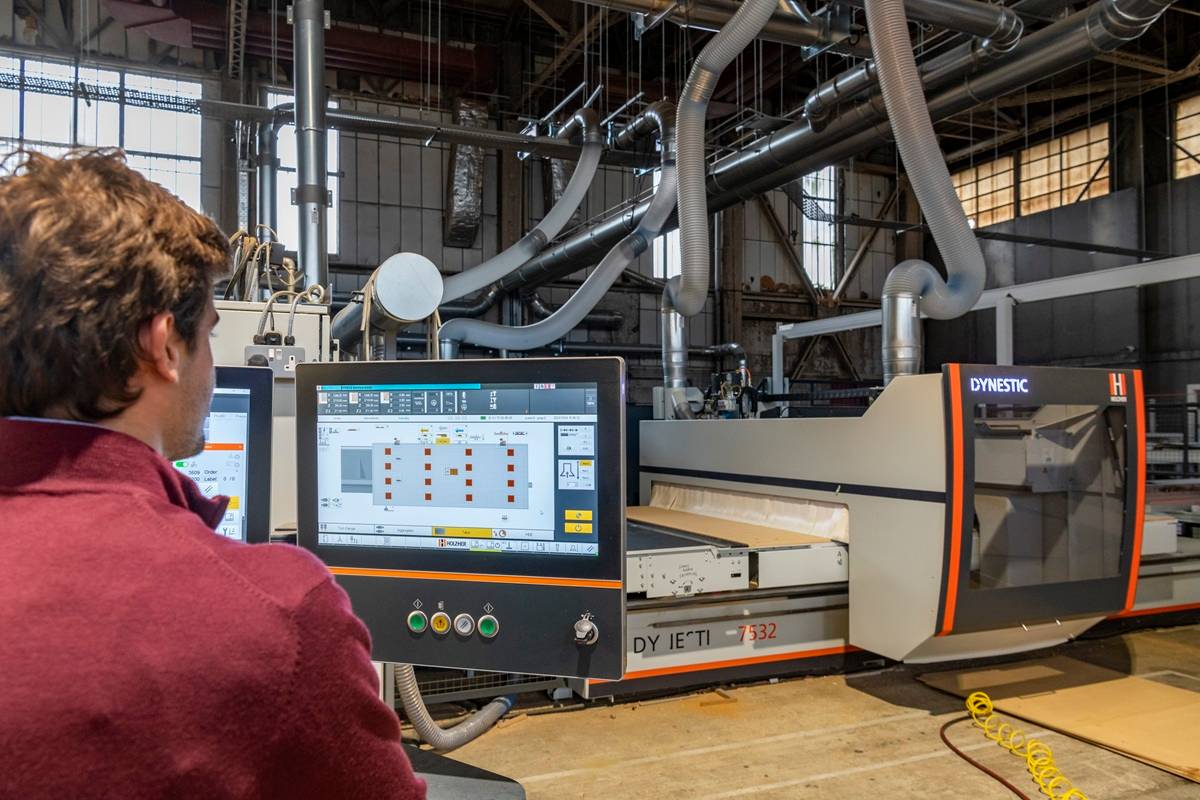
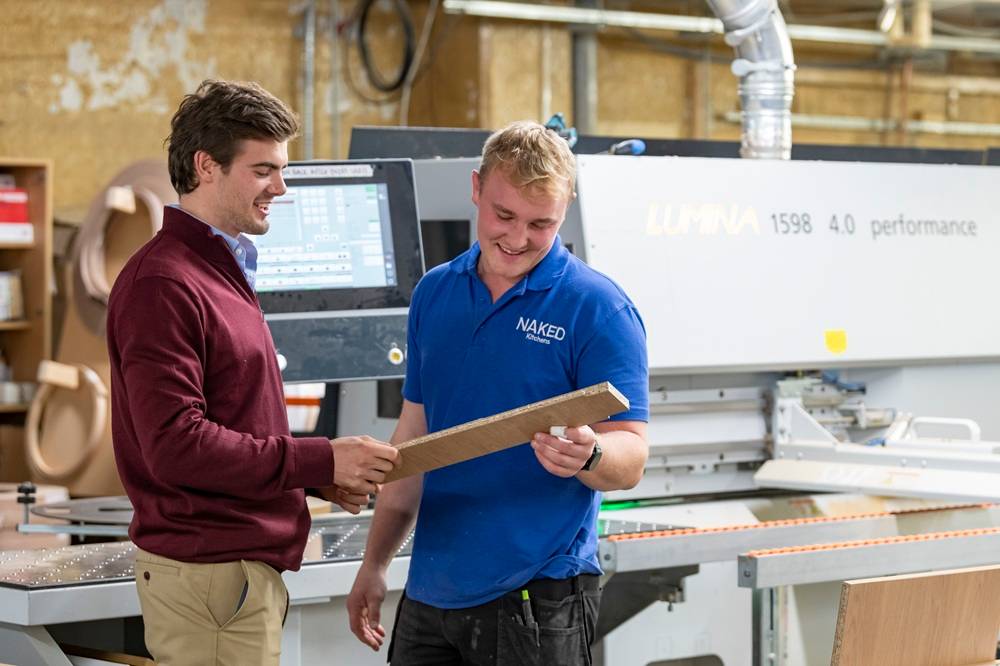
Our CNC machines allow us to cut each part with exceptional precision. But the clever bit happens before the blade even touches the material. We use a process called nesting, which means arranging all the cabinet parts as efficiently as possible across the sheet, so we can get the maximum use from every piece of board.
We also batch orders together where we can, allowing parts from several kitchens to be planned and cut in a highly efficient way. It is a bit like an extremely complicated jigsaw puzzle, except the prize is less waste, cleaner production and a more efficient workshop.
Every kitchen we make is different, but the process behind it needs to be disciplined and carefully managed.
What happens to the offcuts?
Of course, even with very clever cutting, there will always be offcuts. The important question is what happens to them next – and the answer depends on the size and shape of the piece.
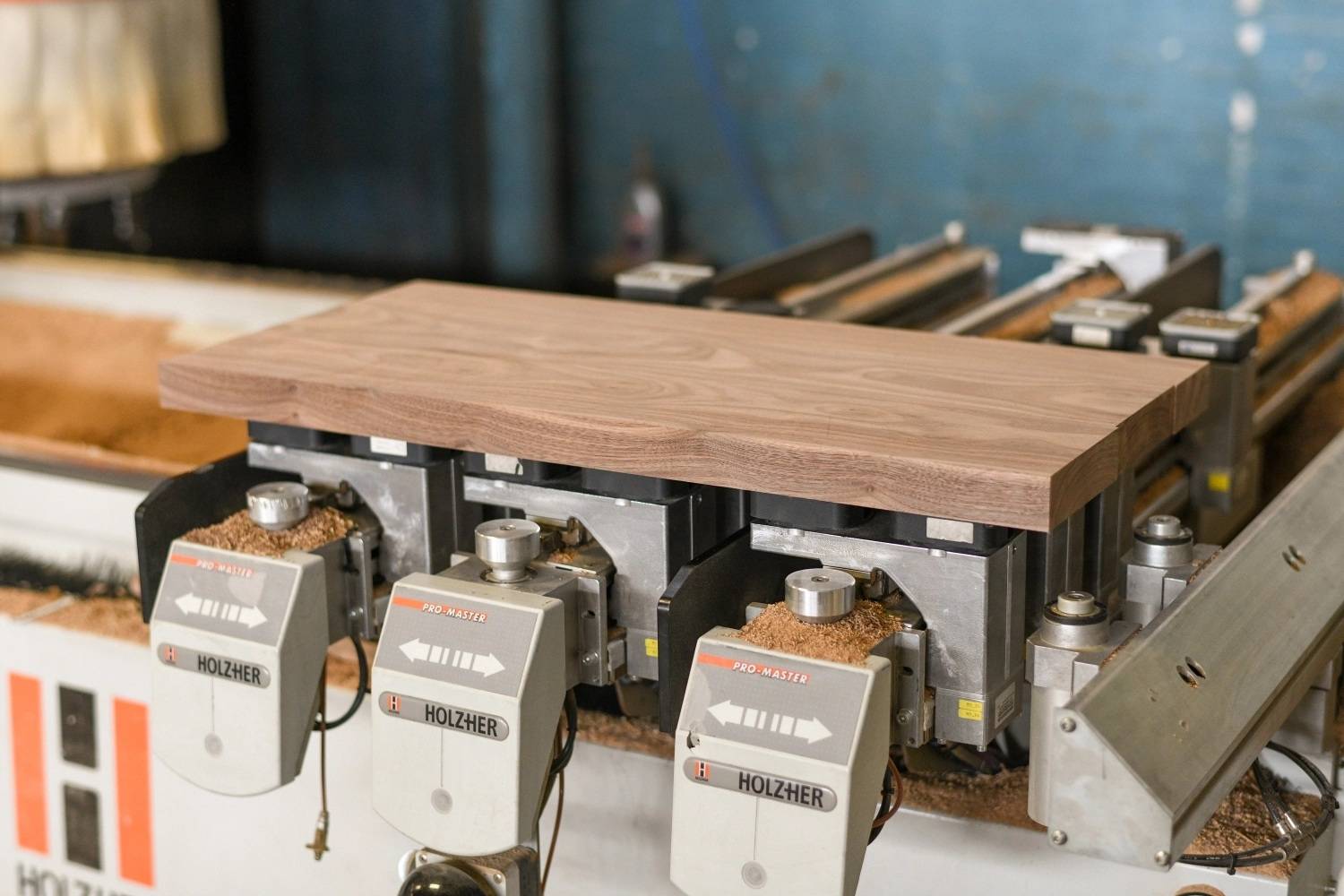
Larger offcuts are kept and reused wherever possible. They might be used for smaller doors, components or samples that we send to clients. Solid timber pieces can often find another use too, depending on their size and condition.
The smaller, more awkward or damaged pieces – the ones that really can’t be made into anything useful – are are shredded and fed into our biomass system.
Even the dust created by cutting and sanding is put to work.
From dust extraction to biomass heat
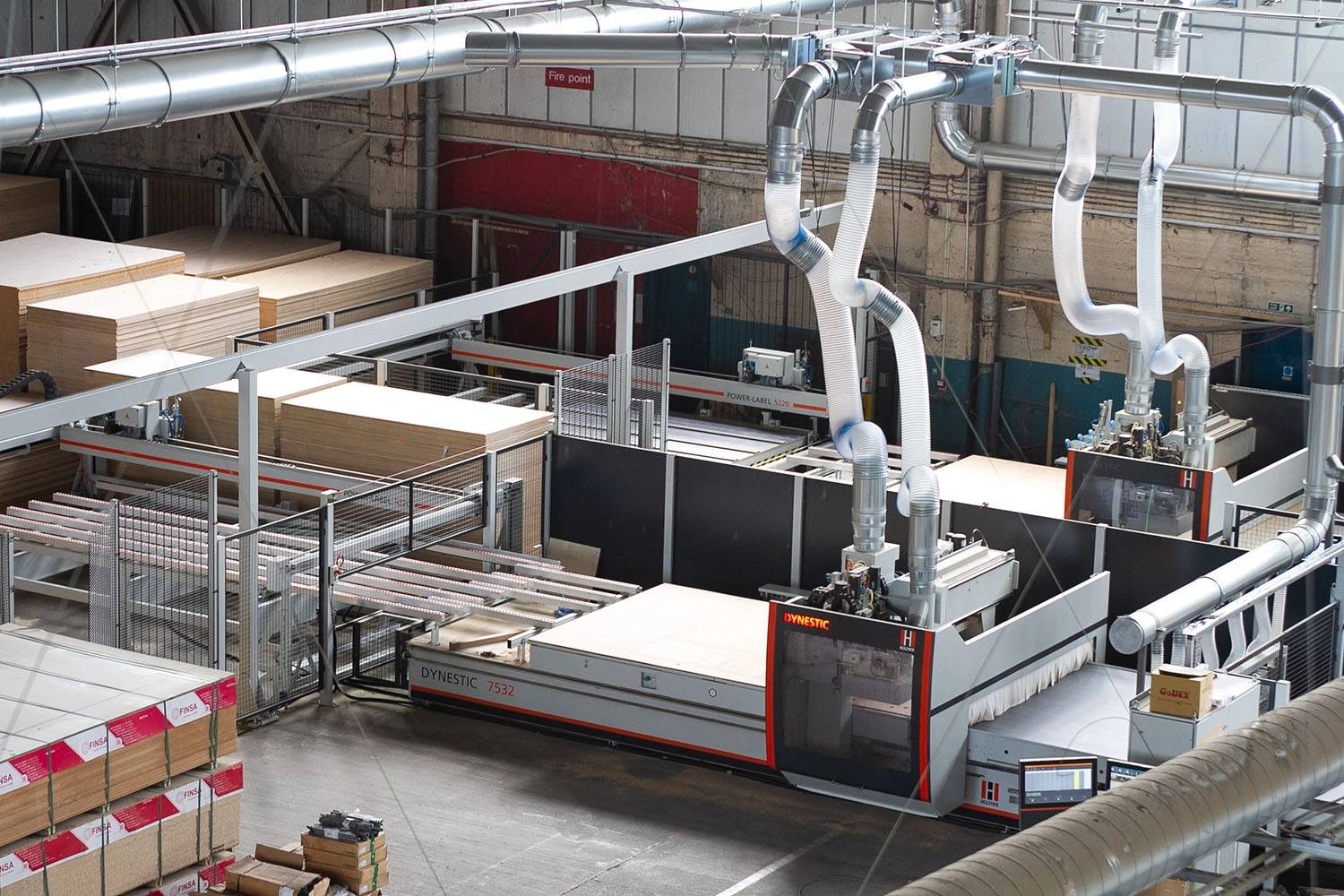
Our workshop has a sophisticated dust extraction system, installed as part of our ongoing investment in cleaner, more efficient production.
As the CNC machines and other equipment cut and shape materials, the dust is collected and drawn away through the extraction system. But rather than being treated as waste, it is collected in a large silo outside the workshop.
From there, it is automatically fed into our 199kW Talbott biomass boiler.
The boiler heats water to around 80 degrees, and that heat is then used around the site – including in the production areas, spray booths and spray line. In other words, the by-products of making kitchens help provide the heat needed to continue making kitchens.
Before this system was in place, gas was used to heat the spray booths and spray line. Now, the heat comes from our own wood waste.
It is a much more circular approach, and one that dramatically reduces the need for material to be taken away, processed elsewhere or sent to landfill.
The eco gate system
There is another important part of the story: our dust extraction does not simply run at full power all day.
The system is driven by eco gates, which means extraction only operates where and when it is needed. When a machine is in use, it sends a signal for the relevant gate to open. When the machine stops, the gate closes and extraction stops in that area.
Without a system like this, dust extraction can run continuously, using energy whether or not every machine is actually being used. Our system is much more responsive, helping reduce unnecessary energy consumption across the workshop.
The fans are also inverter-driven, meaning their output can be adjusted depending on demand. If fewer machines are running, the system can dial down accordingly.
True, it’s not glamorous, exactly, but it’s a behind-the-scenes investment that makes a real difference.
Heating the offices and showroom
The larger biomass boiler heats the main workshop and production areas, but the same principle applies elsewhere on site.
We also have two hand-fed 50kW log boilers, which use solid timber offcuts that are too small to be used for anything else. These are the little pieces – almost like kindling – that come from working with real timber.
We use them to heat our offices and showroom – so, across the site, wood waste is treated as a resource.
A better way to build bespoke kitchens
A kitchen workshop will always produce offcuts, chippings and dust. That is the nature of making furniture from timber and board materials.
At Naked, we work hard to reduce waste from the very beginning through careful planning, CNC cutting, nesting and batching. Then we reuse what we can. And finally, when material really can’t be reused, we use it to generate heat for the workshop, spray booths, offices and showroom.
That means fewer vehicle journeys taking waste away, less material sent off site, less reliance on gas, and a workshop that makes much better use of its own by-products.
This is what we mean by a circular workshop. The material left over from making kitchens helps heat the spaces and processes used to make more kitchens. The offcuts, dust and chippings don’t mark the end of the story, they become part of the next one.
Sustainability is sometimes presented as a separate thing – an extra box to tick, or a section on a website. But for us, it is much more practical than that. It is built into the way the workshop works.
It is in the way we source materials, plan cuts, reuse timber, collect dust, heat the workshop and finish each kitchen. It is in the technology we invest in, and in the simple belief that a beautifully made kitchen should not come with unnecessary waste.
Every Naked Kitchen is made to order, by skilled people, in our Norfolk workshop. The technology behind the scenes helps us make each one more precisely, more efficiently and more responsibly.
And, wherever possible, it helps us turn what is left over into something useful again.
Request a Brochure
To receive a digital copy of our brochure and regular updates from us, please complete your details below.