No products match your search.
Inside the Cambridge Showroom: Nine ways to think differently about kitchen design
Written by Andrew Nixon
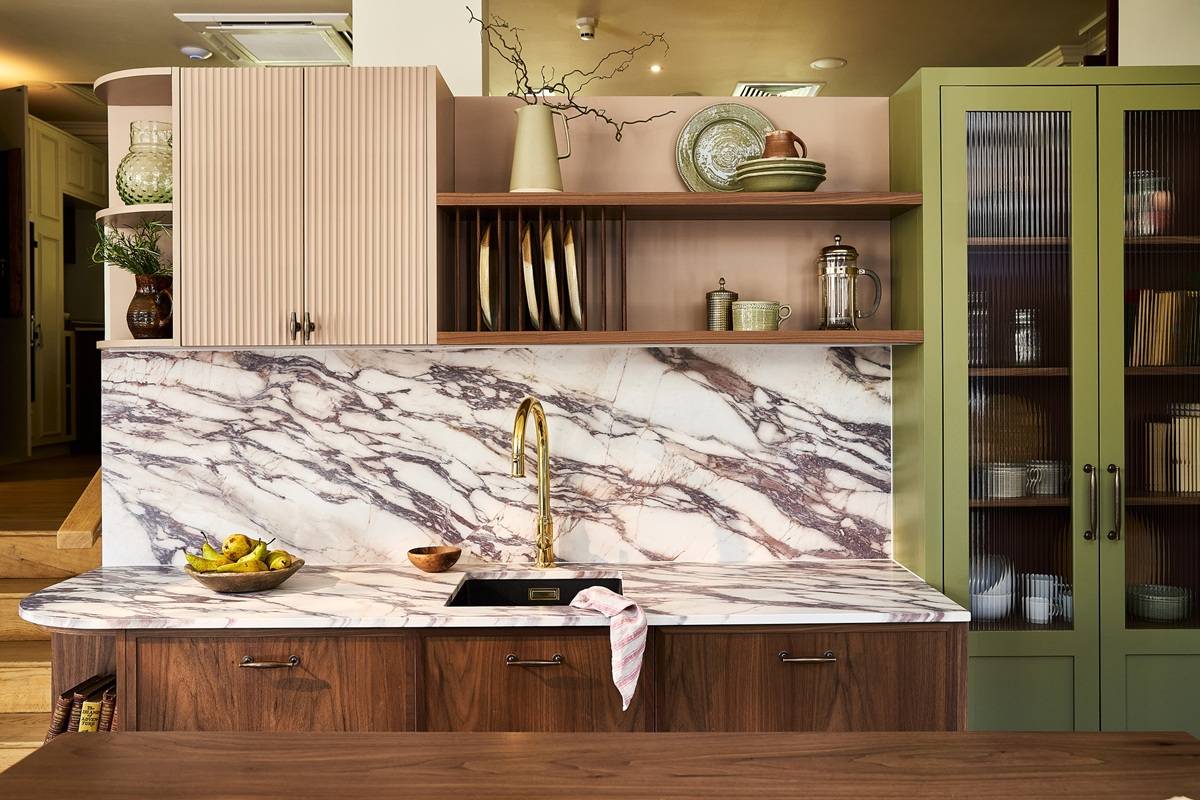
Designing our new Cambridge showroom made us look again at what makes a great kitchen: the small decisions that make a room feel entirely your own.
Naked showrooms have always worked a little differently. We sometimes call them ‘reverse showrooms’, because they are not there to sell you a fixed range. Every Naked kitchen is bespoke, so the point is to gather ideas and inspiration – colours, materials, finishes, clever little storage solutions – and then create the dream kitchen built for your own life.
With Cambridge, that idea came into sharp focus. In designing four very different kitchens – Coleridge, Madingley, Wimpole and Midsummer – we found ourselves thinking hard about what really makes a great kitchen.
Here are eight things we learned – or perhaps, remembered – while designing Cambridge.
1. Showroom kitchens should start conversations
Cambridge was designed to show as much of Naked as possible. But that does not mean showing four kitchens and saying: choose one.
The kitchens all have different personalities. Coleridge is modern, textural and artistic. Madingley is softer, greener and full of gentle curves. Wimpole is earthy and grounded, with oak, reeded detail and a freestanding butcher’s block. Midsummer is rich, dramatic and furniture-like, with raised panelling, stained oak, larders and a magnificent island.
There is no single ‘right answer’; each one starts a different conversation: about materials, colour, storage, proportion, mood, craft and the way you want a kitchen to feel.
That is what a good showroom should do: open things up.
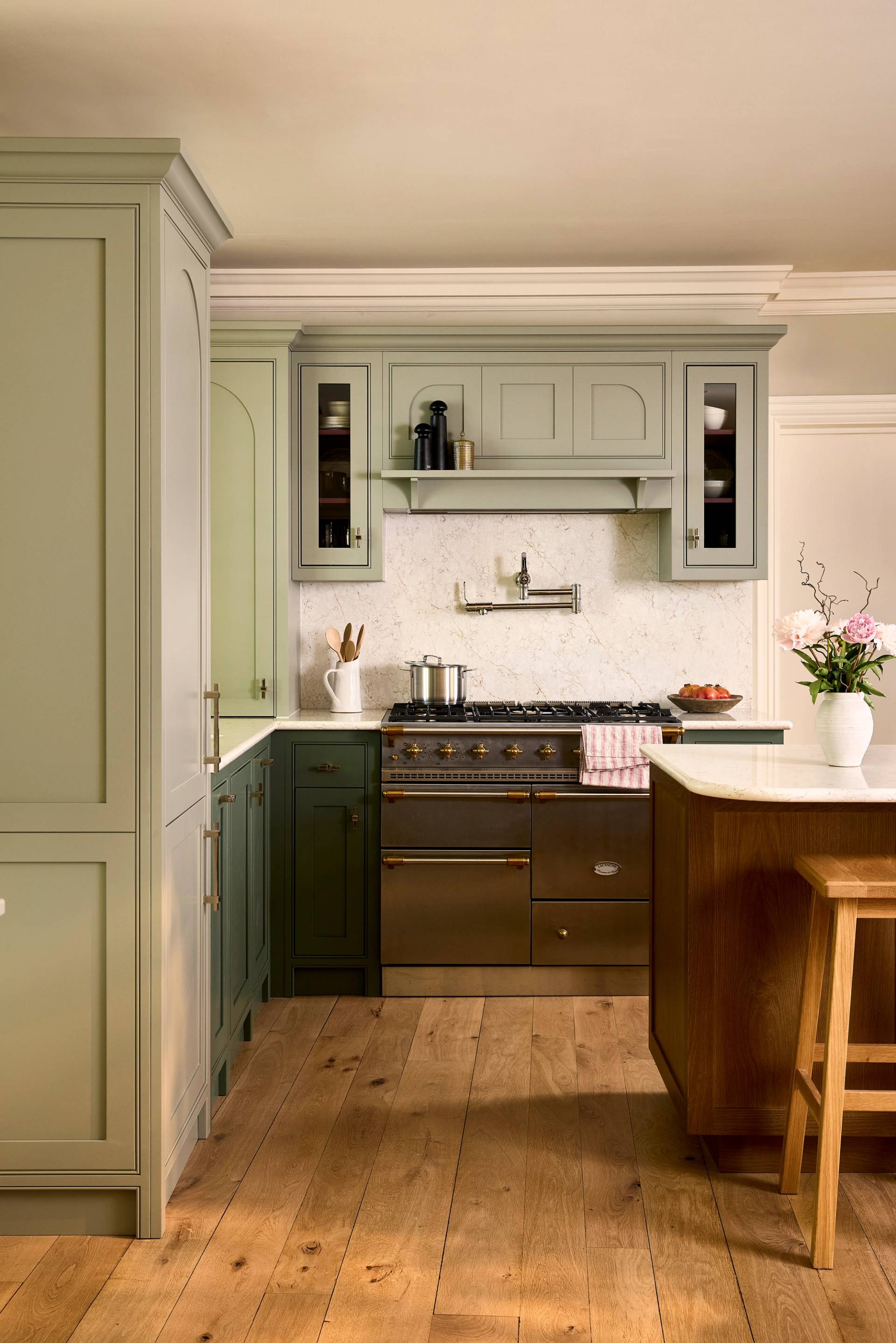
The Madingley kitchen
2. The best kitchens have little threads running through them
A kitchen does not need everything to match. In fact, it is usually better if it does not. What it does need is connection.
Jayne Everett, Naked’s Head of Design, talks about the “little threads” that tie a design together. In Madingley, Sharrington Red appears in small, deliberate moments rather than taking over the room. In Midsummer, darker tones in the island, cabinetry and appliances speak to one another. In Wimpole, reeded detail appears high up on the tall cabinetry and again on the island.
Those threads can run beyond the kitchen too. A boot room bench, a utility cupboard, a pantry, a dresser or even a piece of furniture in the sitting room can pick up an element from the kitchen without slavishly matching it.
These small links are often the difference between a house that has lots of lovely rooms and a whole home that feels beautifully coherent.
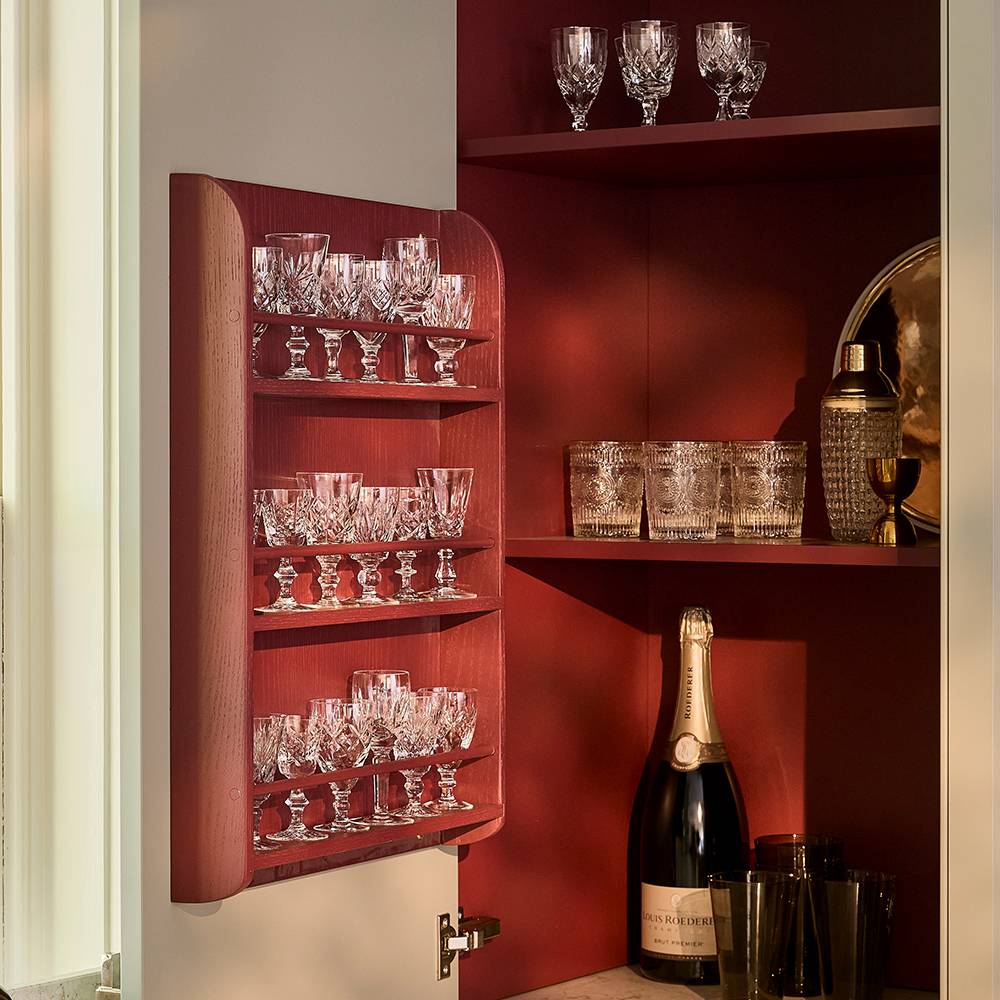
A secret pop of Sharrington Red in a cabinet interior. The thread of red is repeated on a tall cabinet in the Madingley kitchen
3. Think of colours in layers
Naked has always loved colour, and Cambridge gave us a chance to use it in several different ways: earthy greens, soft pinks, warm neutrals, stained timbers and a well-placed flash of red.
Jayne is clear that colour should never be added just for the sake of it: it has to earn its place. It might be the main colour of the room, or it might be almost hidden: inside a larder or on the back of a bookcase. The important thing is that it feels intentional. A small flash of Shearrington Red, used well, can have far more charm than a whole kitchen trying too hard to be ‘bold’.
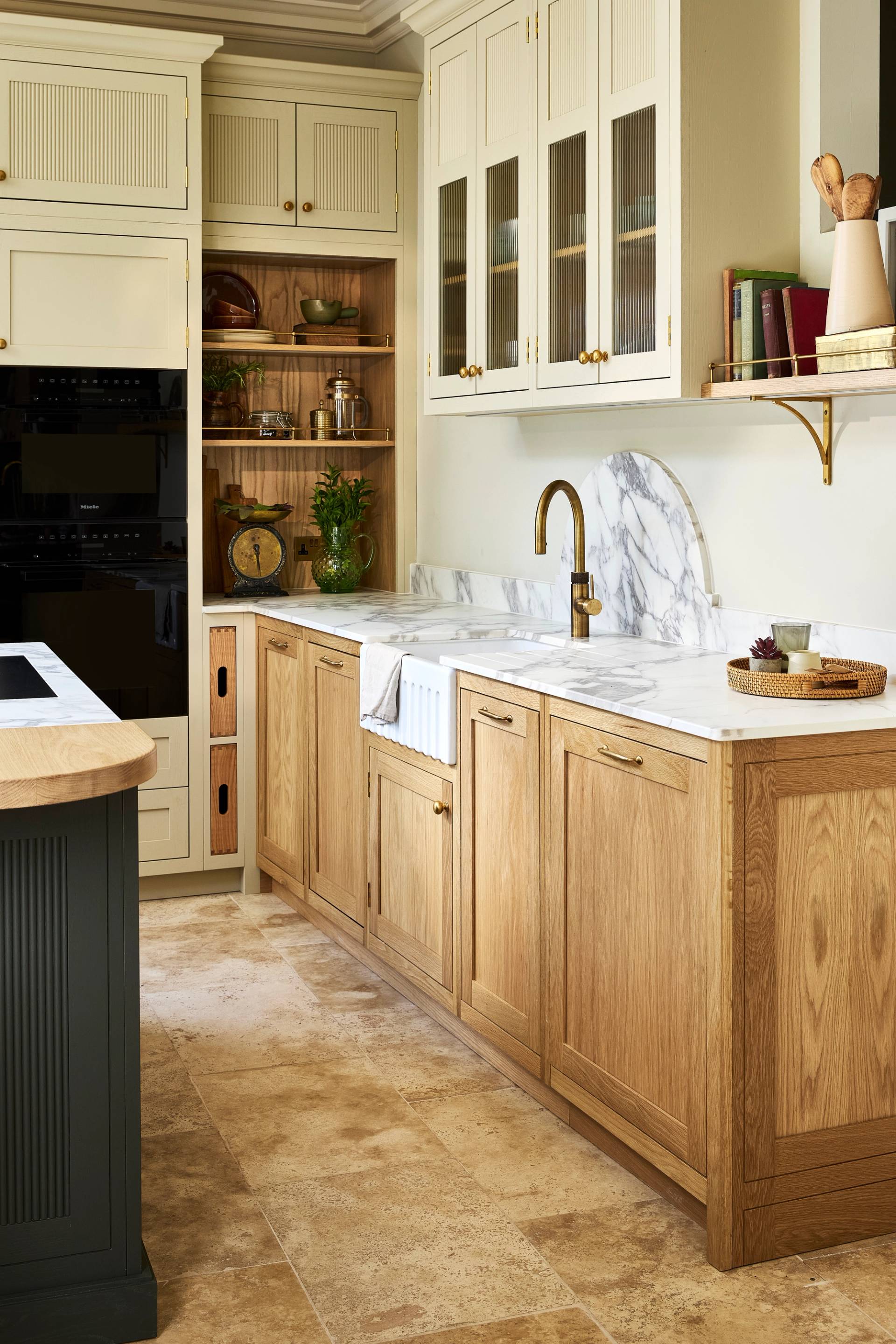
Oak finish in the Wimpole kitchen
4. Timber is back (though for Naked, it never went away)
There is a lot of timber in Cambridge: oak, walnut, stained, unstained, reeded, end grain, framed and more.
Wood is very much back in people’s minds: after years of ultra-smooth, ultra-flat, ultra-cool interiors, there is a real appetite for grain, warmth and natural texture.
But of course for Naked, timber has never been a passing fashion. “We are experts in timbers,” says Jayne. “All things timber for Naked.”
That expertise shows up in different ways across the showroom: unstained walnut in Coleridge, oak Shaker cabinetry in Wimpole, stained oak in Midsummer, end grain in practical prep areas, reeded timber used to soften height and add interest.
Timber brings warmth, but it also brings life. It makes a kitchen feel more like furniture: something made, touched, used and lived with.
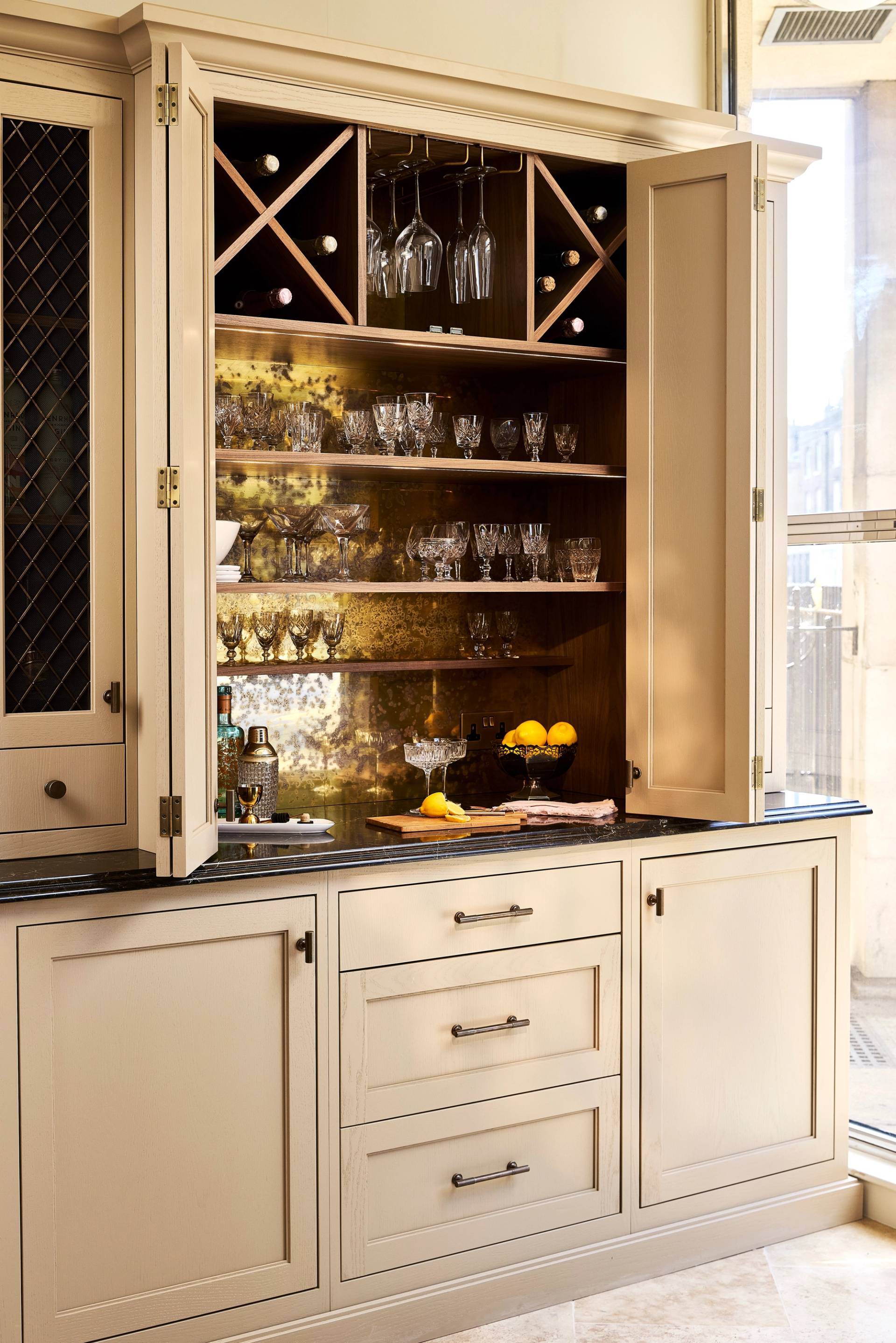
Shaker doors in the Coleridge drinks cabinet
5. The Shaker door is still evolving
Shaker has had a remarkable revival in recent years. A Shaker kitchen no longer has to mean one very particular, traditional kind of kitchen. It can be traditional of course, but also, modern, urban, country, colourful, restrained, soft, sharp or something in between.
In Cambridge, that evolution appears in several forms: classic Shaker, curved Shaker, reeded Shaker and Skinny Shaker – Naked’s slimmer, cleaner take on the classic framed door.
Rather than the usual wide frame, Skinny Shaker uses a much narrower one, giving the door a more modern line. As Jayne explains, it “looks a lot more modern than a normal Shaker” and works especially well in a sleeker kitchen because it avoids adding too many extra lines.
6. Texture can help solve proportion
As well as being decorative, texture can be used to help solve ‘problems’ in a kitchen’s overall design.
A good example is the reeded panelling at the top of the tall cabinetry in Wimpole. Tall cabinets can look imposing if they are treated as one long wall of storage. The texture of the reeded section breaks the height, adds shadow and gives the eye somewhere to rest.
This small detail changes the feeling of the whole room. Similar effects can be achieved with beading, curves, end grain, glazing, shelves and timber panels – all of which can help create a pleasing ‘rhythm’ in a space.
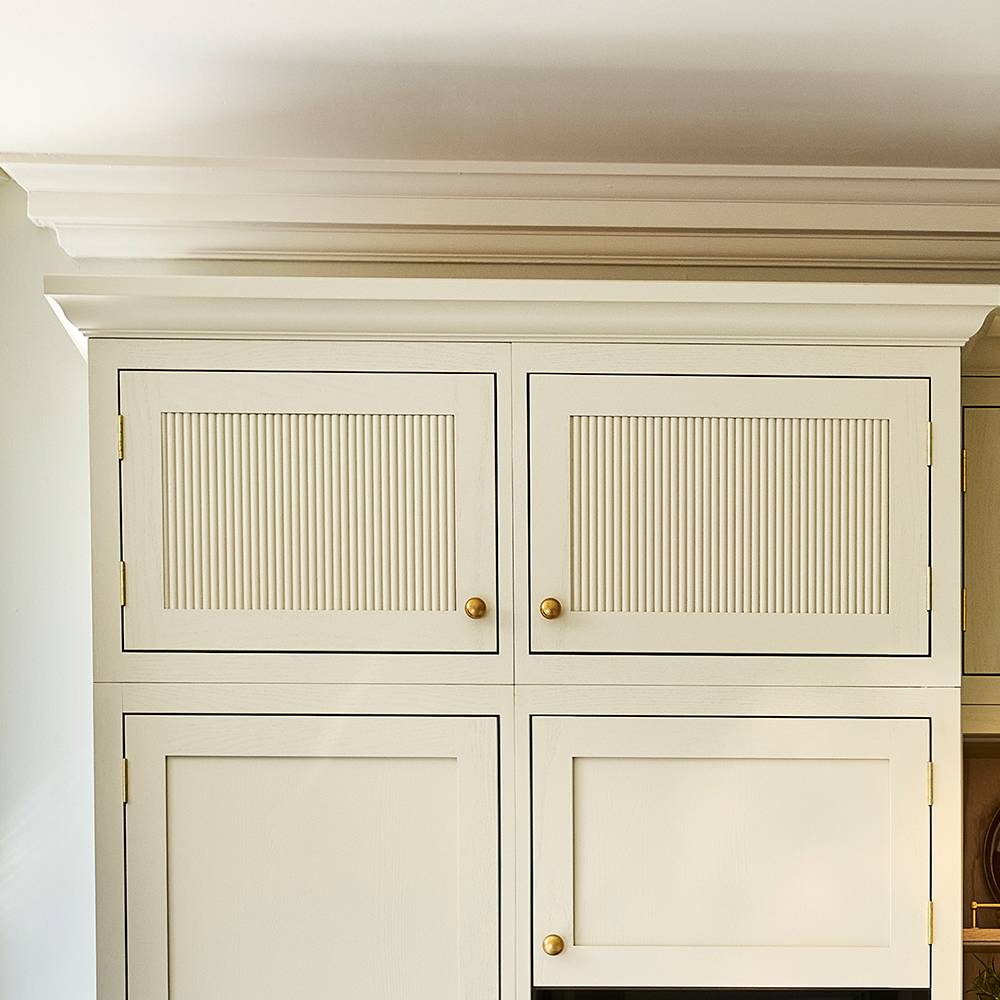
The reeded doors prevent the tall cabinets in the Wimpole kitchen from feeling too overwhelming
7. A great island is both useful and beautiful
A kitchen island can be very practical, with drawers, appliances, bins, sinks, hobs and seating. But they can also be much more than that.
The Midsummer island is part prep table, part gathering place, part centrepiece and part piece of furniture. It has the stability and usefulness of a workshop trestle, but the presence of something you would happily build a room around.
Jayne describes it as “a real showstopper”. But what makes it work is not only how it looks, but how it creates a beautiful, usable ‘place’ in the room: somewhere to prep or to perch, and the spot where so much family life happens.
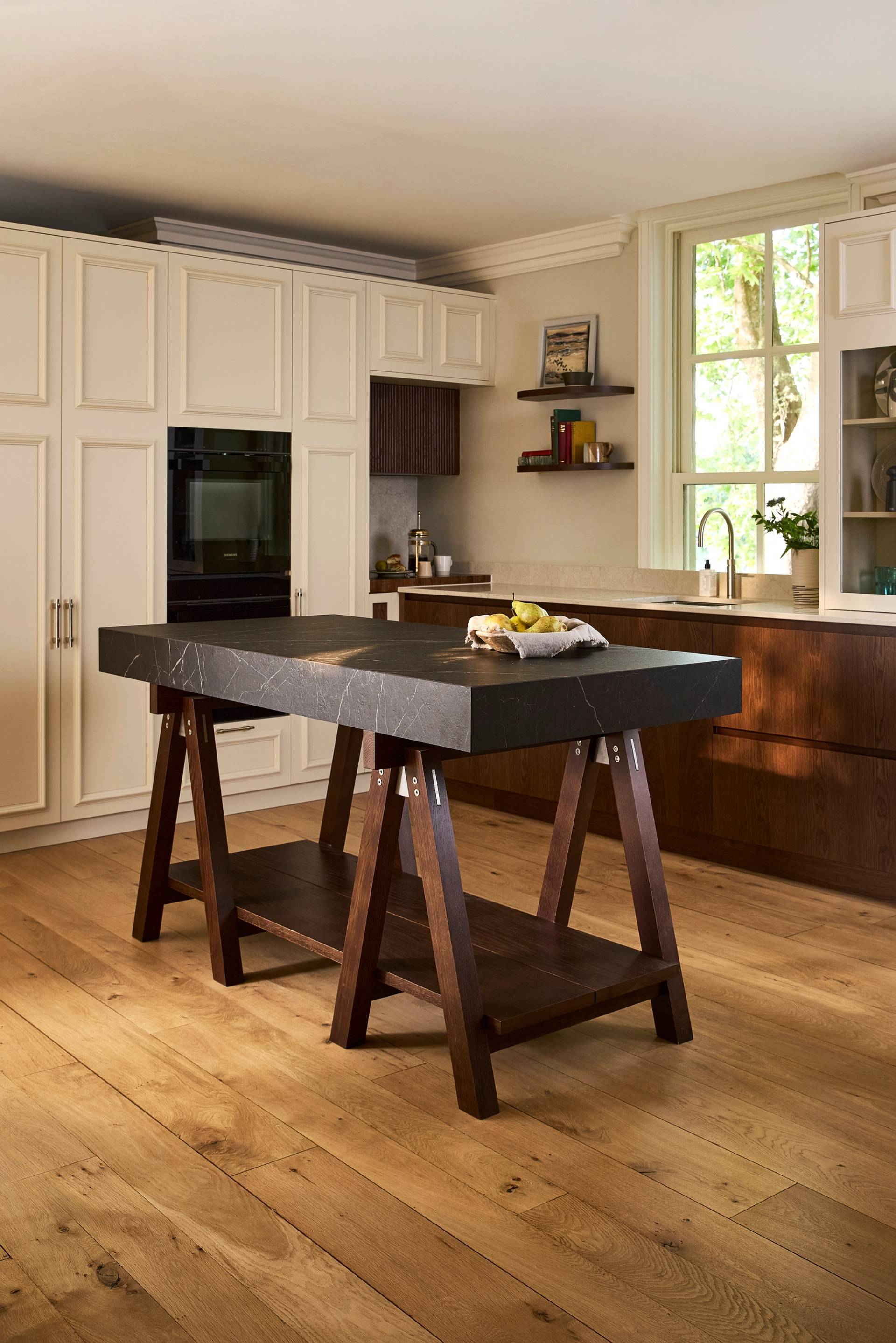
The showstopping - yet practical - Smokestone island in the Midsummer kitchen
8. Not everything has to be fitted
One of the loveliest themes in Cambridge is the use of pieces that feel freestanding, even when they have been carefully designed into the room.
Features include a freestanding island on legs, a butcher’s block at the end of a run and a coffee/drinks cabinet that turns a corner into a destination rather than dead space.
“You don’t just need to do a run of cabinets,” says Jayne. “You can mix it up a little bit.”
That is a deceptively simple idea. A kitchen can be beautifully fitted without feeling over-fitted, and it can have transitions that help it connect with the rest of the home.
Some pieces could even move with you…. Which is another way to think about Built for Life: not only something strong enough to last, but something loved enough to keep.
9. ‘Bespoke’ is a way of making
Perhaps the most important idea in Cambridge is the least visible…
Everything looks finished and natural, but behind many of those details sits a lot of thought, testing and workshop discussion. This is where the dangerous phrase appears: “Can you just…?”
Can you just curve this? Can you just hide that? Can you just make the doors work differently? Can you just make this awkward corner useful?
Of course, with a fully bespoke kitchen, the answer is often yes. But the reason Naked can do these things is because the design team and the workshop are part of the same conversation. The kitchens are made in our Norfolk home, so the details are worked through properly and the makers are involved in solving the design, not merely producing it.
As Jayne says, “We’re not beholden to somebody else giving us a yes or no answer.”
That is also part of the value of a Naked kitchen: the value of making things ourselves. Because there is no long chain of suppliers and middlemen adding their own markups, so much more of what you spend goes into the kitchen itself: the materials, the making, the finishing and the detail. It is also why we never do sales. We price our kitchens properly in the first place.
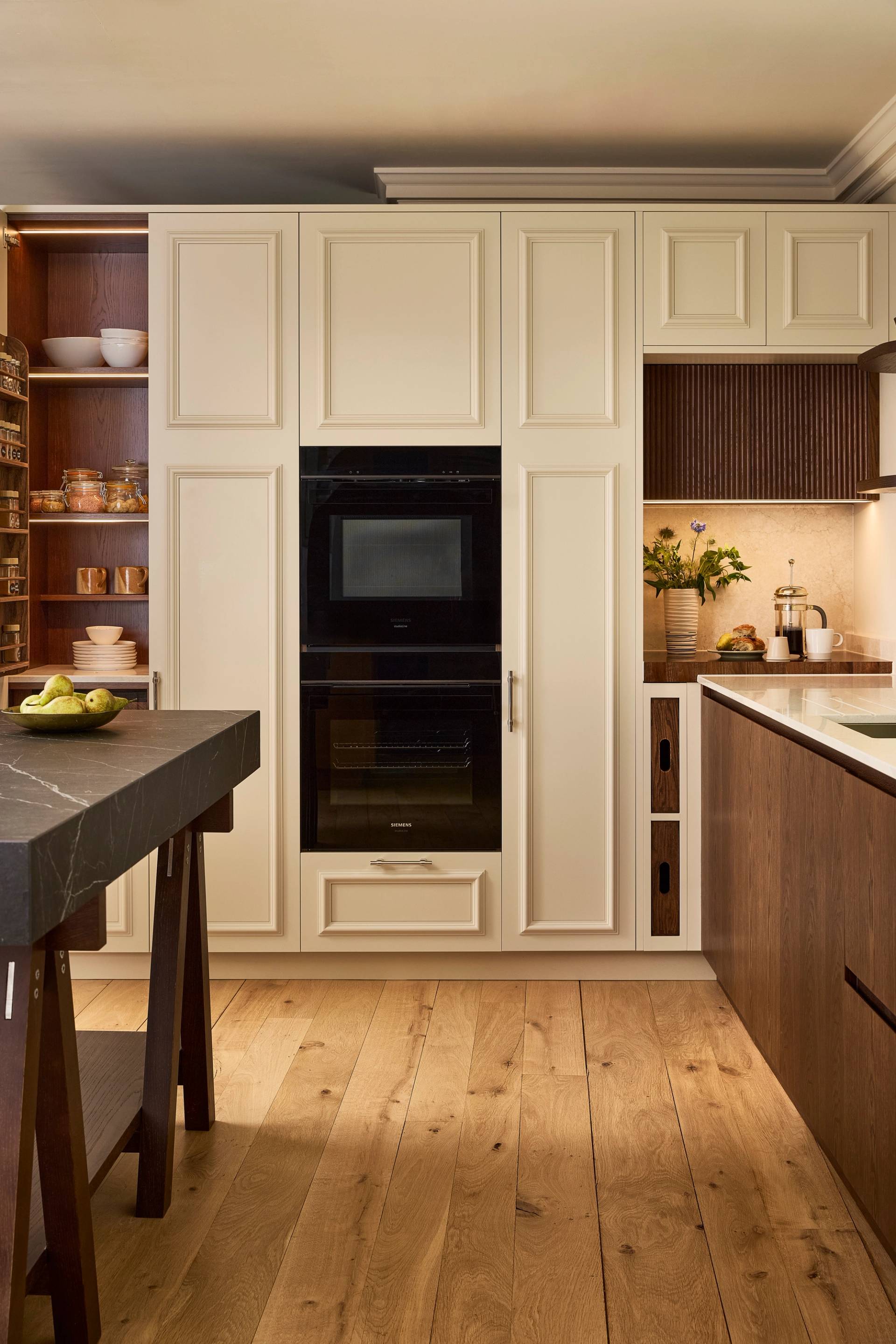
The coffee station in the Midsummer kitchen turns a tricky corner into a destination
So yes, Cambridge is a showroom. It is full of finished kitchens, beautiful materials and carefully made details. But really, it is there to help you imagine – and to help you discover the perfect kitchen built just for your life.
Book a visit to our Cambridge showroom here, or come see our showrooms in Chelsea or Norfolk.
Request a Brochure
To receive a digital copy of our brochure and regular updates from us, please complete your details below.