No products match your search.
What to Show, What to Hide: The Art of Kitchen Display
Written by Jade Agnew
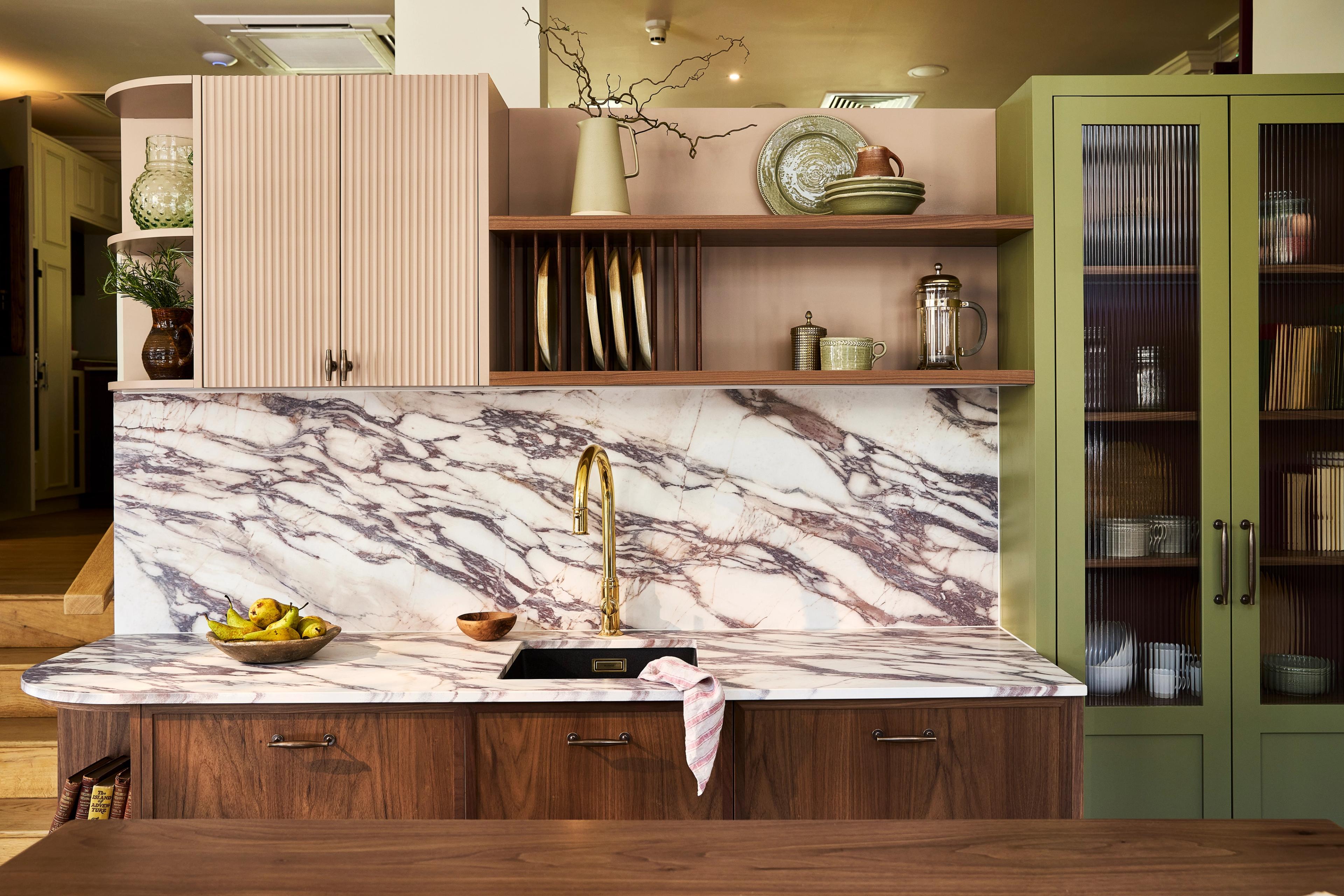
Coleridge Kitchen – open shelving for pieces worth keeping in view, and a worktop with enough movement to do some of the display work itself.
A kitchen is judged as much by what's on show as by what's put away. The best displays aren't decoration added at the end - they're planned with the same care as the cabinetry, so everything else can disappear.
Here's how we think about the difference between the two…
Every kitchen makes a hundred small decisions about visibility. Why is a row of cookbooks left out? Or a jar of oil by the hob? Why do we keep three good mugs on the counter rather than filed away in a cupboard? None of it is accidental in a well-designed kitchen. It's chosen.
The instinct with a beautiful kitchen is often to show everything: open shelving throughout, glazed doors on every cupboard, worktops dressed like a photograph. The instinct with a tidy kitchen runs the other way, hiding it all behind flat, matching doors. Neither gets it right on its own. The skill is knowing which pieces earn a place on show, and which ones do their best work out of sight.
What deserves to be seen
A good display has a simple logic to it: show what you're proud of and what you use often, in that order.
Some important possessions, like the chopping boards you reach for daily, improve with use, and look more at home each time you touch them. Shown properly, they're not showing off – they're evidence that the room is actually lived in.
Craftsmanship earns the same treatment. A glazed door that lets the joinery show through, or an open shelf that reveals the grain of the timber rather than hiding it behind a flat panel, does something a closed cupboard can't. It tells you the kitchen was made, not assembled.
If clear glass feels like too much of a commitment, reeded glass is the more forgiving option. The reeding can register as texture rather than contents, so you get the light and depth without needing the cupboard behind it to be perfectly styled.
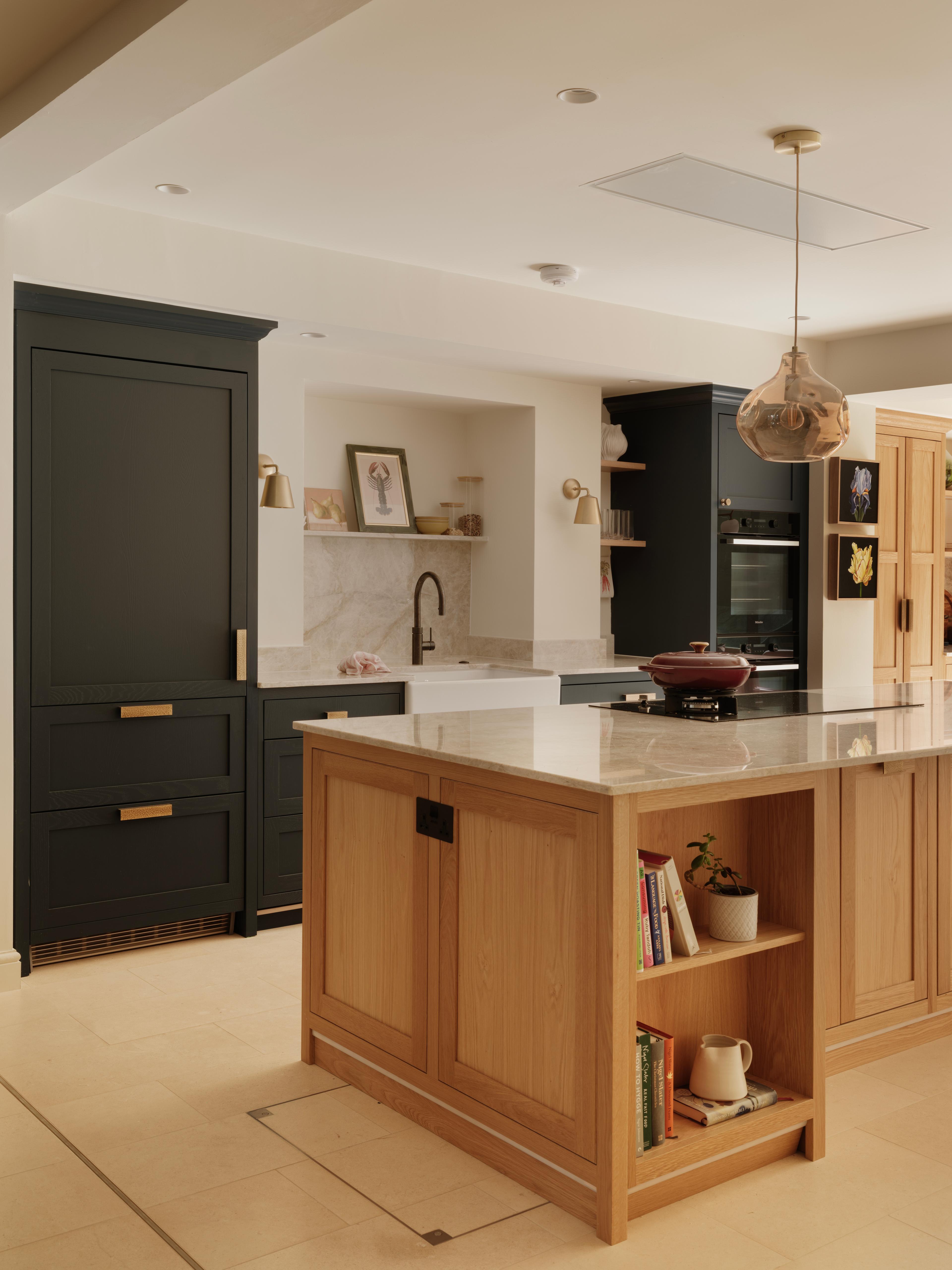
Lavender Hill Kitchen – open book storage built into the oak island, with Night Sky cabinetry and a quartzite worktop doing the rest of the display work.
What works better hidden
Then there's everything that doesn't improve with visibility: chargers, spare batteries, cleaning products, the bin. None of that is about taste. It's function, and function belongs behind a door.
Some appliances run constantly but were never designed to be looked at: a toaster, a kettle, a coffee machine. They need to be reachable every day, not seen every day. A larder with an internal worktop and its own power supply solves this properly: everything stays plugged in and ready, and the door closes on the whole scene when it's not in use.
Integrated appliances do the same job for the fridge and dishwasher. Once they sit behind matching cabinetry, a run of stainless steel and a manufacturer's logo disappear from the room, and the cabinetry reads as one continuous surface again.
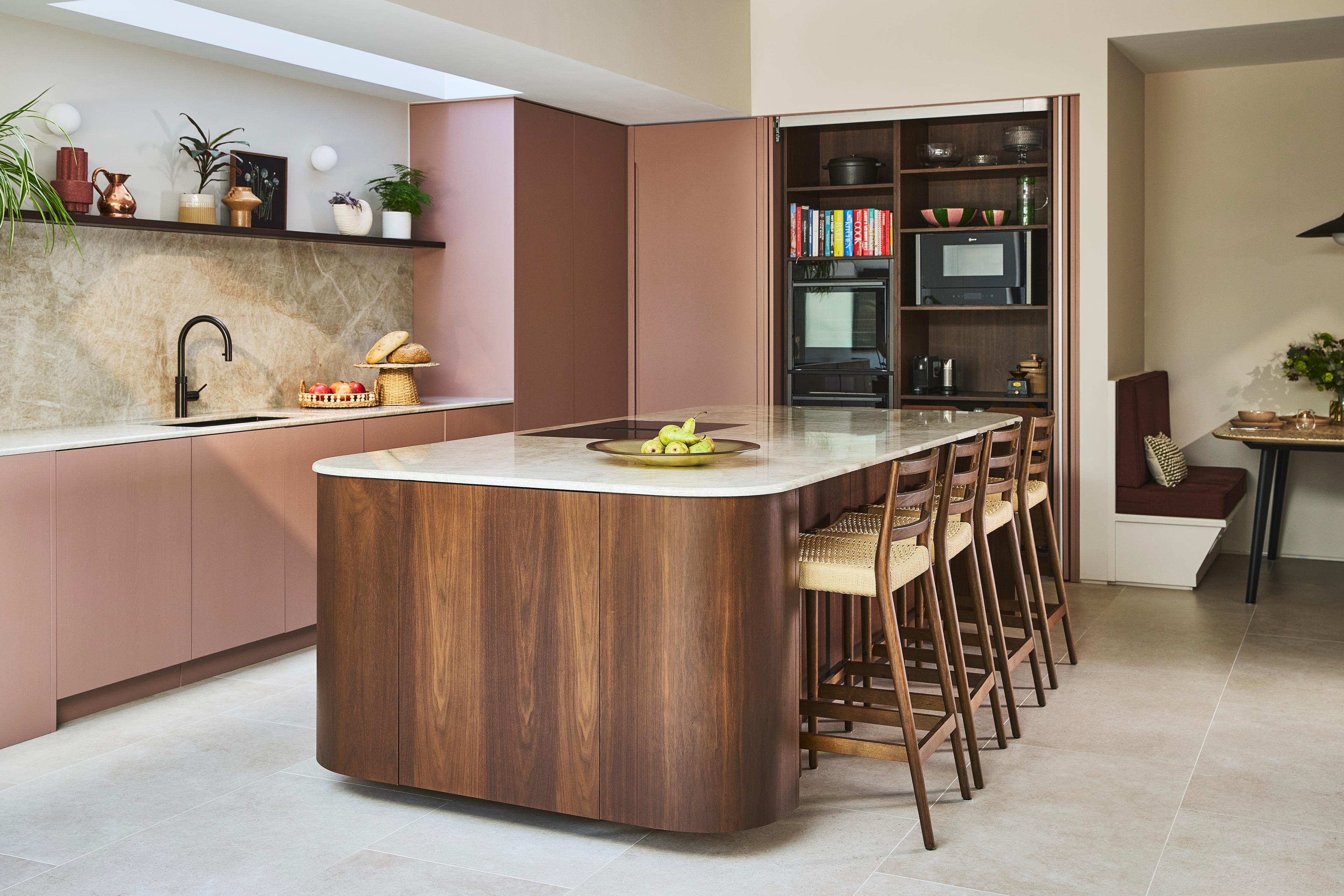
Grove Park Kitchen – pocket doors fold back to reveal the ovens and cookbook shelving, then close again to leave the room calm and uninterrupted.
Open shelving is a commitment, not a shortcut
Open shelving looks effortless. It's the opposite. Every object on it is on permanent display, which means every object has to earn its place, and the collection needs editing constantly. Buy something new and it either finds a spot that makes sense, or it becomes the one thing that looks wrong.
It works best in small doses: one run rather than a whole wall, so what's on it can be curated rather than simply stored. A good test is the first-visit test – anything you wouldn't want a guest to see on their first look round belongs in a cupboard instead.
Let materials do some of the work
Display isn't only about objects. Our eyes are drawn to a worktop with real character, a stretch of timber with visible grain, or even a change of colour on an island. All of these elements are noticeable without a single ornament in sight. A kitchen can feel curated through its materials alone, before a single mug goes on a shelf.
This is where a bespoke kitchen has the advantage over a standard one. The display can be built into the cabinetry itself rather than added afterwards: a glazed cupboard sized for a particular set of glassware, a shelf set at exactly the right height for the cookbooks you actually own. Nothing left to guesswork, and nothing on show that isn't meant to be there.
The same rule, every time
Show what improves with age and use. Hide what doesn't. Everything else is detail, but that one distinction, decided early and built into the design of your kitchen, is what makes a kitchen feel curated rather than cluttered, or bare.
Frequently Asked Questions
Is open shelving practical for a family kitchen?
Decide what’s feasible for your family. If you can be on the messier side, then one run, kept for things you use and like looking at, works well. A whole wall of open shelving in a busy family kitchen can become a dust and clutter magnet rather than a display, but taken care of and curated, it can elevate a space.
What's the difference between display and clutter?
Intention. Display is a small number of chosen objects with room to breathe. Clutter is whatever's left with nowhere else to go. If an item is on a surface because there's no cupboard for it, that's a storage problem, not a styling one.
Should I hide all my appliances?
Not necessarily. Hide the ones that don't add anything to look at, chargers, plastic gadgets, anything mismatched. A characterful range cooker or a well-finished coffee machine can earn its place on show.
How do I decide what goes behind glazed doors?
Anything you'd be glad to see every time you open the cupboard: good glassware, a favourite dinner service, cookbooks with covers you actually like. If you wouldn't choose to look at it, it belongs behind a solid door instead.
Request a Brochure
To receive a digital copy of our brochure and regular updates from us, please complete your details below.