No products match your search.
Kitchen Worktop Ideas: Materials, Styles & Expert Guide
Written by Andrew Nixon
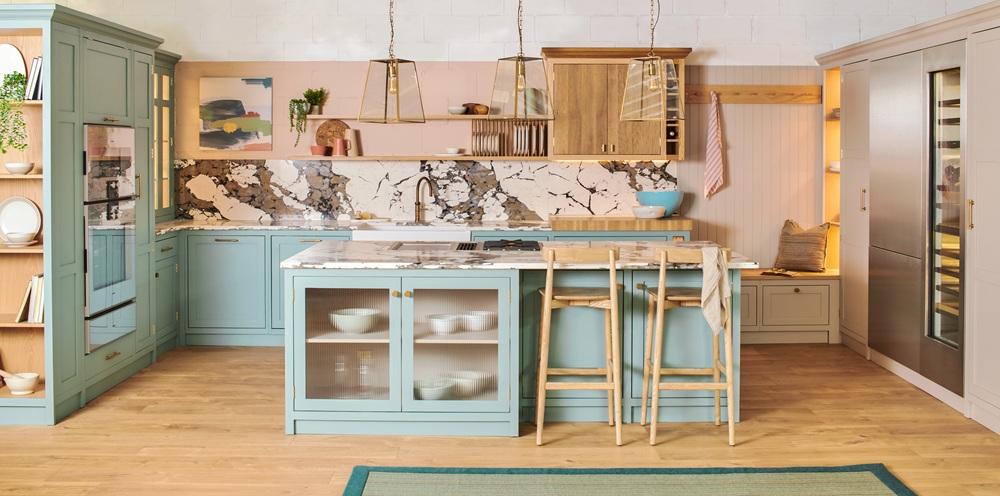
Kitchen worktops play a huge role in both the look and feel of your space – from the warmth of timber to the visual drama of marble. Here’s a beautifully digestible guide to help you explore the best kitchen worktop ideas, materials and styles for your home...
What are the best kitchen worktop materials?
As well as their practical role, kitchen worktops play an important aesthetic and decorative role, adding character and setting the tone of the kitchen. Whether you’re looking for a traditional feel or a more contemporary vibe, your choice of worktop style and material can have a significant impact on how your kitchen looks and feels.
What are the most popular kitchen worktop materials?
Your worktop is one of the most hard-working surfaces in the room. It needs to suit your lifestyle, complement your cabinetry, and set the right visual tone. From natural stone and solid timber to engineered quartz and concrete, each material brings its own aesthetic and practical benefits. The most popular kitchen worktop materials include:
Solid wood - naturally beautiful, warmand tactileButcher's block – chunky, traditional and full of character.Quartz – durable and very low maintenance - and also endlessly versatile in terms of styleNatural stone (marble, granite, limestone) – naturally luxurious and uniqueSolid surface (Corian) - contemporary and seamlessly smoothConcrete - sleek and modern, with an architectual presence Stainless steel - industrial and professional-looking.
Each material has its own strengths, and can come in a variety of different styles, from waterfall worktops to splashback worktops, so the right choice ultimately depends on how you use your kitchen and the atmosphere you want to create.
Types of kitchen worktops: a quick guide
Different materials offer different qualities – not just aesthetically, but in terms of upkeep, durability and overall feel. Here’s a simple overview:
Natural stone (marble, granite, limestone)Beautiful and unique, with striking veining and natural character. Marble offers a softer, more artisanal feel; granite is extremely robust; limestone adds Old World charm.
Quartz (engineered stone)A practical favourite. Non-porous and stain-resistant, quartz is available in a huge range of patterns – from marble-effect to concrete-inspired.
Solid wood (oak, walnut)Wood develops a beautiful patina over time and suits both traditional and modern kitchens. It’s warm and full of lovely organic texture.
Butcher’s blockEnd-grain or edge-grain timber that adds depth and craftsmanship. A classic for country kitchens and hardworking islands.
ConcreteA cool, architectural choice. Modern and subtly textured.
Stainless steelProfessional and hygienic – ideal for industrial-leaning spaces.
Solid surface (Corian)Smooth and minimal. Brilliant for curved worktops and integrated sinks.
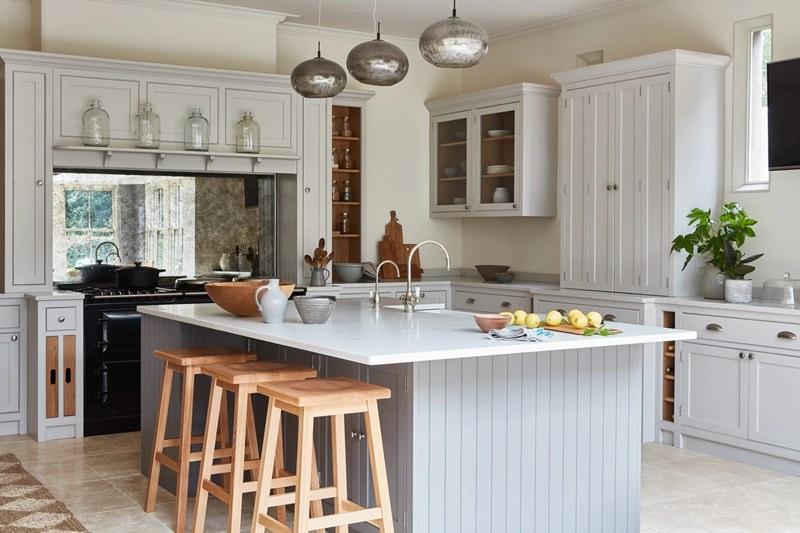
Quartz worktops create a bright, airy feel in the Norfolk Vicarage kitchen
Kitchen worktop ideas by material
From country kitchen warmth to Scandi-style minimalism, here are some examples of different kitchen worktop styles and materials from the Naked Kitchens portfolio to inspire you…
Warmth and character with solid wood worktops
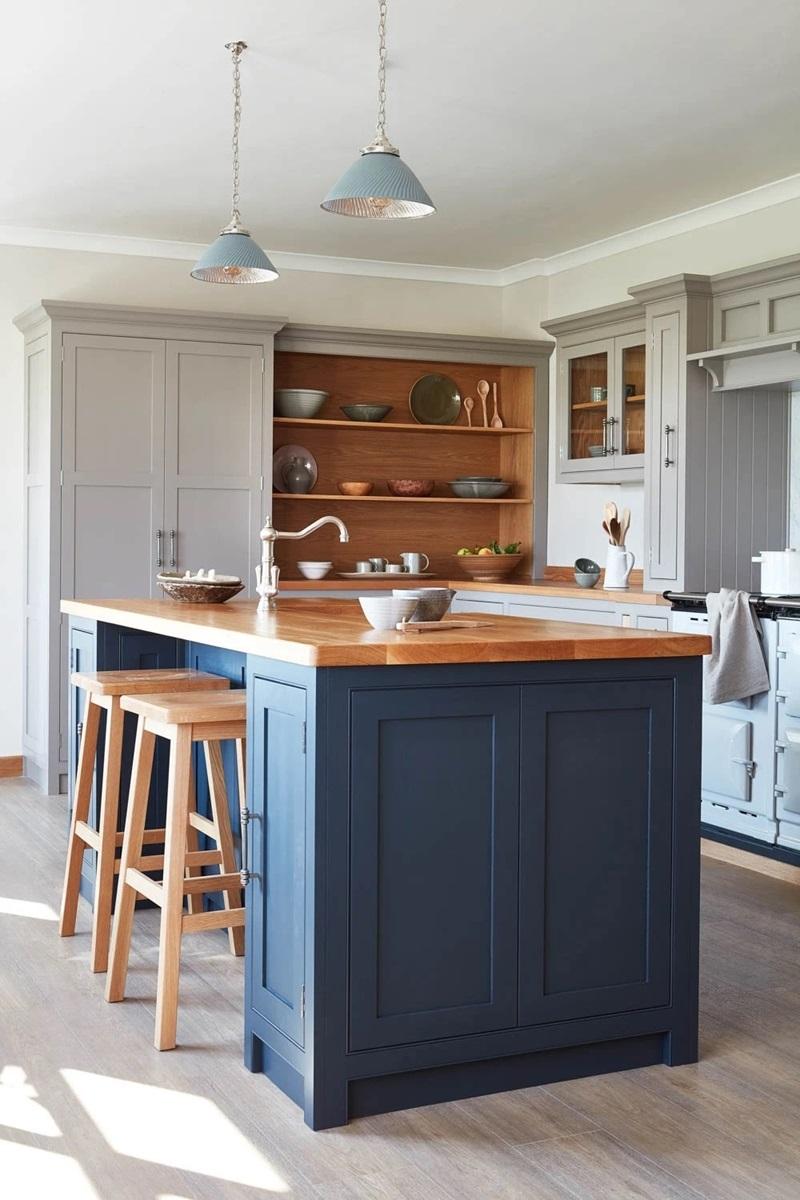
Solid oak worktops create a traditional farmhouse feel in the Raynham kitchen
Wood is a naturally beautiful material, and it has a timelessness which means it works in any style of kitchen. From the lighter tones of ash and beech, though warmer cherry, iroko, maple and oak, to rich mahogany and walnut, a wooden worktop will add texture and character to a kitchen. In the Raynham kitchen above, the solid oak worktops add warmth and create a homely traditional farmhouse feel.
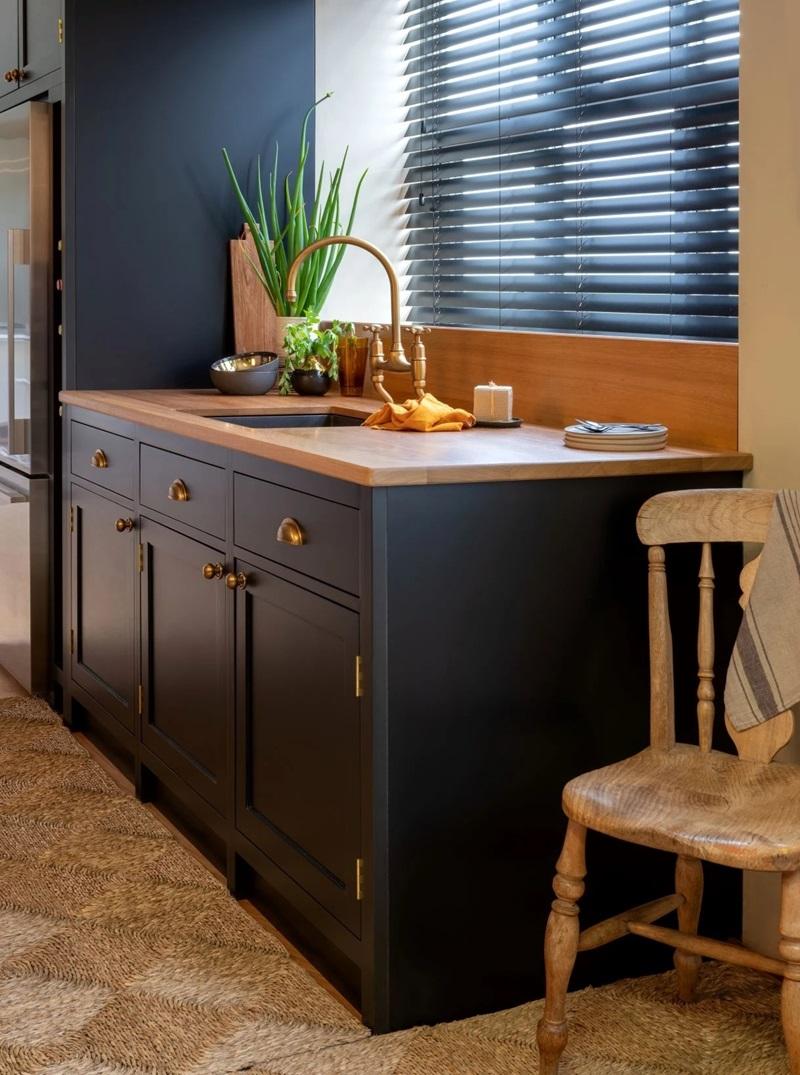
Warm Iroko worktops balance the dark cabinets in the Oyster Catcher kitchen
In the Oyster Catcher kitchen, above, the Iroko wooden worktop with its warm honey tones perfectly balances the deep, rich black of the cabinets and adds a sense of depth and elegance.
Country charm with butcher’s block worktops
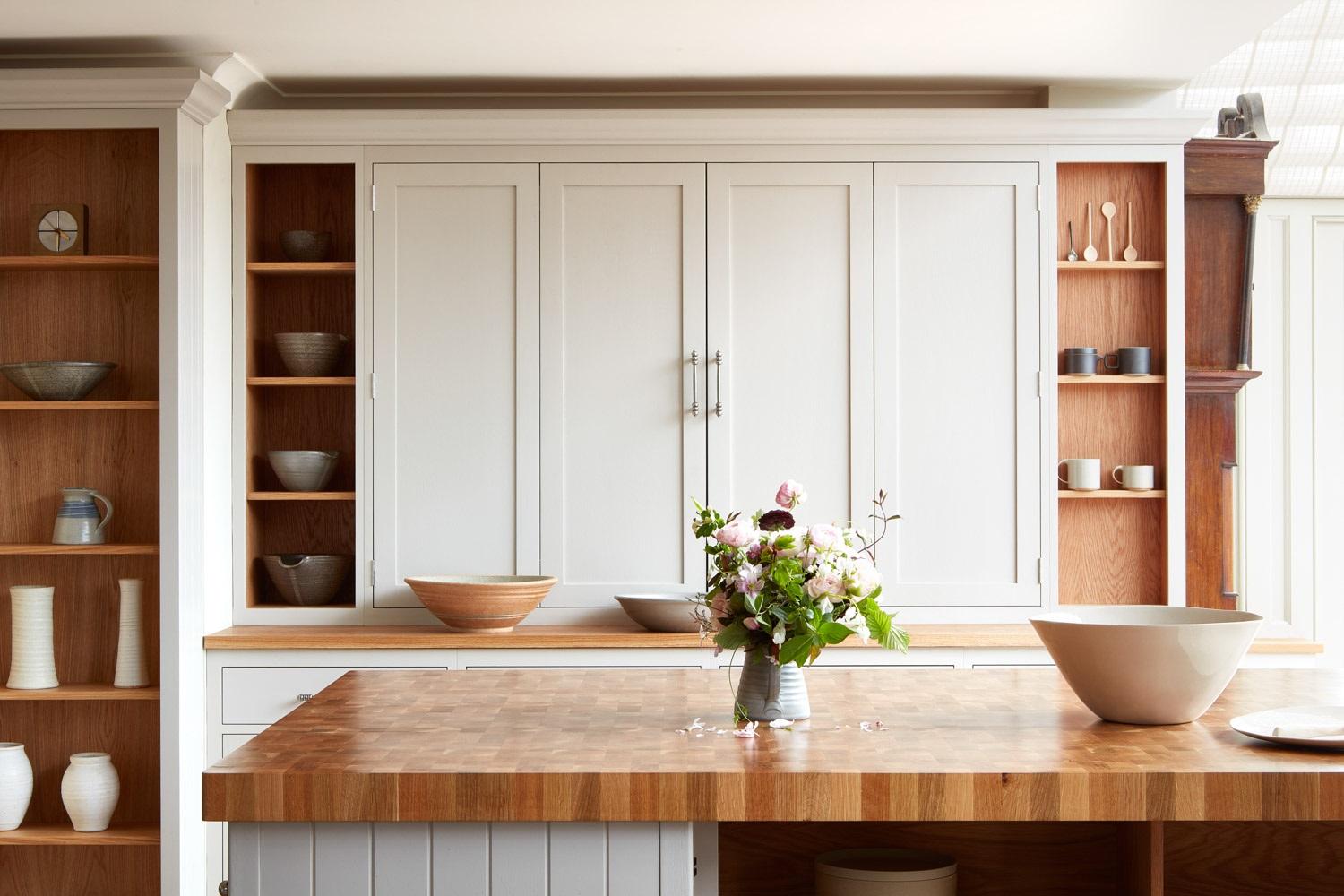
An oak end-grain butcher’s block worktop in the Cley kitchen
A butcher’s block worktop is a great choice for a country-style kitchen. The Cley kitchen, above, features a beautiful oak end-grain butcher’s block worktop, which is both practical and beautiful and adds texture and interest to the space.
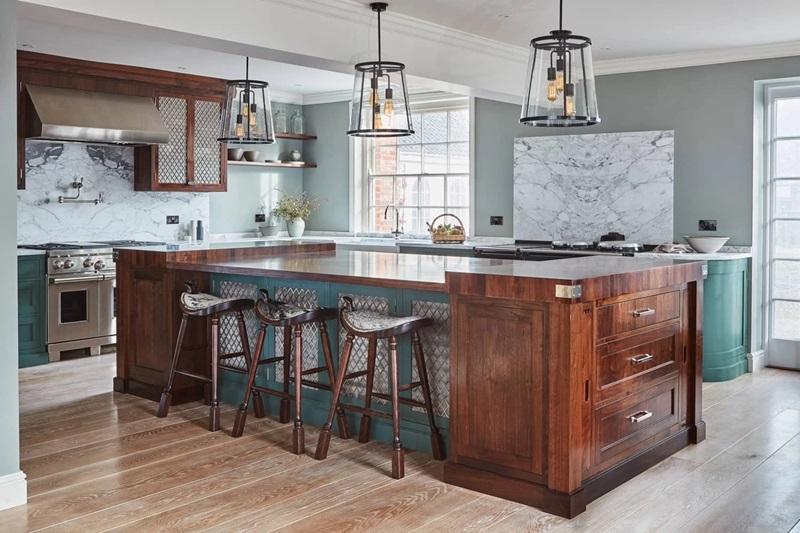
Walnut worktops featuring butcher’s block ends in the Georgian Hall kitchen
Meanwhile, the Georgian Hall kitchen, above, features a sumptuous walnut island worktop with stunning butcher block ends. It’s a country kitchen look but with a wow factor.
Fresh, modern style with quartz worktops
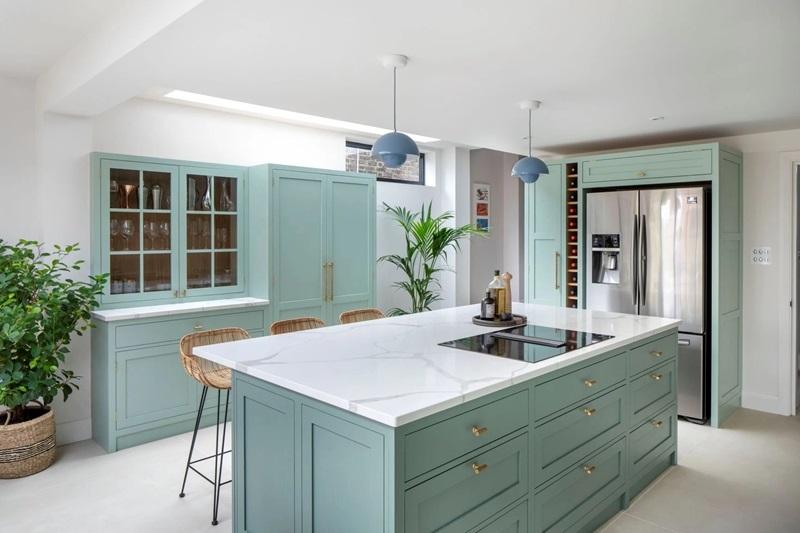
Quartz worktops create a fresh modern look in the Dulwich kitchen
Quartz is a hugely versatile material which comes in a range of different styles and finishes, and it’s a popular choice for contemporary kitchen worktops. The Dulwich kitchen, above, features a Shaker style design with a fresh contemporary twist, courtesy of the cabinets in soft green topped with beautiful marble effect quartz worktops, while the extended island worktop accommodates a row of under-counter seating.
Luxury and drama with marble worktops
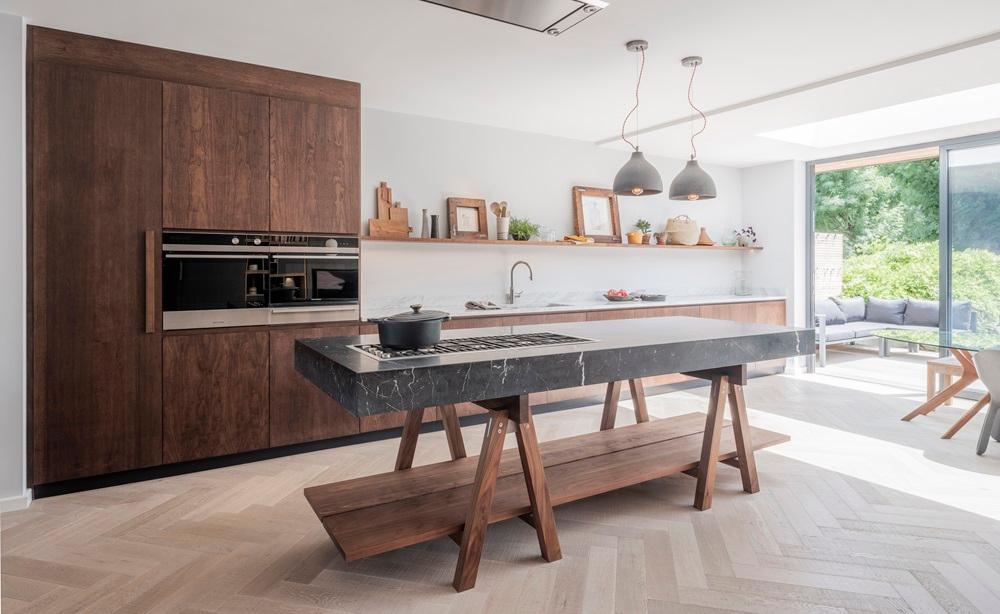
Black and white marble worktop in the award-winning Highgate kitchen
WIth its beautiful natural veining and luxurious, almost glowing quality, marble is a fabulous material for creating kitchen worktops. The Highgate kitchen, above, combines sleek white marble worktops with a show-stopping kitchen island worktop made from a single slab of dark marble, which together with the dark walnut cabinetry creates a smart, minimalist Japandi feel.
Sleek minimalism with concrete worktops
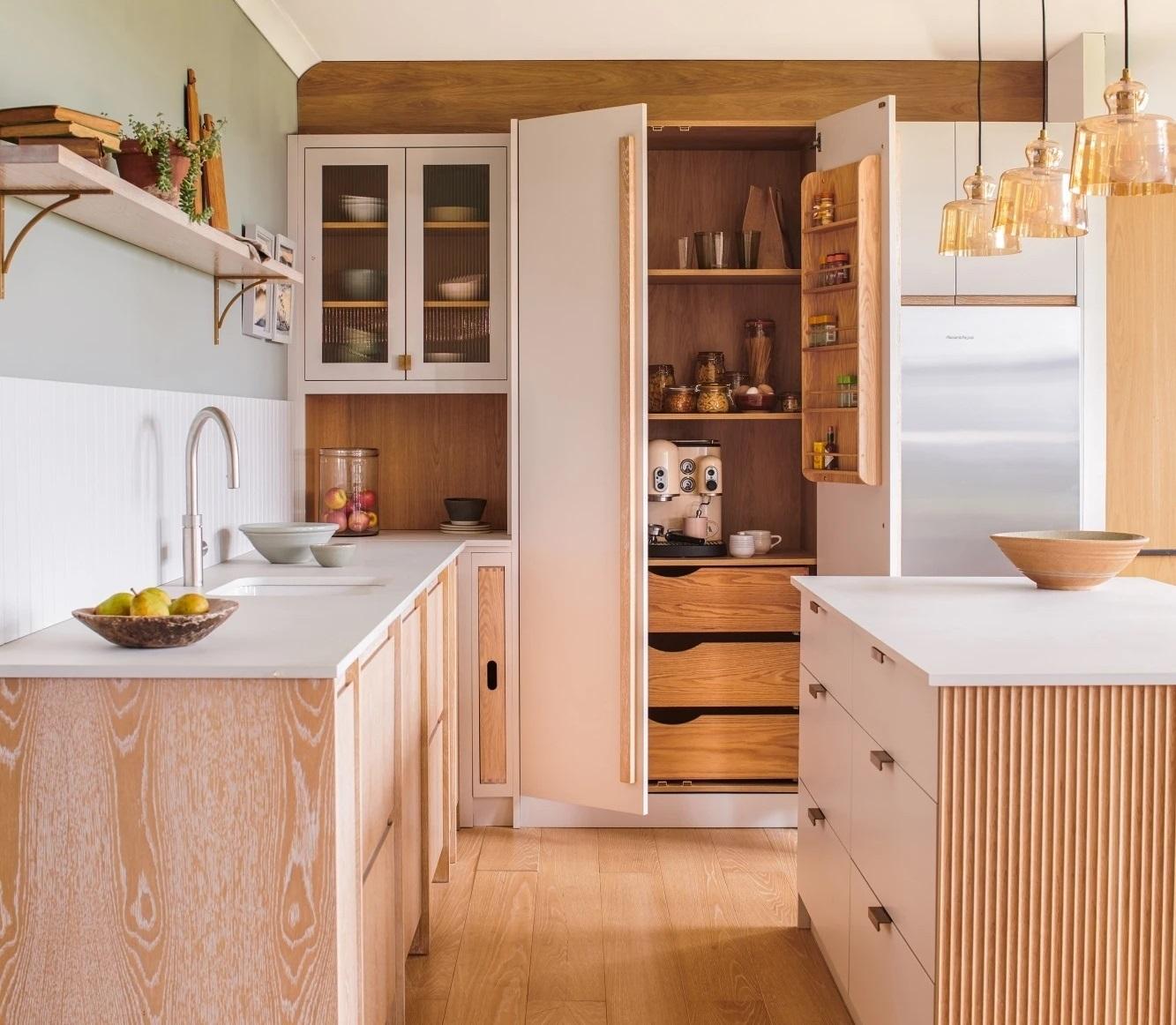
Concrete worktops create a clean minimalist vibe in the Glaven kitchen
Concrete is an extremely durable and versatile material, and it’s available in a range of different colours and textures. Concrete worktops have a smooth, contemporary look and add a distinctly modern edge to a kitchen.
In the Glaven kitchen, above, brushed limed-grain oak and white cabinetry is combined with sleek Caesarstone worktops, creating a modern space with clean, minimalist lines.
Kitchen worktop styles: waterfall, splashback and more
Make a statement with a waterfall worktop
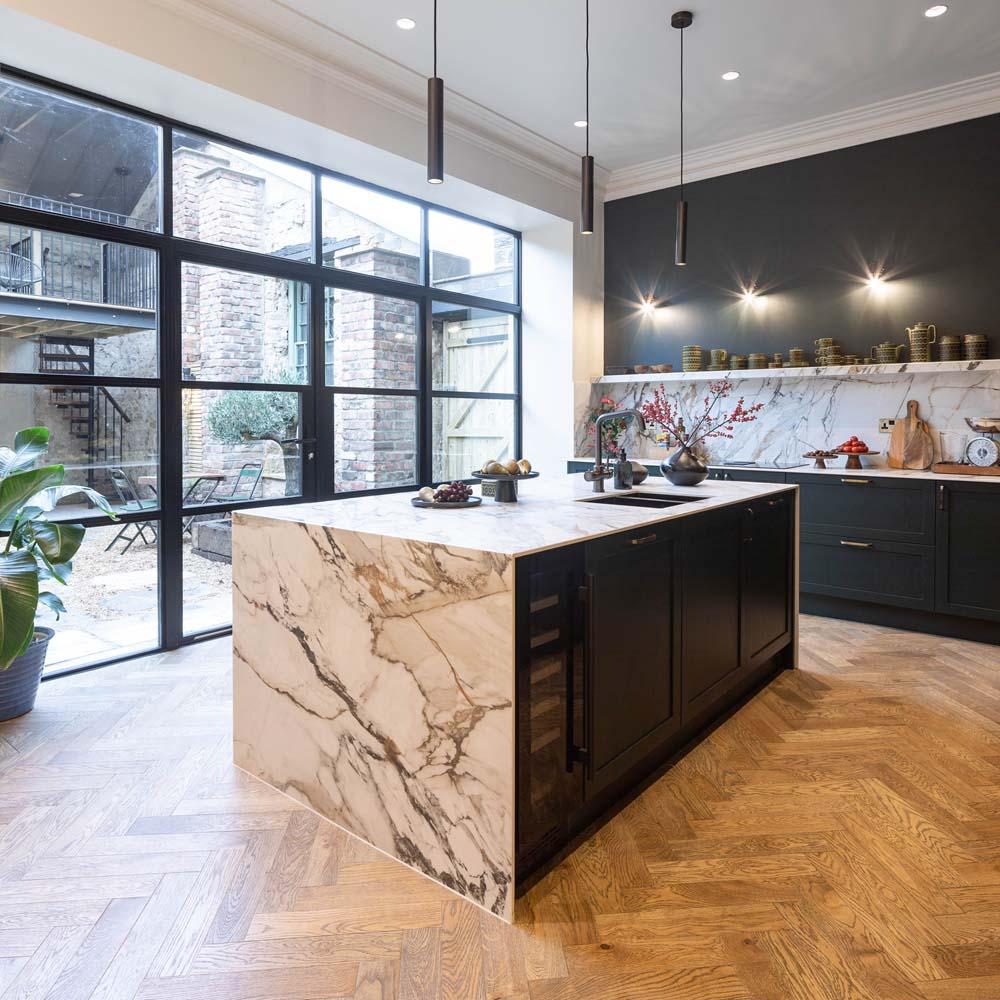
A waterfall worktop adds the wow factor in the Henley kitchen . Image: Amazing Productions.
A waterfall worktop is where the kitchen worktop flows down over the edge of a kitchen cabinet, island or peninsula and cascades all the way to the floor. Waterfall worktops are a fabulous feature in a kitchen, offering a contemporary feel and adding a real wow factor. In the Henley kitchen, above, the kitchen island with its white marble waterfall worktop creates a stunning centrepiece.
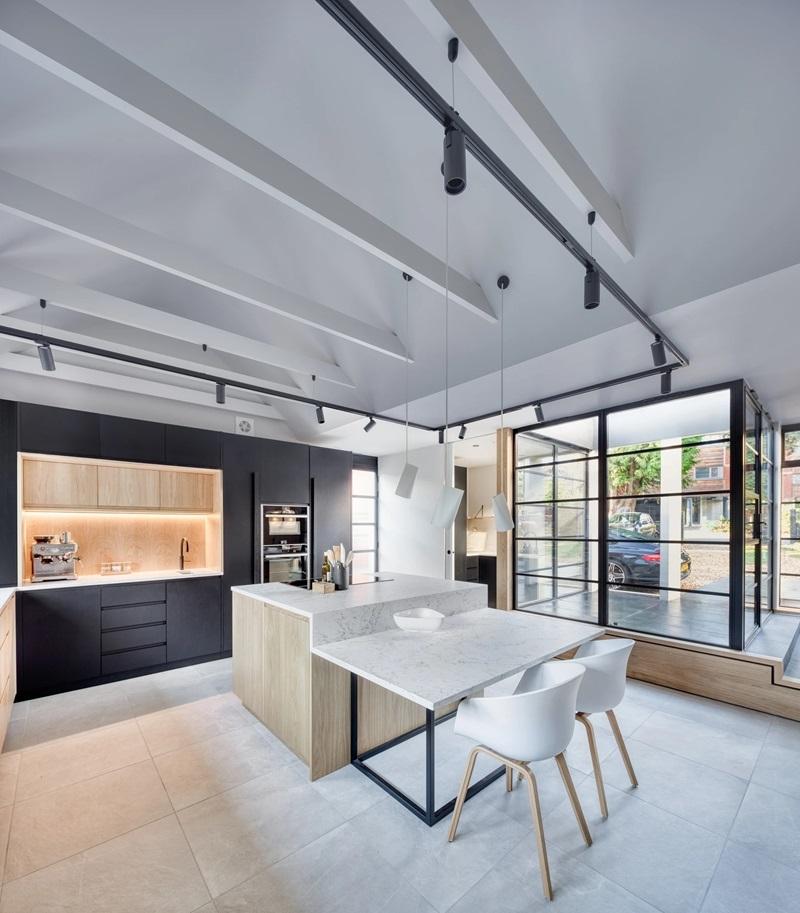
A split-level waterfall worktop in the Southwold kitchen
Meanwhile, the Southwold kitchen, above, offers an unusual twist on the waterfall worktop. Here, the quartz worktop flows over the edge of the island and down into a breakfast bar, creating a striking focal point in this light, modern Scandi-inspired space.
Add a touch of drama with a splashback worktop
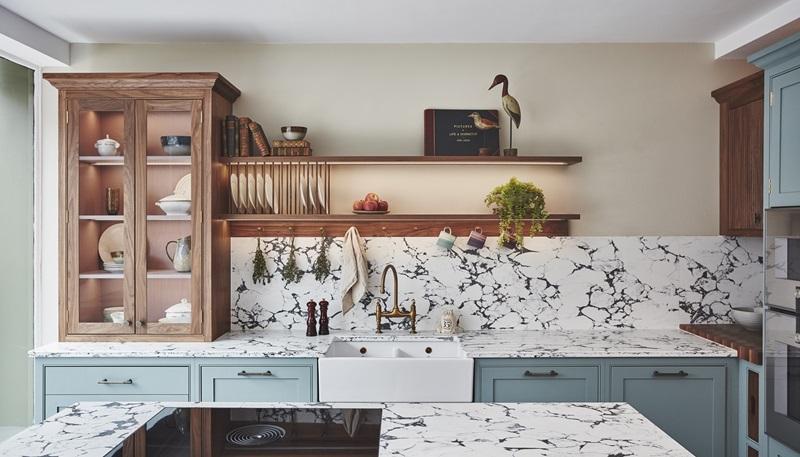
A splashback worktop adds drama in the Anmer kitchen
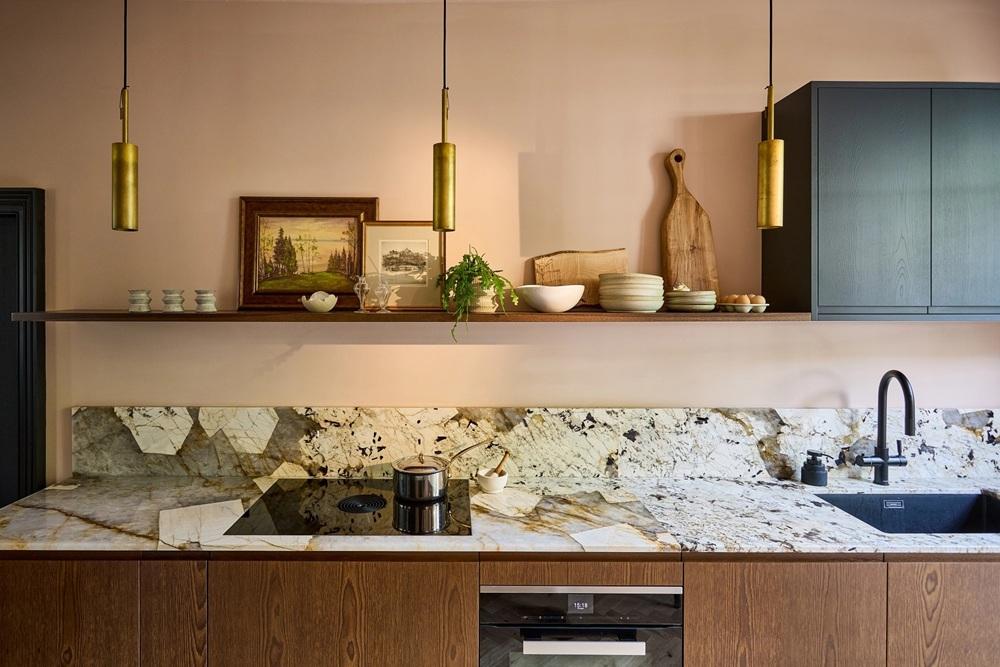
A splashback worktop is where the kitchen splashback flows down onto the worktops, creating a stunning visual effect. In the Anmer kitchen, above, the marbled splashback cascades seamlessly onto the worktop, creating a lovely contrast against the warm timber of the cabinet and shelving, and adding a real sense of drama.
Planning your worktop: heights, depths and thickness
A little technical planning makes a big difference to how your kitchen feels and functions.
Height: Standard kitchen worktop height is around 900mm.
Depth: Most worktops are 600mm deep, though 650mm is increasingly popular for extra prep space
Thickness:
- Quartz/marble/granite: 20mm or 30mm
- Solid wood: 27mm or 40mm+
- Butcher’s block: 60–100mm
- Concrete: varies (usually bespoke)
Overhang: Aim for 30–50mm on cabinet runs; more on an island if stools are involved.
Edge profiles: Square for a contemporary look, chamfered for practicality, bullnose for a softer, traditional style.
These proportions help your worktop feel balanced, ergonomic and perfectly at home in your kitchen.
How to choose the best kitchen worktop for your needs
We don’t believe in choosing a worktop because it happens to be the “standard” option in a showroom. Your kitchen isn’t standard, and your life certainly isn’t. We help you find a surface that genuinely suits the way you cook, live, gather and make a mess — because the right worktop starts with you and your family rather than catalogue.
For busy families: Choose durable, low-maintenance materials such as quartz.
For keen cooks: Look for heat-resistant, robust surfaces such as granite or timber with butcher’s block elements.
For entertainers: Go bold with marble or dramatic dark stone for instant impact.
For contemporary minimalists: Opt for white quartz, concrete or solid surface.
For lovers of warmth and texture: Timber, walnut and butcher’s block add natural richness and character.
The best choice is the one that suits how you live, not just how you want your kitchen to look.
View more examples of our bespoke worktops.
A gorgeous quartz worktop and splashback in the Camden kitchen
At Naked Kitchens, we can create beautiful bespoke kitchen worktops that are perfectly matched to your kitchen and your lifestyle. Get started on creating your dream kitchen.
Frequently Asked Questions
What’s the best material for a kitchen worktop?
There’s no single best material – it depends on your lifestyle. Quartz is brilliant for low-maintenance durability, marble is unbeatable for luxury and character, and wood brings warmth and tactile appeal.
Which style of kitchen worktop should I choose?
That depends on your kitchen style. Waterfall and splashback worktops suit modern spaces; wood and butcher’s block are perfect for traditional kitchens; marble works anywhere you want a striking focal point.
Are quartz worktops better than granite or marble?
Not necessarily — they’re just different. Quartz is durable, consistent and low-maintenance, making it ideal for busy kitchens. Granite and marble are natural stones with unique veining and character; they’re harder to replicate and bring a luxurious, one-off feel. The “best” option depends on whether you value convenience, natural beauty, or a bit of both.
Are wooden kitchen worktops practical?
Yes — as long as you’re happy to care for them. Solid oak or walnut needs occasional oiling and a little care around standing water, but in return you get warmth, texture and a surface that can be refreshed over time. Many families love wood because it develops a beautiful patina rather than looking tired.
What is the most low-maintenance worktop material?
Quartz is usually the easiest. It’s non-porous, stain-resistant and doesn’t require sealing. Solid-surface materials like Corian are also good choices if you want a surface that wipes clean with minimal effort. Natural stone and timber need a little more care, but deliver more depth of character.
Can you mix different worktop materials in one kitchen?
Absolutely. Many of our clients choose quartz for the main runs and wood for the island, or pair marble with a contrasting prep surface. Mixing materials creates depth, zones different areas of the kitchen, and can make the space feel more designed and personal.
What’s the standard thickness for a kitchen worktop?
It varies by material. Most quartz, marble and granite worktops are 20mm or 30mm thick; solid wood is typically 27mm or 40mm; butcher’s block can be 60–100mm for a more traditional look. The thickness affects the overall character of the kitchen — slim profiles feel modern, while chunkier tops add substance and warmth.
See also:
Cleaning and caring for kitchen worktop surfaces - tips for all types of material
Waterfall islands and beyond - 5 ideas for beautiful, flowing kitchen worktops
Kitchen islands - a guide to different styles and ways to use them
Kitchen zones – an alternative to the kitchen work triangle
Request a Brochure
To receive a digital copy of our brochure and regular updates from us, please complete your details below.