No products match your search.
Kitchens Unbound: Skylab’s Space Kitchen – Dinner without gravity
Written by Andrew Nixon
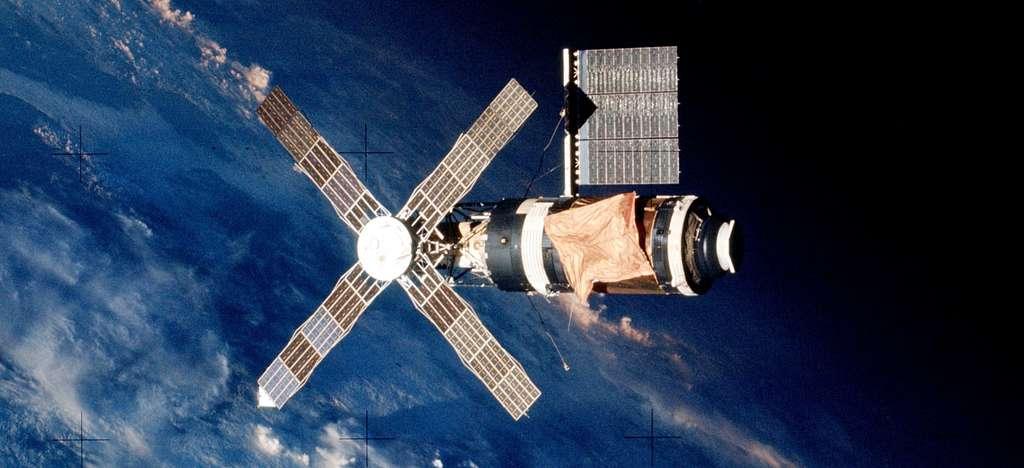
Our Kitchens Unbound series explores remarkable kitchens from history, culture, and even the furthest corners of human imagination. From Tudor palaces to tiny galley ships, these are spaces that show just how central kitchens are to life everywhere.
And sometimes, “everywhere” means literally out of this world. In 1973, NASA’s Skylab became home to the very first kitchen in space...
In May 1973, NASA launched Skylab – America’s first space station and, at the time, the largest spacecraft ever put into orbit. The aim was ambitious: to see whether human beings could not just visit space but actually live and work there for weeks and months at a stretch.
Skylab was partly cobbled together from Apollo hardware, but it was also a genuine piece of interior design. Inside its vast cylindrical workshop – adapted from the third stage of a Saturn V rocket – astronauts would eat, sleep, exercise, shower, and carry out experiments.
Designing such a space was a team effort: physiologist Rita Rapp oversaw the food system, carefully calculating calories and variety to keep crews healthy; Joseph Kerwin, the first physician-astronaut, monitored how those meals affected life and work in orbit; and NASA’s legendary “Mr. Fix It” Jack Kinzler became a kitchen hero when his improvised sunshade saved the station from overheating, preserving not just equipment but the freezer full of food.
All of them understood that if you’re going to ask people to live in orbit for 28, 59, or even 84 days (the durations of Skylab’s three missions), then food can’t be an afterthought.
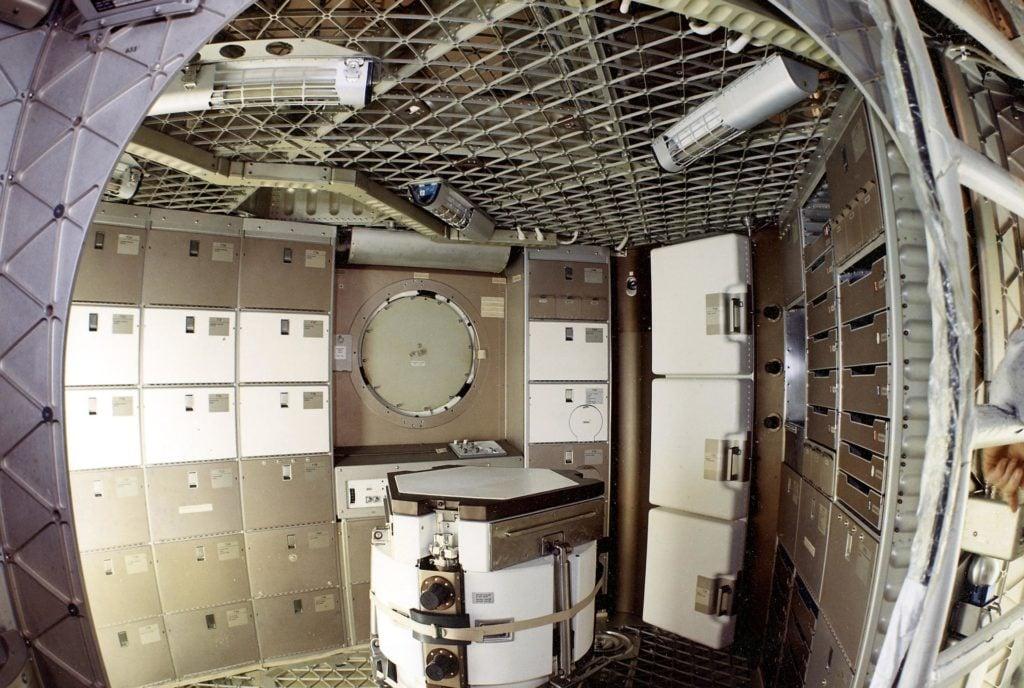
The Skylab kitchen. Photo: public domain
A kitchen for zero gravity
The Skylab galley was small by Earth standards, but revolutionary in space. It included:
- Refrigerators and freezers – the first ever used in orbit, to keep food fresh for long stays.
- Food warmers – hot meals were no longer just a dream.
- Colour-coded lockers – every item had a precise home, reducing chaos in weightlessness.
- Magnetised trays and Velcro – utensils and dishes stuck where they were put, rather than floating away.
- A triangular dining table – designed so there was no “head of the table,” encouraging camaraderie among the crew.
The astronauts quickly discovered that this odd three-sided table wasn’t just about keeping dinner from drifting away. It became a hub for shared routines and social life. An astronaut was assigned to be cook for the day and all the crew tried to make a point of eating together to relax and keep in touch.
Compared with Apollo’s squeeze tubes and bite-sized cubes, this was a domestic revolution. Skylab became the first spacecraft where astronauts could enjoy something resembling a family dinner.
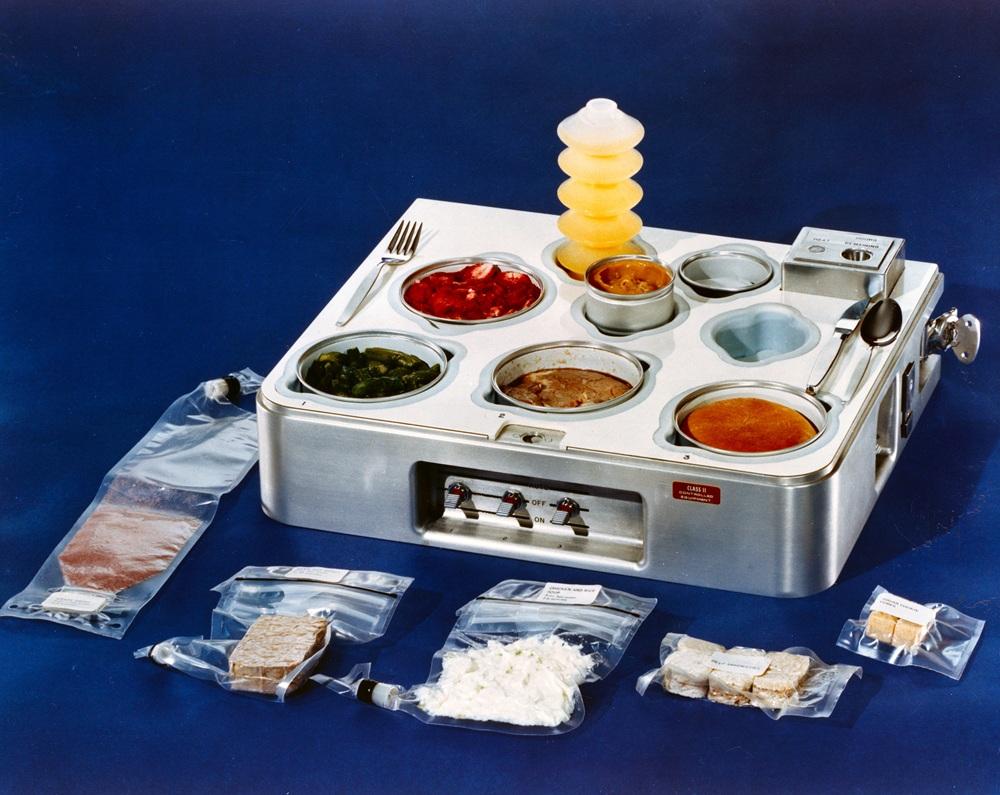
A Skylab food tray, including orange drink, strawberries, asparagus, prime rib, dinner roll and butterscotch pudding. The packages include grape drink, beef pot roast, chicken and rice, beef sandwiches and sugar cookie cubes. Photo credit: NASA, via Flickr
Challenges beyond cooking
Designing a kitchen in orbit meant solving problems most of us never think about…
- Crumbs are dangerous! A loose breadcrumb can clog instruments or float into eyes. Food had to be prepared to minimise debris.
- Water behaves differently. Liquids form floating spheres; drink pouches with straws were essential.
- Heat rises – but not in space. Without gravity, convection doesn’t happen. Ventilation fans had to be carefully designed to remove cooking smells and prevent hot spots.
- Even sitting is odd. As one Skylab account put it: “In the ward room they found it was easier to eat standing up, as sitting meant bending, and bending in zero gravity tired the stomach muscles.”
And of course, things sometimes got messy. In the words of another crew member: “We were continually reaching out to get a ball of gravy or something else that had got away.”
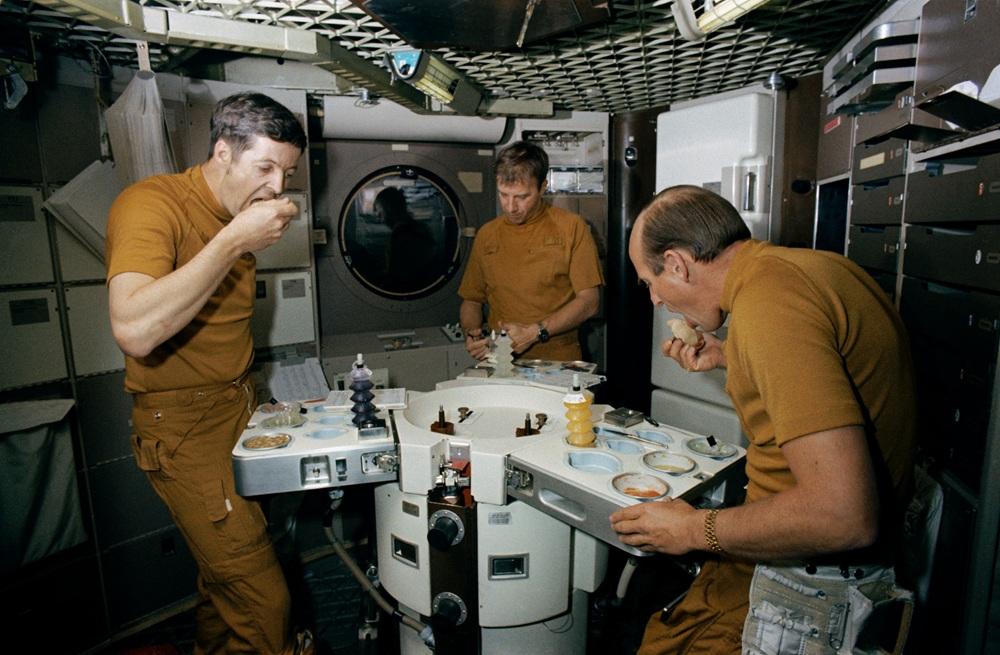
The Skylab kitchen. Photo: public domain
Lessons for life on Earth
What can a 1970s space station teach us about designing kitchens here on the ground?
- Layout matters everywhere. Even in zero gravity, careful arrangement of storage, preparation and eating areas made life smoother.
- Organisation is freedom. Every item in Skylab had its place; on Earth, a well-planned larder or utility space gives the same ease.
- The kitchen is always social. From Tudor palaces to 1970s spacecraft, eating together has been the heart of daily life. As one astronaut put it: “When we stopped letting the food times move around, things kind of stabilised out for us.” The simple act of sitting down to eat – or float to eat – gave a rhythm to life in orbit.
From Skylab to Norfolk
At Naked Kitchens, we’re unlikely to be fitting magnetic cutlery trays any time soon. But the philosophy is familiar: kitchens aren’t just for cooking, they’re for living. A well-planned island or breakfast bar, like Skylab’s triangular table, creates a natural hub for connection. Clever storage keeps everything in its place. And the right layout makes daily routines smoother – whether you’re feeding astronauts, a family of five, or a crowd of friends.
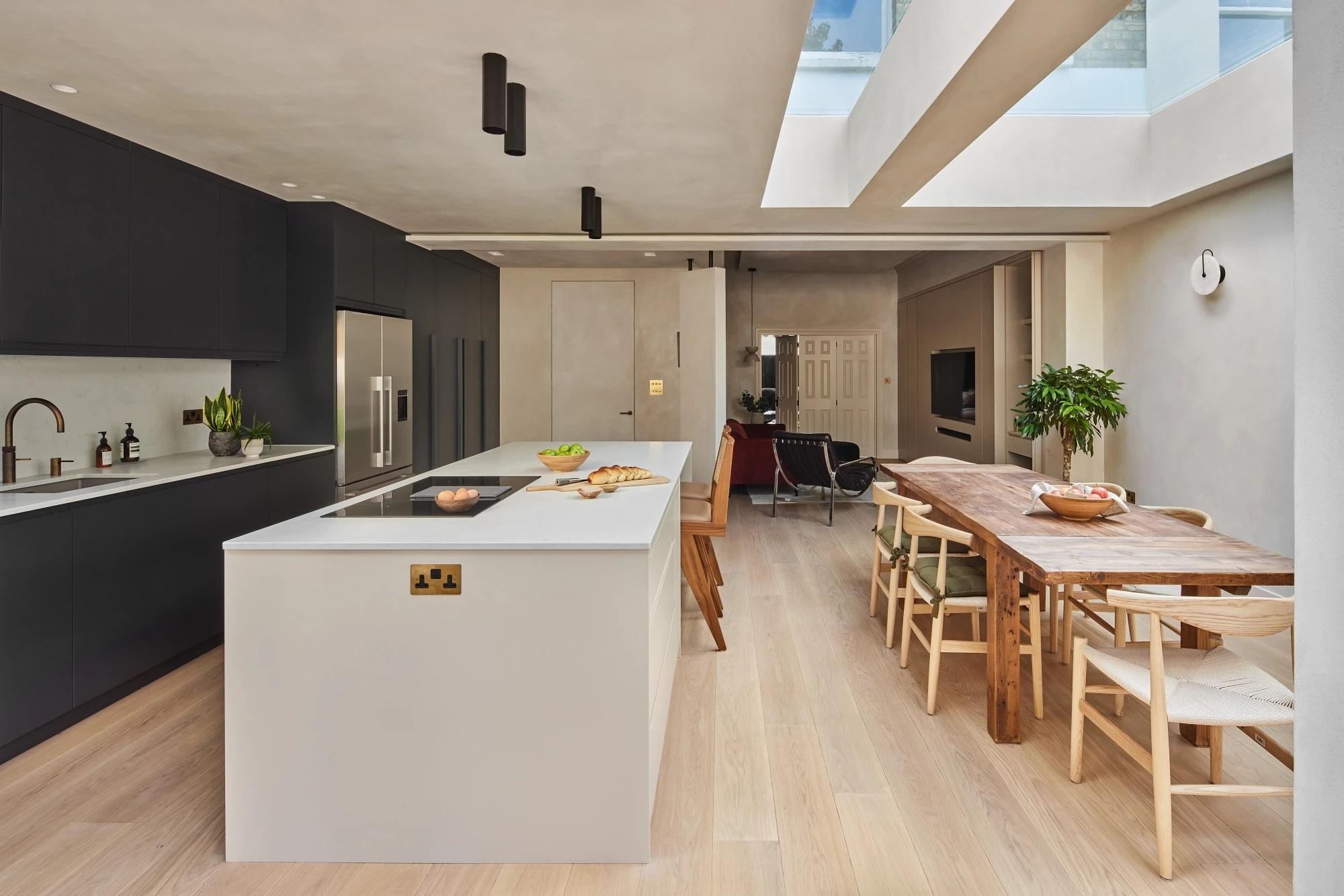
Built for life – wherever you are in the universe…. Browse our out-of-this world kitchens portfolio here.
See also:
Kitchens Unbound: The International Space Station galley kitchen
‘Kitchens Fit for Heroes’: The surprising brilliance of Britain’s post-war prefabs
The Frankfurt Kitchen - the kitchen that revolutionized modern design
The Sunderland flying boat galley kitchen - built for a high-pressure life
Ernest Shackleton's Cape Royds kitchen - built for an extreme life
Request a Brochure
To receive a digital copy of our brochure and regular updates from us, please complete your details below.