No products match your search.
Designing a kitchen for busy family life
Written by Andrew Nixon
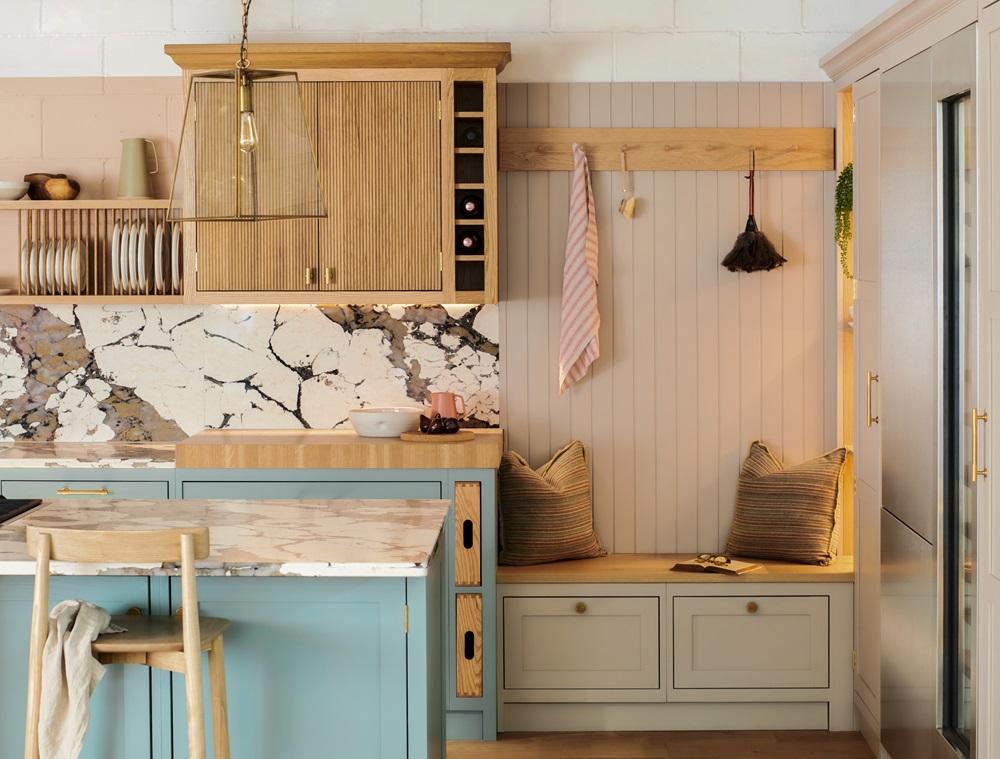
A family kitchen has to absorb the full chaos of daily life – from school mornings and snack raids to homework, hosting and Sunday roasts. Here’s how to design a space that works beautifully around real family routines…
A family kitchen has to work hard. It’s where breakfasts are negotiated, packed lunches are assembled, homework is supervised, friends gather and get in your way, Sunday lunches happen, and someone is almost always looking for a charger.
So designing one involves more than choosing tough materials or adding extra cupboards. It’s about understanding the rhythms of family life, and creating a kitchen that can absorb chaos yet still feel like somewhere you actually want to spend time.
In fact, the best-designed kitchens can actually make everyday family life easier. Here’s how…
The family kitchen as traffic system
Busy family kitchens are full of movement. Someone is making toast, someone is unloading the dishwasher, someone else is trying to get to the fridge. And the usual suspect has abandoned a school bag in exactly the wrong place.
This is why layout matters so much.
A good family kitchen needs clear routes through the space, especially between the fridge, sink, hob, dishwasher and table or seating area. It should allow several people to use the room at once without everyone colliding in the same narrow strip of floor.
In practical terms, that might mean:
- Enough space around an island for people to pass comfortably
- A fridge positioned so snack-seekers don’t interrupt the cooking zone
- A dishwasher close to everyday crockery storage
- A landing space near ovens, fridge and sink
- Seating that sits slightly outside the main prep area.
Designing around routines, not just zones
Kitchen zoning is useful, but in a family kitchen it helps to think in routines. What actually happens here on a normal weekday morning?
And questions like….Where are the cereal bowls? Where do the lunchboxes live? Where does the coffee machine go? Where are school water bottles filled? Where do bags land when everyone comes home?
A breakfast zone or pantry station can make mornings much calmer, particularly if it brings together cereals, bread, spreads, bowls, mugs and small appliances in one place. A dedicated lunchbox drawer can sound absurdly specific – but it saves ten minutes of rummaging every morning.
The same applies to after-school snacks, homework, dog food, sports bottles, baking kit, recycling, vitamins, phone chargers and the mysterious category of “things that must not be lost but have no proper home”.
The more accurately the kitchen reflects your family’s real routines rather than an imaginary ‘showroom’ life, the better it will work.
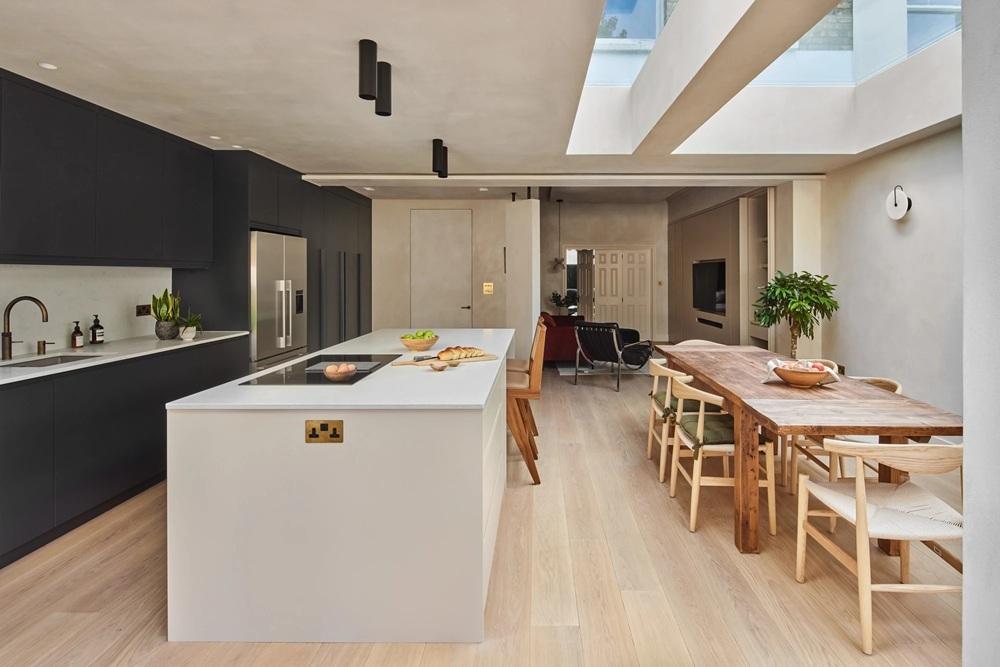
The Kensington kitchen has plenty of space and flexibility
The island isn’t compulsory
The kitchen island has become shorthand for “family kitchen”, but it isn’t always the best answer.
A well-designed island can be brilliant: a place for chopping, chatting, homework, snacks, drinks, serving and general family orbiting. It can also provide excellent storage and help define the kitchen in an open-plan space.
But an island that’s too large, too close to the main run, or dropped into a room simply because “family kitchens have islands” can make the space harder to use.
Sometimes a peninsula, breakfast bar, dining table or even a generous uninterrupted run of worktop will serve family life better. The key question is, what does this family actually need the space to do? An island isn’t always the answer (though it very often is!).
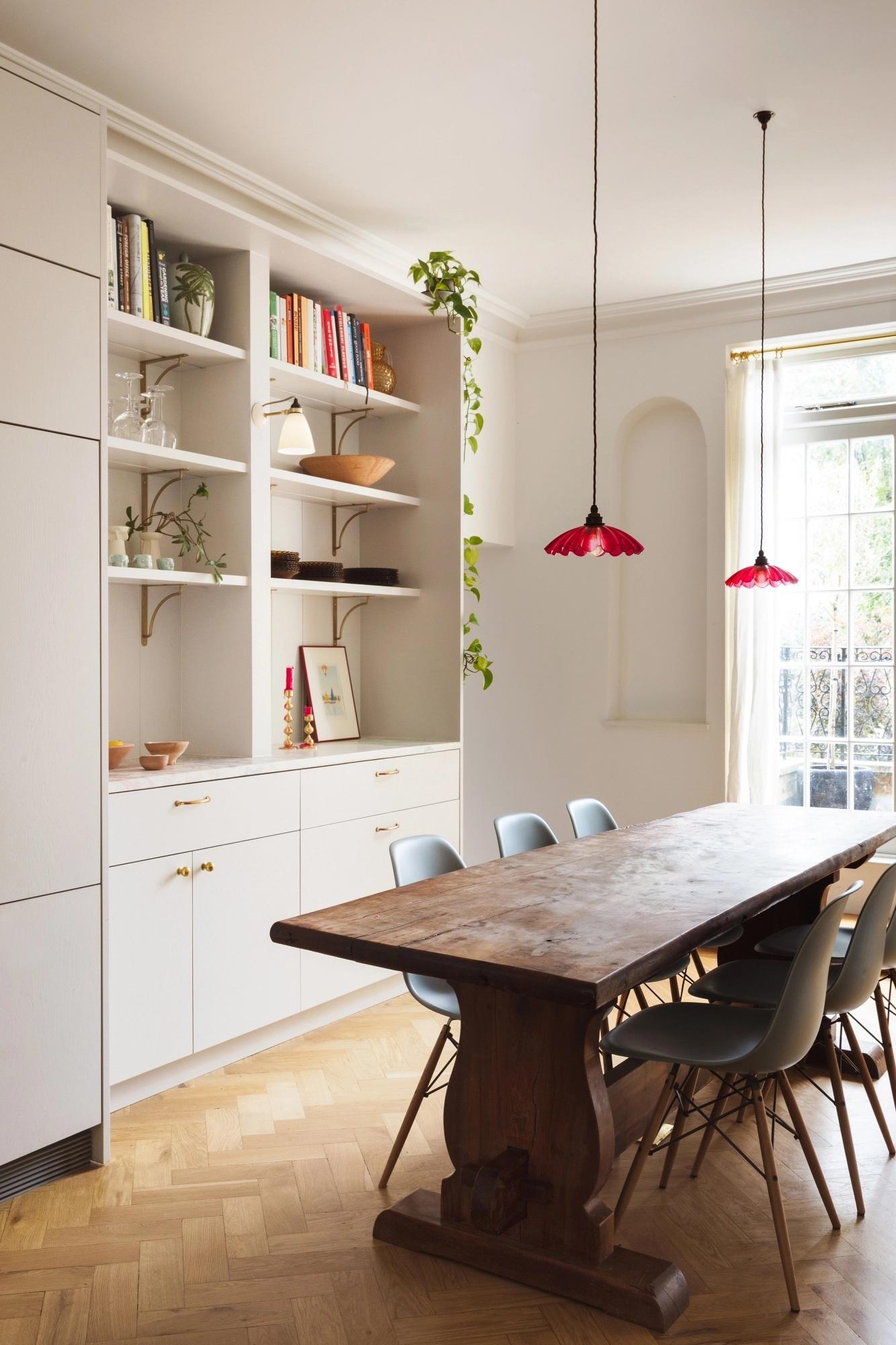
The Haringey kitchen is built around a long dining table
Storage that stops the daily pile-up
Family kitchens accumulate… stuff. Lunchboxes, water bottles, devices, party bags, letters from school, half-used craft supplies and so on.
So the storage has to be smart, not just “lots of cupboards”.
Good family kitchen storage usually includes:
- Deep drawers for pans, bowls and everyday cookware
- Easy-access drawers for children’s cups, snacks or lunchbox supplies
- Tall larder storage for food, bulk buys and breakfast ingredients
- A dedicated place for recycling and cleaning supplies
- Appliance storage to keep worktops clear
- Somewhere for paperwork, chargers and the bits of family life that otherwise colonise the island
This is where bespoke design becomes genuinely useful – because families are super-specific. One household needs a baking cupboard, while another needs a dog-feeding drawer.
Surfaces that can take real life
A family kitchen has to be durable, but that doesn’t equal dull. It
Quartz worktops are a good choice because they’re hard-wearing, low-maintenance and forgiving in a busy space. Timber brings warmth and develops character over time, though it needs a little more care. Painted cabinetry can be wonderfully robust when properly made and finished.
So beautiful materials are very much in play. The important thing is to choose ones that really will work for you. If your kitchen will see muddy elbows, hot pans, dropped cutlery, school projects, baking sessions and big Sunday lunches, it needs finishes that can cope with life rather than merely photograph well on installation day.
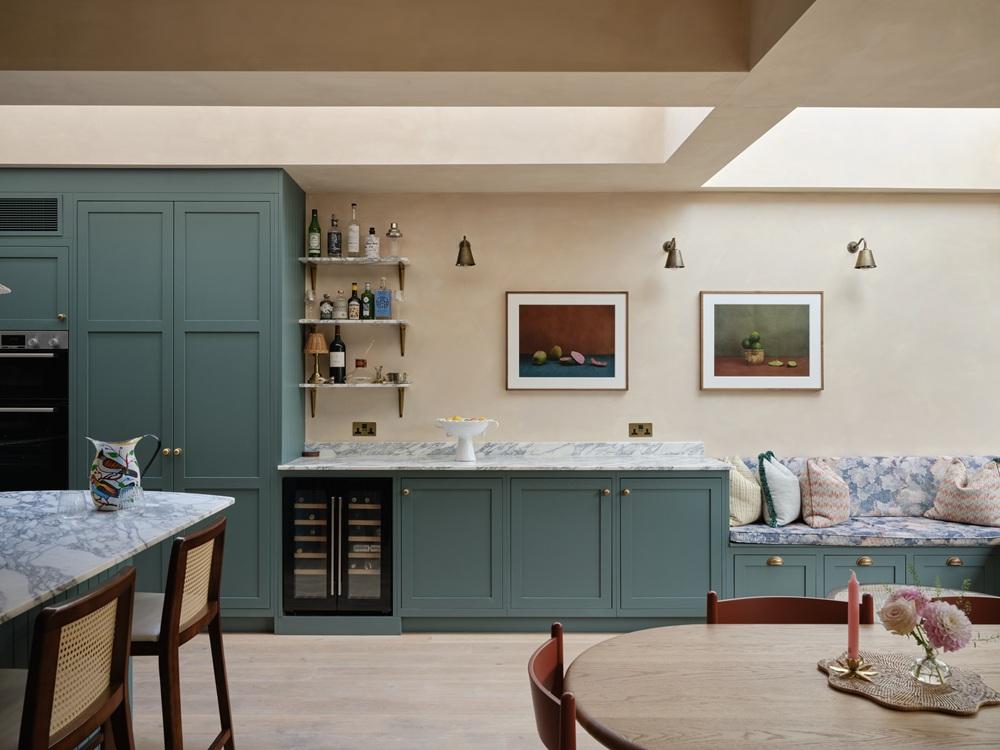
The Queen's Park kitchen has flexible spaces and plenty of seating options out the way
Room for togetherness – and escape
A family kitchen should bring people together, but in a way that’s flexible and allows for different kinds of togetherness.
For example, a younger child may want to sit close while you cook but a teenager may want to hover near the fridge without formally admitting they’re spending time with you. Someone may need a quiet corner for homework while the rest of the room carries on around them.
Thoughtful seating is the key here. Island seating can work brilliantly, but so can a dining table, built-in bench, window seat, breakfast bar or small perch for one. The aim is to create places where people can naturally settle without blocking the working parts of the kitchen.
Designing for your family’s future
One of the hardest things about family kitchen design is that families, of course, change and children grow up.
The kitchen that needed low-level plastic cup storage for toddlers will later need a coffee station, bigger fridge space, more seating, or somewhere to serve a crowd.
It’s impossible to predict exactly how your future family will behave, so the trick is to design in flexibility. Think adjustable shelving, generous larder storage, adaptable drawers, hard-wearing finishes and timeless cabinetry – all things that help the kitchen evolve with the household.
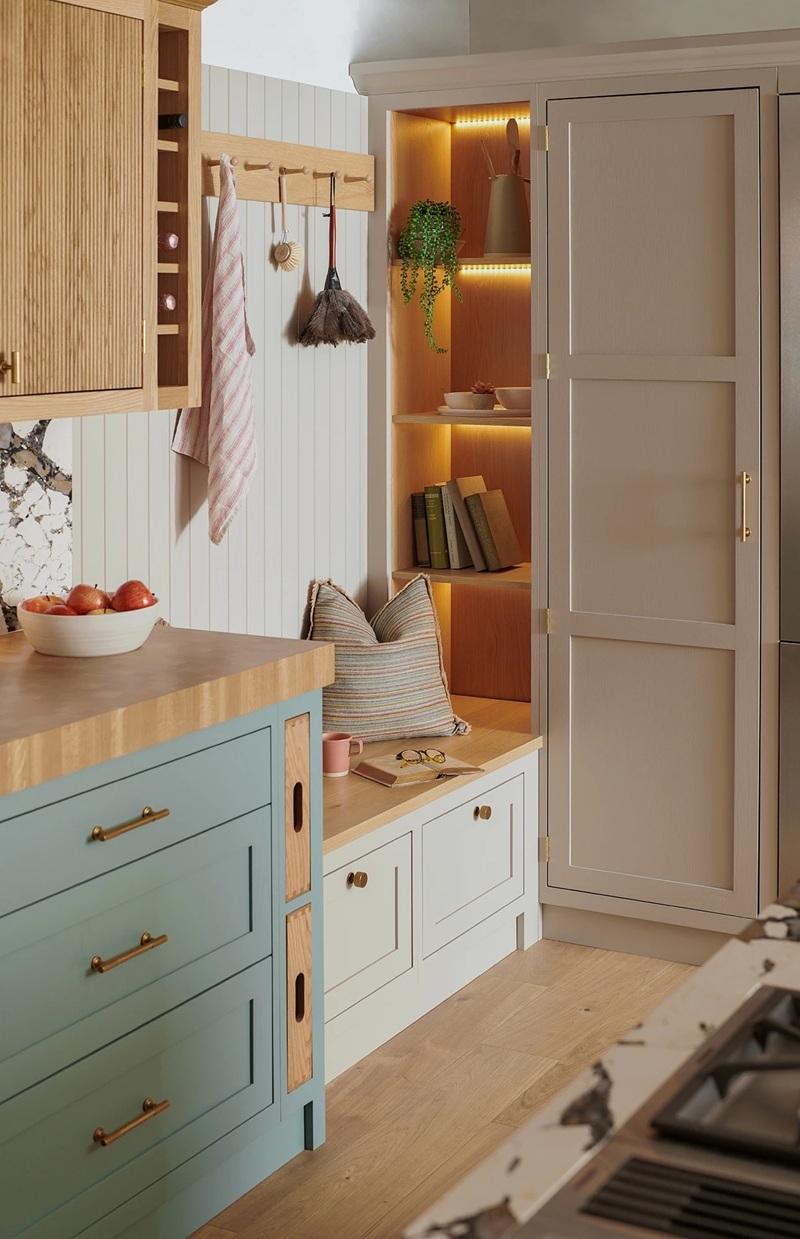
The Elmham kitchen (also pictured top) has clever storage and tucked away alcove seating - perfect for family life
A kitchen built around your family
There’s no single formula for the perfect family kitchen, because every family is different. That’s why we start with how you live.
At Naked Kitchens, we design and build kitchens around real people, real routines and real homes. We’ll think about the morning rush, the Sunday roast, the homework corner, the snack drawer, the big family gathering, and the quiet cup of tea after everyone has finally left the room.
Start your kitchen journey with Naked today.
Frequently Asked Questions
What is the best layout for a busy family kitchen?
The best layout is one that supports your family’s routines. Open-plan, U-shaped and semi-open layouts can all work well, but the key is good flow: clear routes, enough prep space, and seating that doesn’t interrupt the main cooking zone.
Do you need an island in a family kitchen?
No. An island can be brilliant, but only if the room has enough space around it and the island genuinely improves how the kitchen works. In some homes, a peninsula, dining table, breakfast bar or banquette may be a better solution.
How do you keep a family kitchen tidy?
The secret is designing storage around everyday clutter. That might include deep drawers, a tall larder, appliance storage, a lunchbox drawer, recycling storage, a charging drawer, or a dedicated place for school papers and keys.
What materials are best for a family kitchen?
Hard-wearing, repairable and easy-to-live-with materials tend to work best. Quartz worktops, properly finished painted cabinetry and durable timber can all be good choices, depending on the look and level of maintenance you want.
Can a family kitchen still be stylish?
Absolutely. Practicality and beauty aren’t opposites. A well-designed family kitchen should be durable, easy to use yet full of character.
Request a Brochure
To receive a digital copy of our brochure and regular updates from us, please complete your details below.