No products match your search.
The most common kitchen layout mistakes (and how to avoid them)
Written by Andrew Nixon
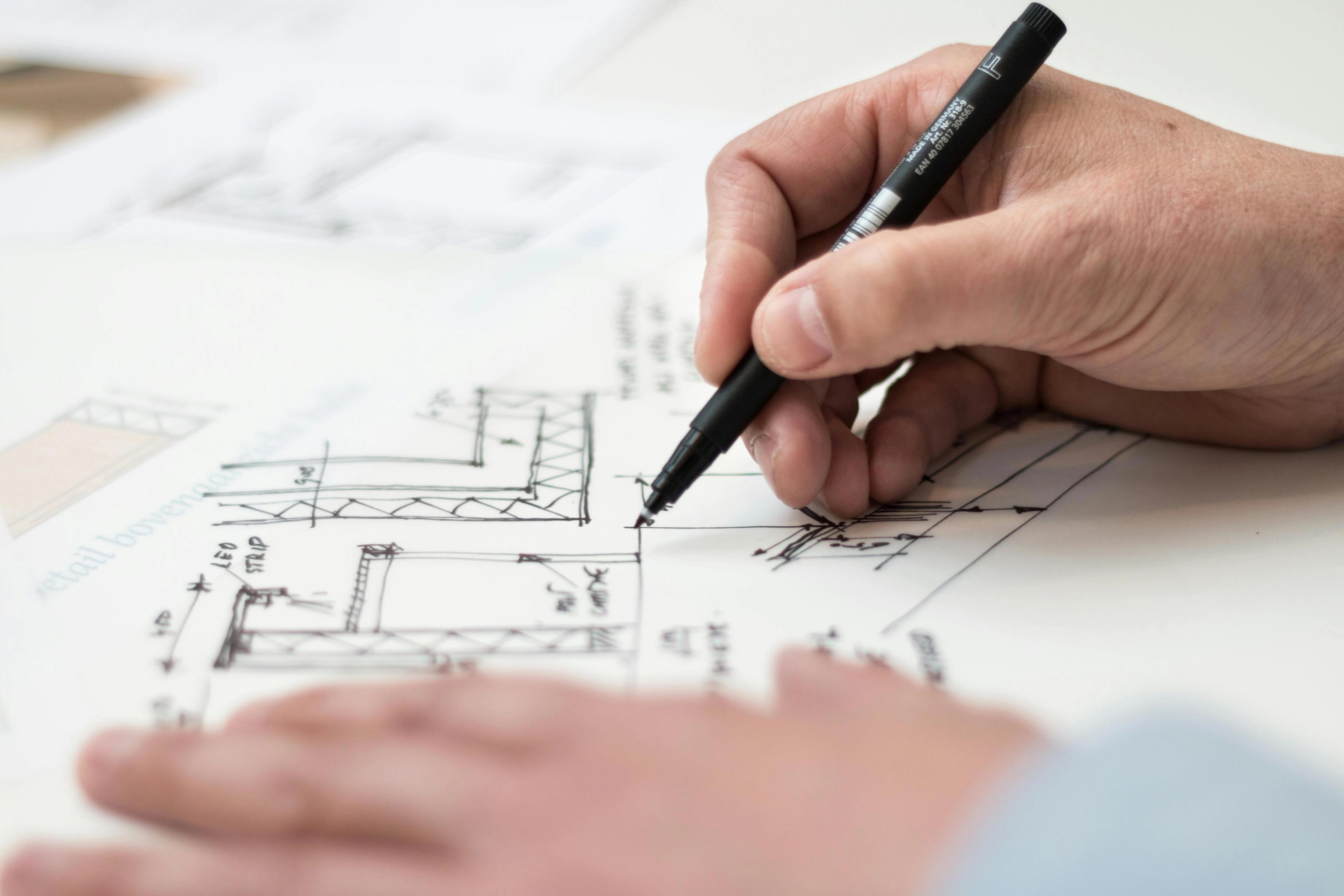
We take a look at some of the most common kitchen layout mistakes, together with expert tips and advice to help you avoid them…
A good layout is the difference between a kitchen that simply looks nice and one that genuinely works for the way you live.
Get it right, and everything flows: cooking, hosting, everyday home life. Get it wrong, and even the most beautiful kitchen can be a daily frustration to use.
We’ve pulled together some of the most common layout mistakes we see in real homes, along with practical ways to avoid them – and a few insights from how we help our clients get it right from the start.
If you’re at the measuring stage, it’s worth beginning with a clear, accurate floor plan. We’ve put together a simple guide to help you capture everything properly – including a checklist of the key measurements we’ll need to design your space:
See How to draw a floor plan for your new kitchen
Why is it so important to have a good kitchen layout?
A well-planned kitchen balances form and function, creating a space that feels natural to move around in and easy to live with day to day.
When the layout is right, you barely notice it – things are simply where they should be. But when it’s not, small frustrations start to add up: awkward bottlenecks, nowhere to put things down, or constant back-and-forth between key areas.
Mistake #1: Poor circulation routes around the kitchen
This is one of the most common issues we see – kitchens that look good on paper, but feel surprisingly awkward once you start using them.
If circulation hasn’t been properly considered, you can end up with congestion and bottlenecks, or a layout where you’re constantly retracing your steps just to get things done.
How to avoid it
It helps to plan your layout around how you actually use the space. You (and anyone else in the kitchen) should be able to move around comfortably, open doors and drawers fully, and work without getting in each other’s way.
As a guide, aim for around 3.5–4 feet of clearance between runs of cabinets, worktops and islands, depending on the size of the room.
It’s also worth thinking in terms of zones rather than isolated features. Modern kitchen design often divides the space into areas for preparation, cooking, cleaning, storage and so on. When these zones are positioned sensibly in relation to each other, the whole kitchen starts to feel more intuitive.
See Kitchen zones – an alternative to the kitchen work triangle
Mistake #2: An oversized kitchen island
Kitchen islands are wonderful things – but like most good ideas, they can be overdone.
An island that’s too large, or poorly positioned, can end up dominating the room and even getting in everyone’s way, interrupting the natural flow and making the space feel more cramped than it really is.
How to avoid it
When planning an island, think carefully about how it will sit within the overall layout. There should be enough room to move around it comfortably, and enough space to use it properly.
If you’re including seating, allow at least 2–2.5 feet per seat.
It’s also worth asking what you actually need the island to do. In some spaces, a narrower island, a movable piece, or even a well-designed breakfast bar can work far better than trying to squeeze in something oversized.
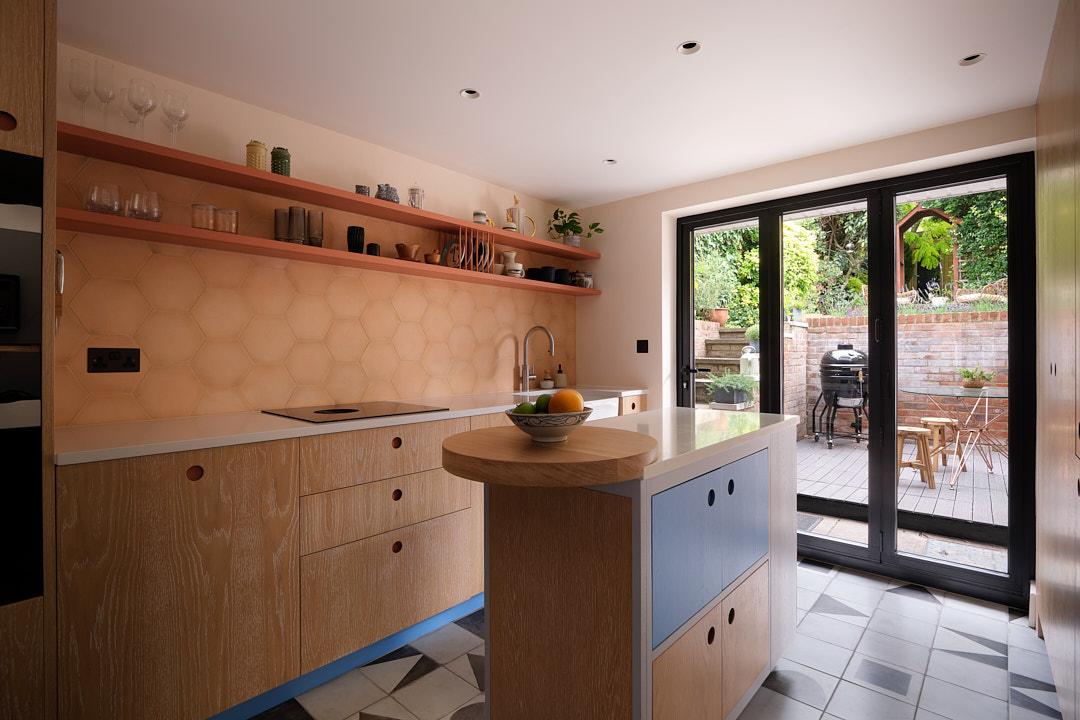
Made to measure: a custom-built narrow kitchen island on wheels in the St Albans Cottage kitchen
Mistake #3: Not enough usable worktop space
This is one of those things you don’t really notice – until it’s missing.
You need somewhere to put things down as you move around the kitchen: shopping bags when you come in, ingredients as you prep, hot dishes straight from the oven.
Designers sometimes refer to this as “landing space” – the stretches of worktop next to key areas like the cooker, sink or fridge – but in simple terms, it’s just about having enough practical surface exactly where you need it.
Without enough of it, a kitchen can quickly feel cluttered, inefficient and slightly stressful to use.
How to avoid it
Make sure there’s practical worktop space next to your main working areas. As a guide, aim for around 15–24 inches beside the cooker, sink, refrigerator and microwave – these are the places where you naturally need somewhere to put things down.
If space is tight, even a small addition – such as a slimline island, a trolley or a cleverly placed worktop extension – can make a big difference.
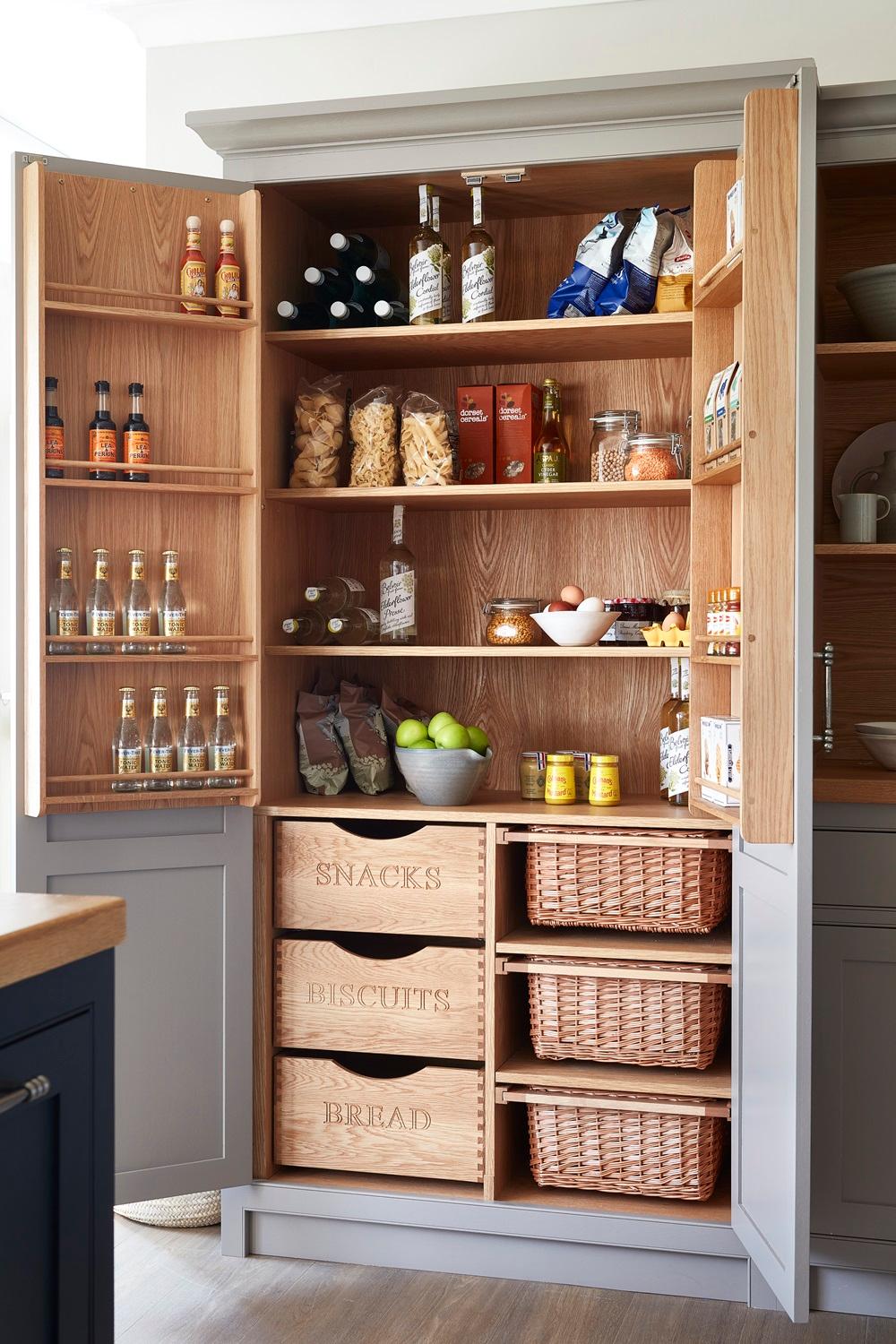
A bespoke pantry cupboard in the Raynham kitchen
Mistake #4: Forgetting about utility and pantry needs
Storage has a huge impact on how a kitchen feels to live with day to day.
Without dedicated pantry or utility space, everyday items tend to spill out onto surfaces, cupboards become overcrowded, and the whole room can start to feel just slightly chaotic.
How to avoid it
A well-designed pantry brings order to food, drinks and everyday essentials, keeping everything organised and easy to access while still neatly hidden away.
Likewise, separating out the more practical elements of kitchen life – laundry, cleaning supplies, bulk storage – into a utility area (or even a well-designed utility cupboard) can transform how the space functions.
It’s often the difference between a kitchen that feels calm and one that always feels a little busy.
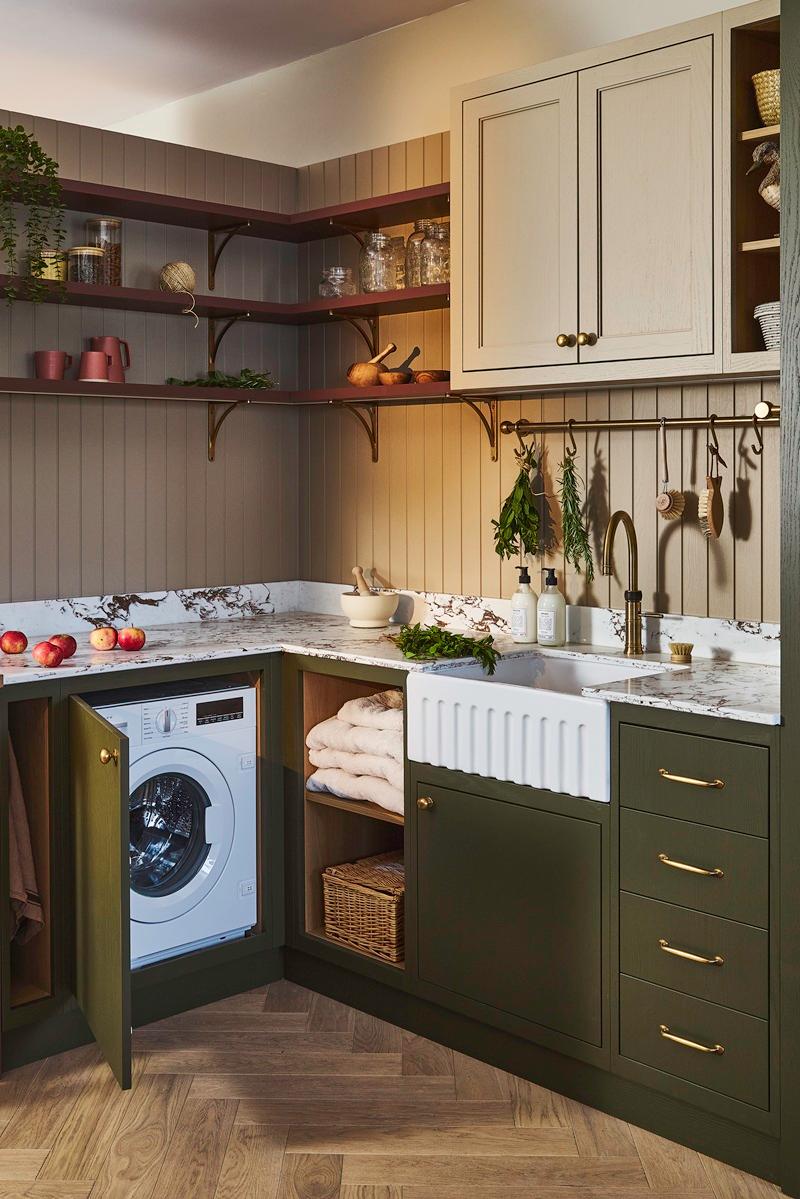
Mistake #5: Not starting appliances
This is a surprisingly important one. Many people think about appliances quite late in the process – once the layout is already taking shape. In reality, it’s often better to start here.
Appliances are some of the largest and most fixed elements in your kitchen. They dictate where services need to go, how much space is required, and how the room flows. If they’re squeezed in afterwards, you can end up compromising on layout, circulation and storage.
How to avoid it
It’s worth deciding early on what appliances you want, roughly where they’ll go, and how you’ll use them day to day.
From there, the rest of the layout tends to fall into place much more naturally.
Integrated appliances can help create a clean, cohesive look, while thoughtful storage ensures that smaller appliances don’t end up cluttering your worktops. As a rule, keep everyday items accessible, and give everything else a proper home.
With some careful planning – and a bit of expert guidance where it helps – you can avoid the most common layout pitfalls and create a kitchen that’s not just beautiful on day one, but a genuine pleasure to live in for years to come.
Request a Brochure
To receive a digital copy of our brochure and regular updates from us, please complete your details below.