No products match your search.
Designing a kitchen that works with the rest of your house
Written by Andrew Nixon
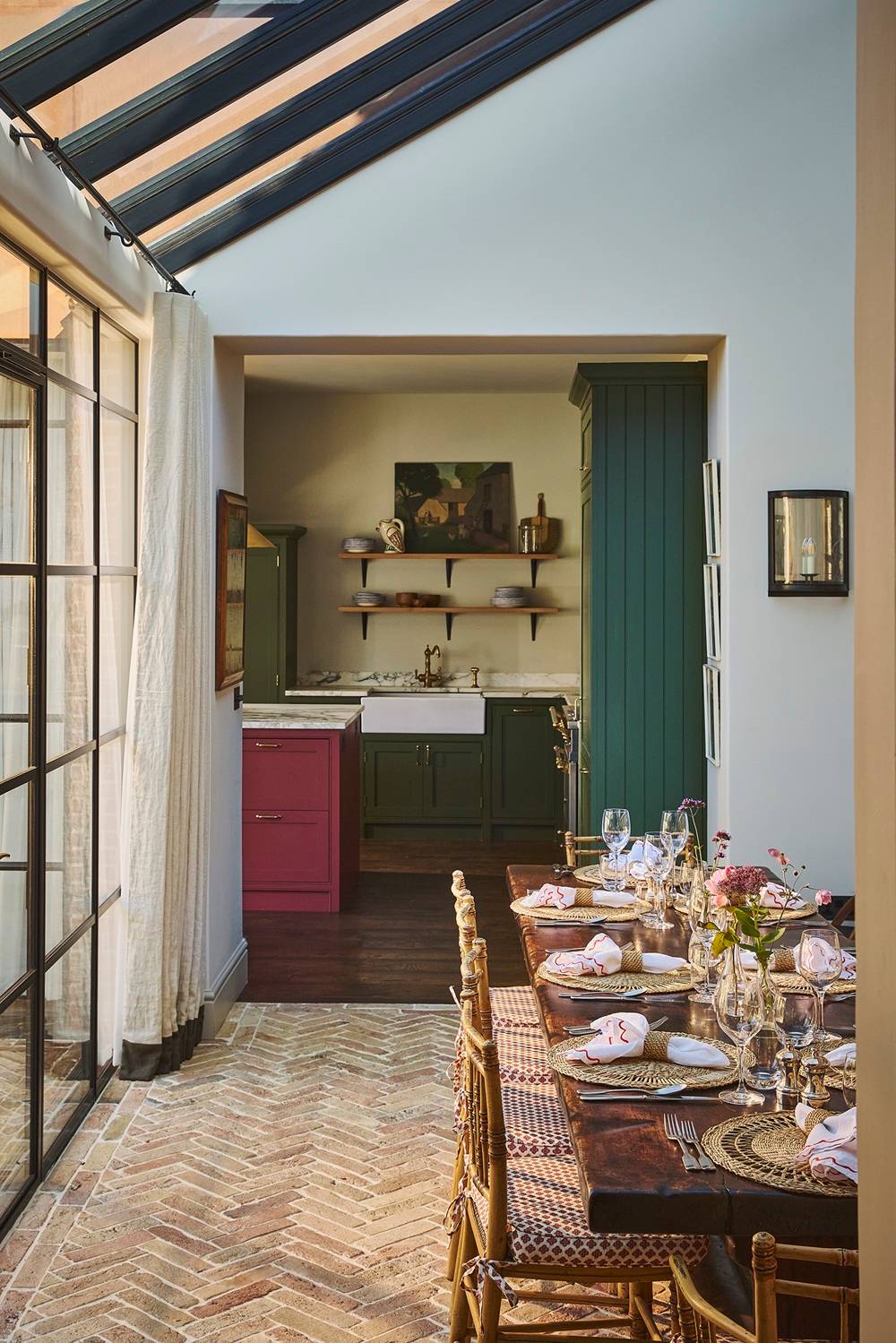
When a kitchen is designed as part of the whole house, everyday life flows more easily from room to room...
In real life, the kitchen is rarely just a place you go to cook something. It’s a space that spills out into everyday living: the family meeting point and the place where homework appears or friends perch with a glass of wine.
Designing a kitchen that works well with the rest of your house helps that busy, overlapping reality feel purposeful instead of a bit chaotic. When the kitchen connects visually and practically with the surrounding rooms, it creates a sense of flow and continuity throughout your whole home.
Why design a kitchen that works with the rest of your house?
The traditional role of the kitchen has evolved over the years, becoming a genuinely multipurpose family space – used for cooking, eating, entertaining, working and everything in between. By thinking about the other living spaces in your home as part of the kitchen design process, you can improve how the house functions day to day, create visual links between rooms, and avoid the kitchen feeling like a separate ‘island’ within your home.
Here are some practical tips for creating a kitchen design that complements and enhances your home as a whole…
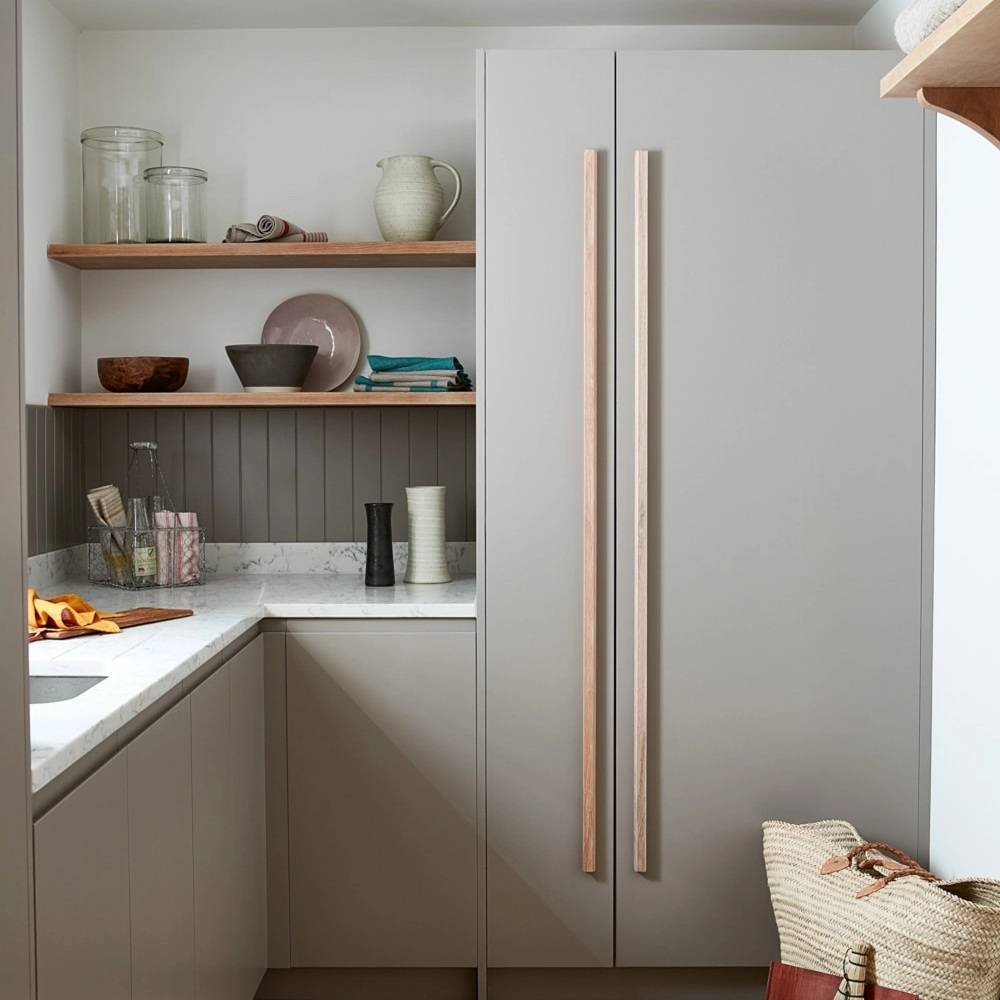
The pantry is a natural extension of the kitchen in the Brancaster Marshes design
Create a seamless flow between kitchen, utility and boot room
Traditionally, boot rooms, pantries and utility rooms were treated as very separate spaces, both functionally and aesthetically. Increasingly, however, these rooms are being designed as natural extensions of the kitchen – particularly in homes where everyday life moves fluidly between them.
At Naked, we’re often asked to design boot rooms, utilities and pantries alongside the kitchen itself. Some clients choose to echo the same cabinetry style, colours or detailing across these spaces, which helps create a smooth transition as you move through the house. It also means these hardworking rooms feel considered and coherent, rather than like an afterthought.
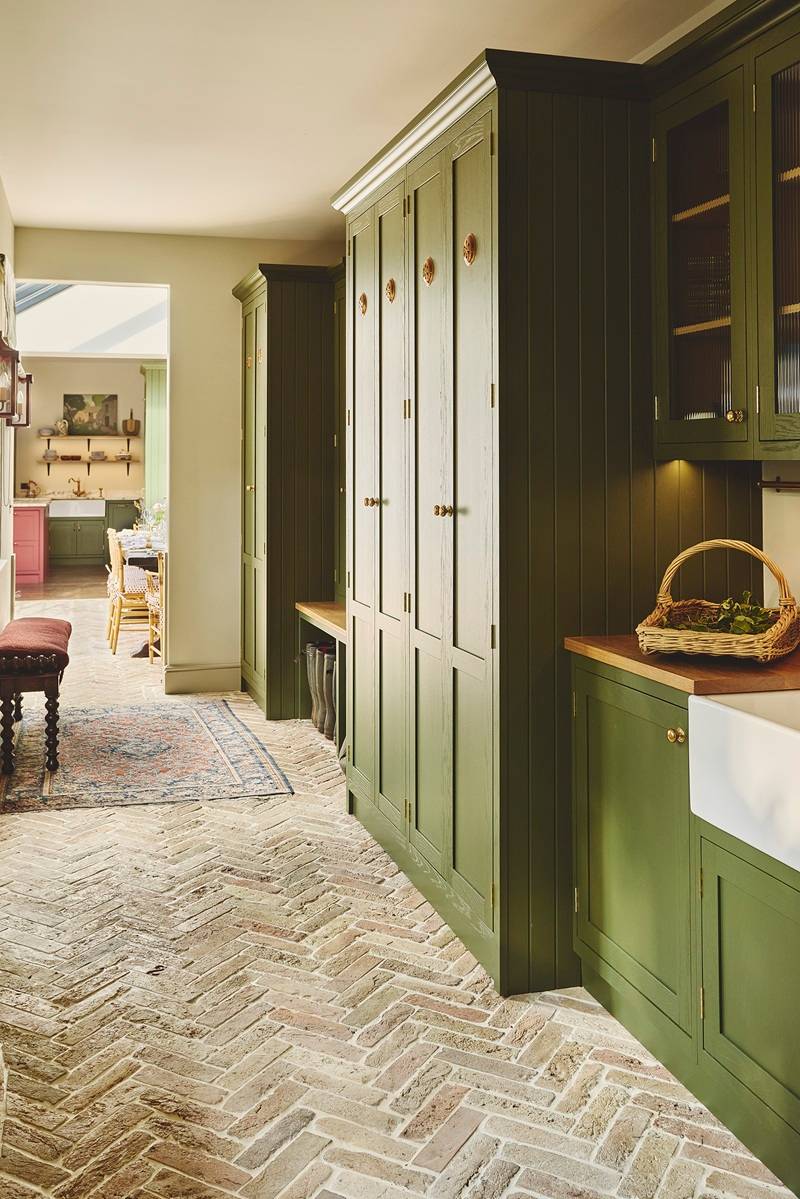
Above and top: Bespoke green cabinets link the main kitchen and utility in Norton House. Interior Design by Dani Neville Design. Photos: Malcolm Menzies.
Match materials and finishes for visual continuity
One of the most effective ways to connect the kitchen to the rest of your home is through materials and finishes that feel in keeping with the wider space. Think about what already exists in your house – timber floors, stone details, painted joinery – and how those cues can be picked up in the kitchen. In a traditional home, natural materials such as wood and stone can be echoed through cabinetry, worktops, flooring or handles. In a more contemporary setting, cleaner lines and simpler finishes may feel more appropriate. The aim isn’t to make every room identical, but to ensure they feel related.For a great example of this done well, see Modern Cottage Style for the Whole Home: Inside Norton House
Use colour to unite the different spaces
Colour is another powerful way to create cohesion across your home. Rather than repeating exactly the same scheme in every room, look for opportunities to echo tones or build a palette that works as you move from space to space.
In homes with a neutral base, this might mean using a family of soft, complementary shades – warm greys, earthy browns or muted greens. In more colourful homes, bolder tones can appear as accents in cabinetry, tiles, splashbacks or even smaller details like handles.
A clever way to think about it is to consider how colours are experienced in motion, when you walk through the home, not just in isolation as in a photograph.
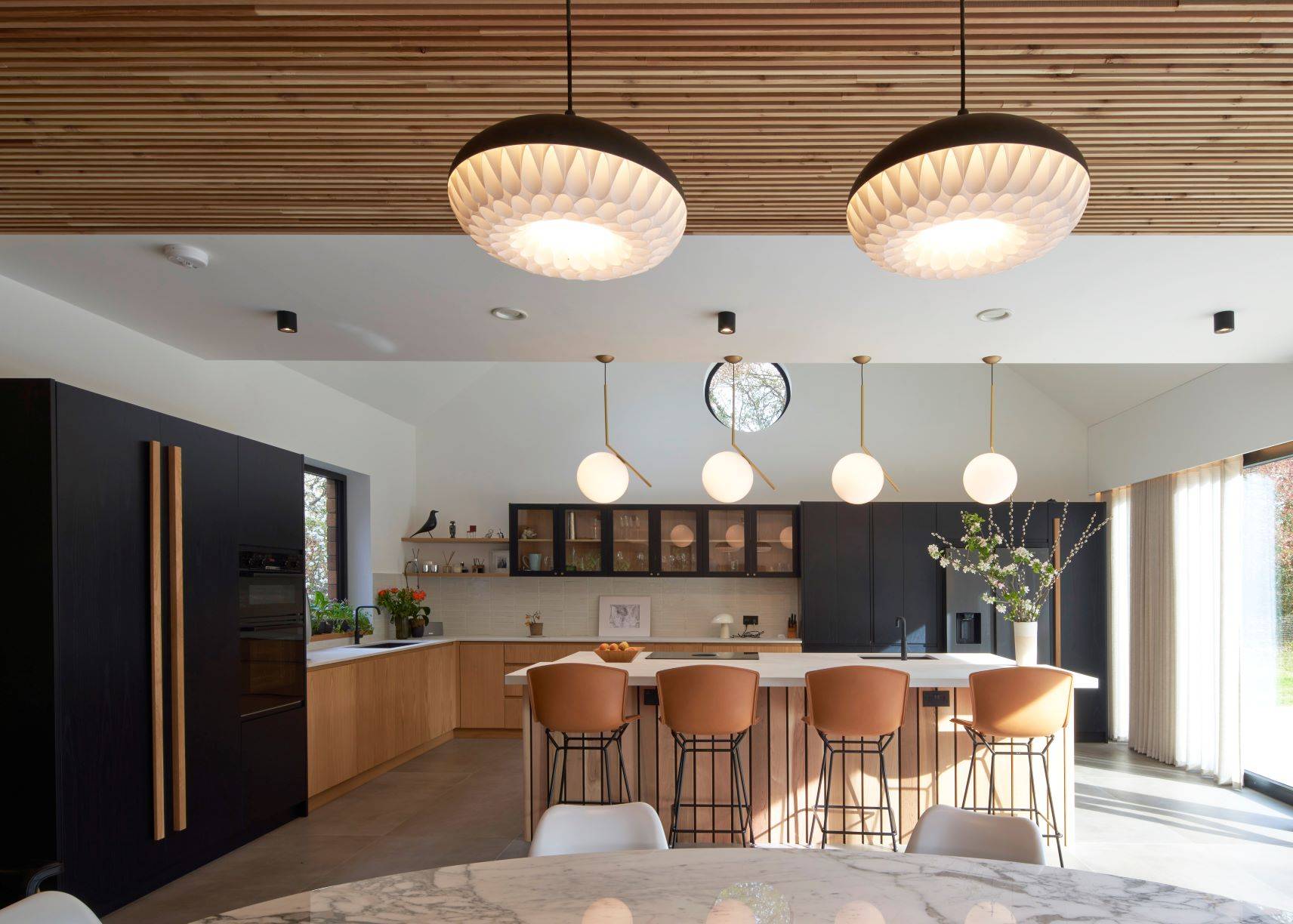
The kitchen area integrates beautifully with the wider space in the Guildford kitchen
Integrate an open plan kitchen with the wider space
In open or semi-open plan layouts, the kitchen is rarely viewed head-on and in isolation. It’s seen from the dining table, the sofa, or across the room as you move through the space – so details matter.
In the Guildford kitchen above, oak bar handles and panelling echo the scalloped cladding used elsewhere in the room, reinforcing the mid-century modern feel and helping the kitchen sit comfortably within the wider living space.
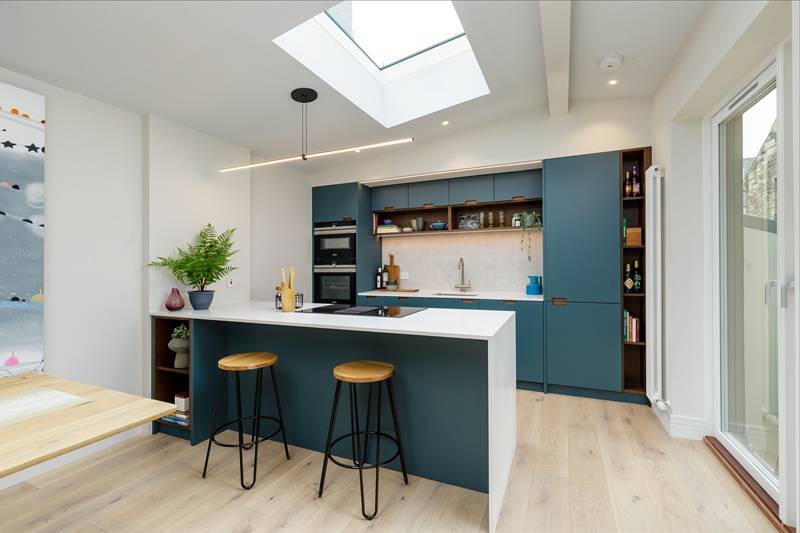
The waterfall peninsula creates a visual connection in the Castle Mews kitchen
Meanwhile, a kitchen island or peninsula can create a bridge between the kitchen and the wider space in an open plan kitchen. In the Castle Mews kitchen, above, the waterfall peninsula helps to define the cooking area, while maintaining an open layout that connects visually with the rest of the living areas.
At Naked, we design and build beautiful cabinetry for your whole home. Book a design call with our friendly team.
Frequently asked questions
How can I stop my kitchen from feeling like an ‘island’ in my home?
By considering the existing design elements in your home, and using similar materials, colours and finishes in your kitchen, you can create a sense of visual continuity and connection between the kitchen and the other rooms in your home.
Can Naked's cabinetry be used for other rooms in your home?
Absolutely. Inspired by the craftsmanship, materials and detailing of our kitchens, we design bespoke furniture for every room – including dressing rooms, boot rooms, utility rooms, pantries, bathrooms and studies – so your home feels thoughtfully connected from room to room.
See also:
The joy of a great utility room – and why it's worth making space for one in any home
Modern Cottage Style for the Whole Home: Inside Norton House
Request a Brochure
To receive a digital copy of our brochure and regular updates from us, please complete your details below.